










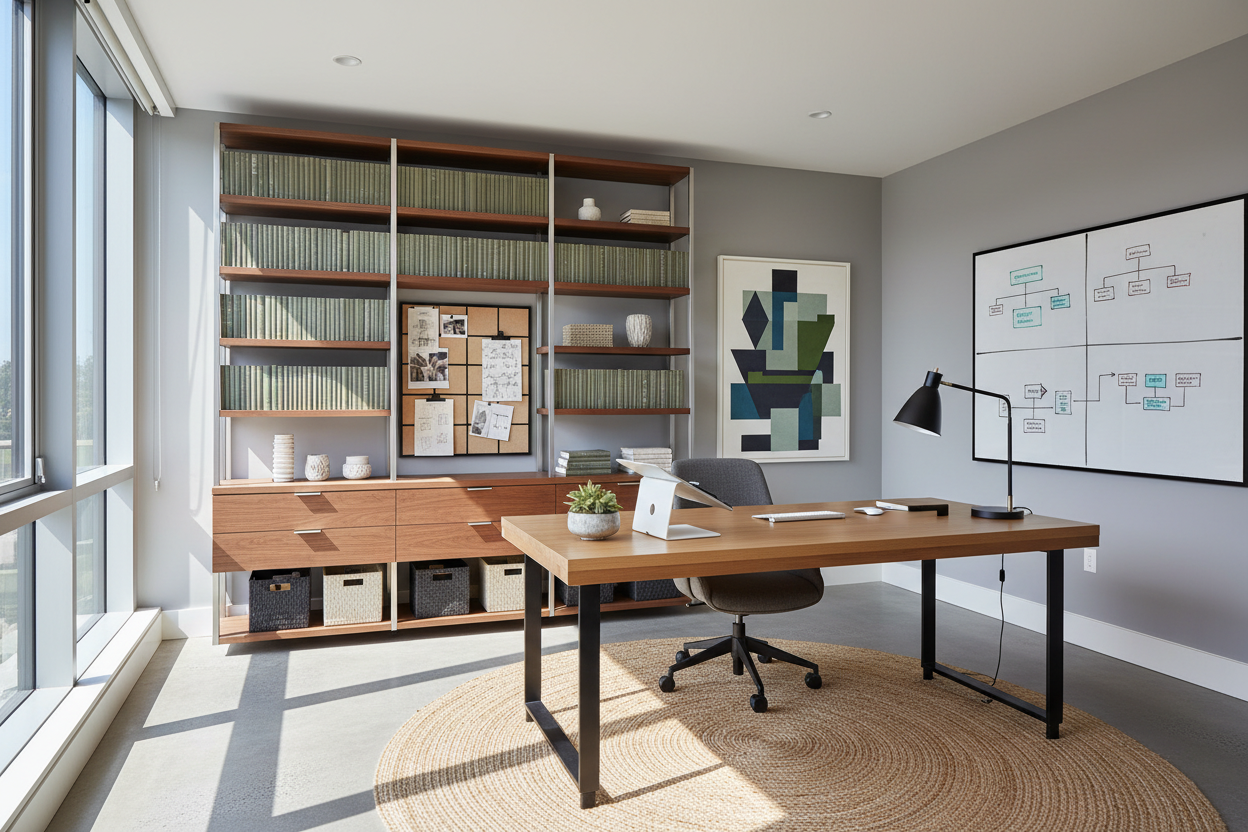
We have all walked into a workspace that feels chaotic rather than curated. It is not just about clutter; it is about how the flow of a room interacts with your cognitive load. As a designer, I see clients struggle to balance aesthetics with functionality, often buying storage units that look beautiful in a catalog but fail in practice. True mastery of office and organization requires looking beyond the bins and boxes to understand the architecture of your workflow. This guide will help you curate a space that is as efficient as it is elegant.
Key Features of a Well-Organized Workspace
- Ergonomic Zoning: Placing high-use items within arm's reach (the "primary zone") to reduce physical strain.
- Material Durability: Choosing high-pressure laminates or sealed woods that resist scratching from binders and equipment.
- Visual Weight: Balancing heavy, closed cabinetry with lighter, open shelving to prevent the room from feeling claustrophobic.
- Integrated Cable Management: Selecting furniture with built-in grommets and channels to eliminate visual noise.
- Modular Scalability: Investing in office organizing systems that can grow as your business or storage needs expand.
The Architecture of Layout and Flow
When planning the organization of an office, we must first address the floor plan. A common error is pushing every piece of furniture against the walls. In design terms, this creates a "dead zone" in the center of the room. Instead, consider floating your desk to command the room. This allows you to utilize the wall space behind you for a credenza or floor-to-ceiling shelving unit, creating a dedicated "active storage" wall.
Zoning Your Workflow
Effective organization of office interiors relies on zoning. Create a distinct "reference zone" for manuals and archives, and a "supply zone" for consumables. By separating these functions physically, you create a mental boundary that helps maintain focus. If you are working with a smaller footprint, use a rug to visually anchor these zones, separating the work area from a reading nook or filing area.
Selecting Materials: Aesthetics vs. Utility
The tactile experience of your furniture plays a massive role in how the room feels. While a glass desk offers a sleek, modern silhouette, it offers zero concealment for wires or messy drawers. For a sophisticated look that hides the inevitable clutter of daily work, I often recommend walnut or oak veneers with a matte finish. These textures forgive dust and fingerprints far better than high-gloss lacquers or glass.
Invest in Quality Systems
Cheap plastic bins degrade the look of even the most expensive mahogany desk. Elevate your space by choosing office organizing systems made from powder-coated steel, leather, or felt. These materials absorb sound—an often overlooked factor in office design—and add a layer of warmth and texture. When selecting filing cabinets, look for full-extension ball-bearing slides; the difference in smooth operation is palpable and adds to the sense of luxury.
Visual Balance and Styling
Design is about balance. If you have a wall of closed cabinetry (heavy visual weight), counter it with a plant or a piece of art on the opposing side. When dealing with the organisation office requirements (for our international clientele who prefer British standard sizing), ensure that your shelving heights are adjustable. This flexibility allows you to align shelf heights with the horizon line of the room, creating a subconscious sense of order.
My Personal Take on Office and Organization
I learned a hard lesson early in my career regarding open shelving. I designed a stunning custom white oak unit for a client who wanted an "airy, open" feel. It looked incredible on installation day. However, three months later, I visited for a follow-up. The client had filled the shelves with mismatched binders, brightly colored product samples, and tangled charging cords. The "airy" unit had become a source of visual stress.
Since then, my rule is the "80/20 Split." I advise clients to have 80% closed storage (doors and drawers) for the messy reality of work, and only 20% open shelving for curated items like books, awards, or sculpture. Also, a specific detail to watch for: check the interior depth of drawers. I once specified a beautiful filing cabinet that was half an inch too shallow for standard hanging file tabs to glide smoothly—a nightmare I never repeated. Function must always precede form in workspace design.
Frequently Asked Questions
How do I organize a small home office without it looking cluttered?
Utilize vertical space. Install floating shelves above the monitor line to draw the eye upward. Use uniform storage containers (same color and texture) to reduce visual noise, making the space feel larger and more cohesive.
Is custom built-in storage worth the investment over freestanding units?
If you plan to stay in the property for more than five years, yes. Custom built-ins maximize every inch of available space, including awkward corners, and increase the property value. For renters or short-term stays, high-quality modular freestanding units are the better choice.
What is the best way to hide cables in an open desk layout?
Use a vertebrae cable manager that runs from the floor to the underside of the desk. Mount a power strip to the underside of the desktop so only one main cord runs to the wall outlet. Sleeving cables in a fabric wrap also makes them look intentional rather than messy.


Dejar un comentario
Este sitio está protegido por hCaptcha y se aplican la Política de privacidad de hCaptcha y los Términos del servicio.