










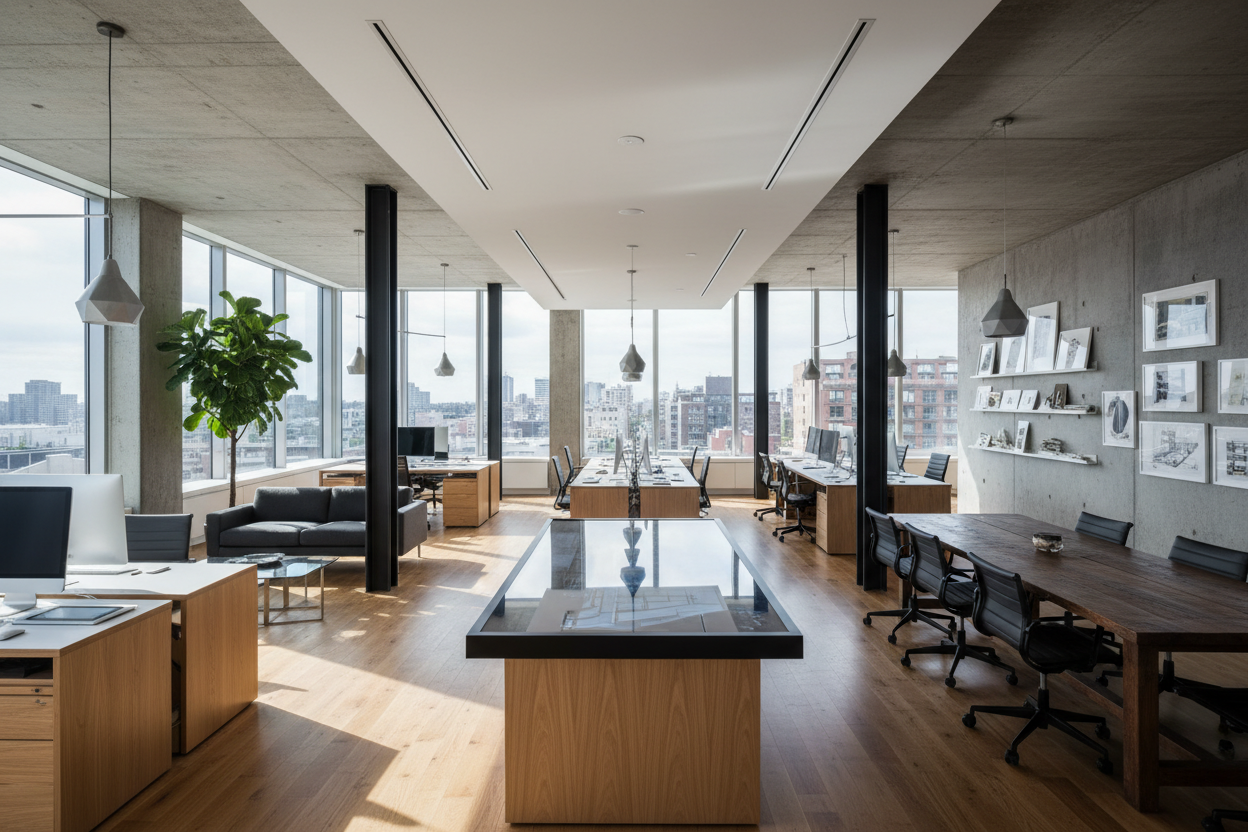
We often treat the structural shell of a workspace and its interior contents as separate entities, but true harmony exists only when they merge. Whether you are commissioning a commercial headquarters or refining a boutique workspace, the design of office building environments requires a sophisticated understanding of spatial hierarchy, light filtration, and human behavior. It is not merely about stacking floors; it is about curating an ecosystem where productivity meets psychological well-being.
Key Elements of Modern Office Architecture
- Spatial Flow & Zoning: Moving away from rigid grids to fluid circulation paths that encourage spontaneous collaboration.
- Biophilic Integration: Incorporating living walls and natural materials to soften the office building architecture.
- Acoustic Management: Using baffles, soft textures, and layout strategies to dampen sound in open areas.
- Light Penetration: Maximizing glazing to ensure natural light reaches the building core, not just the perimeter offices.
- Adaptive Infrastructure: Raised flooring or modular partitions that allow the architecture of office buildings to evolve with business needs.
The Intersection of Shell and Interior
When analyzing office buildings design, one must look beyond the façade. The most successful projects blur the line between the exterior architecture and the interior layout. For instance, exposed structural columns should not be hidden behind drywall; they should be celebrated as grounding elements that dictate the placement of lounge areas or workstations. This industrial honesty creates a sense of permanence and reliability.
Mastering the "Architect's Office" Aesthetic
There is a reason why architecture firm office design is often held as the gold standard. It prioritizes function without sacrificing form. To achieve this look, focus on a monochromatic palette heavily reliant on raw materials—polished concrete floors, blackened steel frames, and warm walnut joinery. The goal is to create a canvas where the work itself provides the color. In an architect's office, storage is rarely an afterthought; it is integrated into the walls, maintaining clean sightlines that reduce visual clutter and mental fatigue.
Materiality and Sensory Experience
The tactile experience of a workspace is just as vital as the visual one. In high-end office building architecture, we are seeing a return to authenticity. Avoid synthetic laminates that feel cold to the touch. Instead, opt for solid wood desks that develop a patina over time or wool-blend upholstery that adds warmth to a steel-framed chair. These choices affect the acoustic quality of the room, absorbing the harsh frequencies of ringing phones and clicking keyboards.
Lessons from My Own Projects: The Glass Trap
I want to share a specific lesson from a project where I attempted to replicate the sleek aesthetic of a high-end architect office space. We designed a series of conference rooms with floor-to-ceiling glass walls to maximize transparency and light. It looked stunning in the renderings and immediately after installation.
However, two months in, the client called me with a practical issue I hadn't fully anticipated: privacy and acoustics. While the double-glazing handled sound transmission decently, the visual exposure made staff feel like they were in a fishbowl, actually reducing usage of the rooms. Furthermore, the hard surfaces caused internal reverb that made conference calls difficult. We had to retrofit the space with heavy velvet drapery and install acoustic felt panels on the ceiling. The lesson? Transparency in office building architecture is beautiful, but it must be balanced with psychological shelter. Always budget for acoustic softening, even in a glass-heavy design.
Conclusion
Ultimately, the successful design of a workspace is about empathy. It requires anticipating how a human body moves through the architecture of office buildings and how the eye rests on specific textures. By prioritizing natural light, honest materials, and acoustic comfort, you elevate a building from a mere container of desks to a catalyst for innovation.
Frequently Asked Questions
What is the most durable flooring for high-traffic office buildings?
Polished concrete or terrazzo are the top choices for main circulation paths due to their longevity and ease of maintenance. However, for acoustic control in work zones, high-density commercial carpet tiles or engineered hardwood with acoustic underlayment are preferred.
How does ceiling height impact office design?
Higher ceilings (10ft+) promote creative thinking and a sense of freedom, which is why they are common in architecture firm office design. Lower ceilings, while cozier, can feel oppressive in open-plan layouts if not managed with proper uplighting.
Is open-plan architecture still relevant?
The trend is shifting towards "activity-based working." Rather than a vast sea of desks, modern office building architecture utilizes neighborhoods—clusters of open desks interspersed with sound-proof phone booths and private focus rooms to accommodate different working styles.


Dejar un comentario
Este sitio está protegido por hCaptcha y se aplican la Política de privacidad de hCaptcha y los Términos del servicio.