










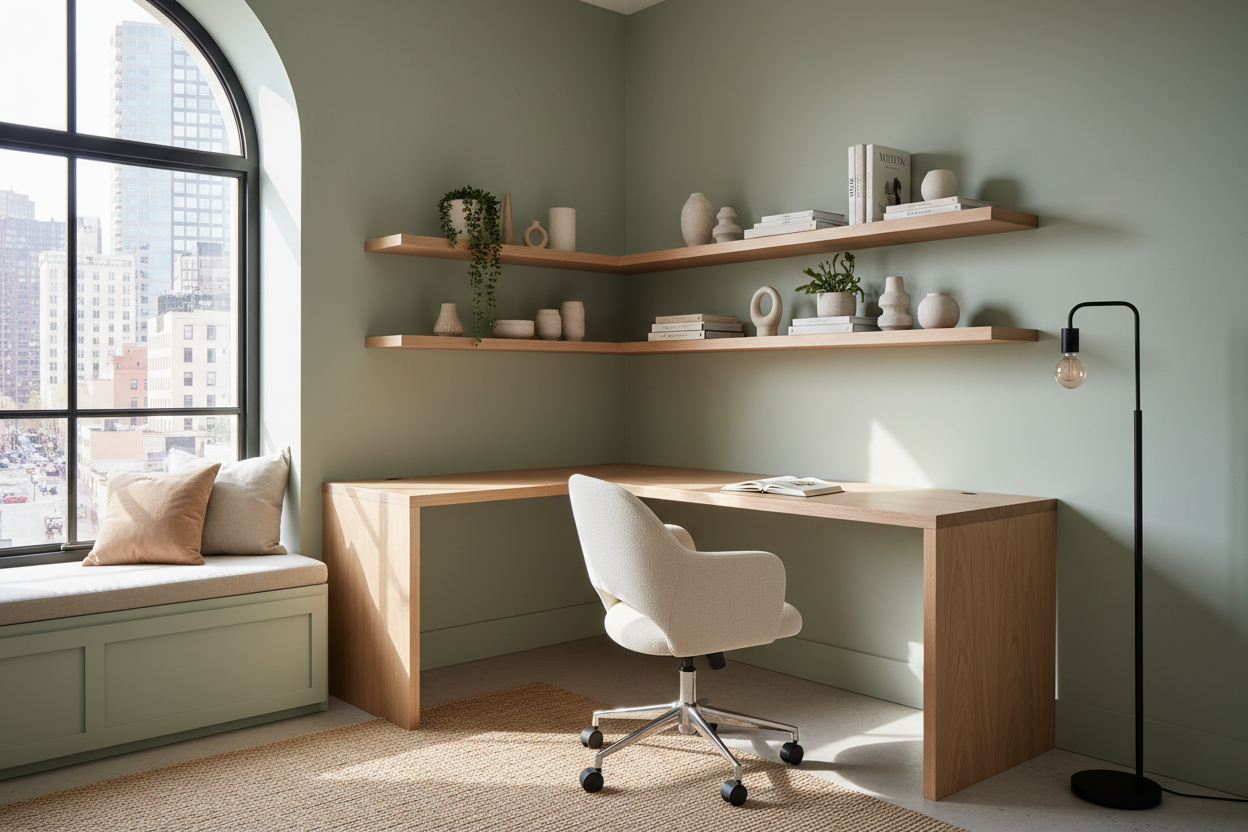
We have all been there: staring at that awkward, empty junction between two walls, wondering how to make it functional without ruining the room's flow. As remote work became a permanent fixture for many North Americans, the scramble to find usable square footage left a lot of us cramming bulky furniture into spaces that were never meant to hold it.
Whether you are carving out a workspace in a cramped apartment or finalizing the layout of a dedicated den, office corners are notoriously tricky to get right. Do you shove a desk against the drywall? Add a reading chair that will ultimately just gather laundry? In this guide, I will walk you through how to properly scale, furnish, and style these spaces so they feel like an intentional part of your home, rather than an afterthought.
Quick Decision Guide
- Mind your clearances: Always leave at least 36 inches of push-back space for your desk chair to avoid scraping the walls.
- Avoid the "penalty box" effect: Do not face your desk directly into the corner unless you have a window or a highly engaging visual focal point.
- Go vertical with storage: Utilize wall space up to the ceiling to draw the eye upward and maximize a tight footprint.
- Anchor with lighting: A dedicated pendant or articulated wall sconce defines the zone without eating up valuable floor or desk space.
Mastering the Corner Office Layout
Finding the Right Footprint
When brainstorming small corner home office ideas, scale is your biggest hurdle. A common mistake is buying a massive executive desk that suffocates the room. If you are setting up a corner office in bedroom spaces, you need to maintain a clear visual boundary between "rest" and "work." I recommend starting with a layout tape-out: use painter's tape to mark the exact dimensions of potential furniture on your floor. Ensure you have a minimum of 36 inches behind the desk for chair clearance, and at least 30 inches of walkway space around the perimeter.
What to Put in Corner of Office Spaces
If you already have a primary desk centered in the room, you might be wondering how to utilize the remaining corner office space. This is the perfect spot for a secondary function. Consider a comfortable reading nook with a compact accent chair and a floor lamp, or a dedicated printing and filing station. If the corner *is* your primary workspace, opt for a minimalist writing desk paired with floating shelves, or a carefully measured L-shaped desk that hugs the perimeter without protruding into the room's main traffic flow.
Storage: Corner Office Cabinet Ideas
Storage is the Achilles heel of any small corner office setup. Standard filing cabinets are often too deep and visually heavy for tight spaces. Instead, look into custom or semi-custom corner office cabinet ideas. Tall, narrow bookcases that fit snugly into the 90-degree angle can provide massive storage without a heavy footprint. If you are working with a transitional or mid-century aesthetic, consider a wall-mounted credenza. It keeps the floor visible, which tricks the eye into perceiving more square footage, while hiding unsightly cables and paperwork.
Integrating Style and Decor
Blending with the Room
Effective corner office decor relies on cohesion. If your home office corner ideas clash entirely with the rest of your living room or bedroom, the space will look chaotic. Carry your home's existing color palette into the corner office design. If your living room features warm walnut wood and brass accents, choose a desk and shelving in those same materials. Use a textured area rug to anchor the desk—this creates a "room within a room" feeling without needing physical dividers. Finally, thoughtful office corner decoration, like a trailing pothos plant or curated framed artwork, softens the hard angles of monitors and tech gear.
Designer's Honest Take: Lessons from My Own Projects
Early in my career, I designed a corner office at home for a client living in a compact Toronto condo. They insisted on a heavy, solid oak L-shaped desk to maximize their surface area. I agreed, thinking it would be highly functional. Once it was delivered, it completely swallowed the room. The visual weight of the solid wood base made the 10x12 room feel like a closet.
I learned the hard way that corner office design ideas look very different on a floor plan than they do in reality. We ended up selling that desk and replacing it with a sleek, glass-topped writing table and a wall-mounted monitor arm. The glass allowed light to pass through, instantly opening up the corner office nook ideas we had originally envisioned. The honest truth? Unless you have massive square footage, heavy corner desks are usually a mistake. Keep the base of your furniture visually light, and rely on the walls for your storage.
Frequently Asked Questions
How do I light a small corner office?
Avoid relying solely on overhead recessed lighting, which casts harsh shadows when you lean over a desk. Instead, use layered lighting: an articulated wall sconce frees up desk space, while a small, warm-toned desk lamp adds task lighting. If the corner lacks natural light, consider adding a mirror on the adjacent wall to bounce light around.
Is an L-shaped desk necessary for a corner office setup?
Not at all. While L-shaped desks offer great surface area, they can easily overwhelm small corner office ideas. A straight desk placed diagonally across the corner, with a tall plant or floor lamp tucked behind it, often creates a more dynamic and breathable home corner office setup.
How can I separate my home office corner from the rest of the bedroom?
Visual boundaries are key. Use a distinct area rug under your desk chair, paint the two corner walls a slightly darker accent color, or install a lightweight wooden slat partition. These office corner decorating ideas signal to your brain that you are entering a workspace, even if it is just three feet from your bed.

Dejar un comentario
Este sitio está protegido por hCaptcha y se aplican la Política de privacidad de hCaptcha y los Términos del servicio.