










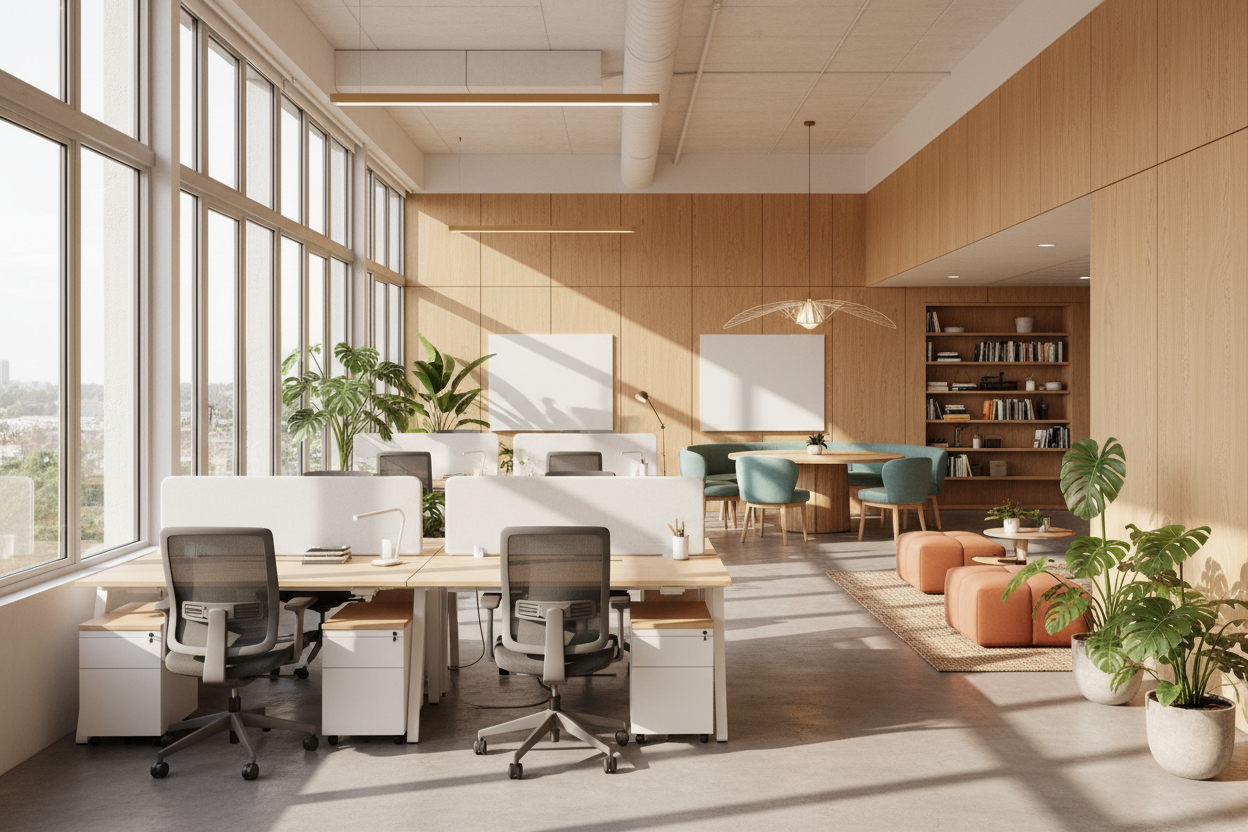
There is a distinct difference between a room with a desk in it and a workspace that actively facilitates success. In my fifteen years of spatial planning, I have seen productivity suffer simply because the environment wasn't conducive to the work being done. Whether you are orchestrating a commercial build-out or refining a private study, the right office design ideas should bridge the gap between rigorous functionality and inspiring aesthetics. It is not just about where you sit; it is about how the room makes you feel when you walk in.
Key Features to Look For
- Ergonomics & Comfort: Prioritize seating with adjustable lumbar support and seat depth to prevent fatigue.
- Lighting Layers: Combine ambient overhead lighting with focused task lighting to reduce eye strain.
- Acoustic Control: Use soft materials (rugs, acoustic panels) to dampen echo and improve focus.
- Traffic Flow: Ensure clear pathways of at least 36 inches to maintain an airy, uncluttered feel.
- Material Durability: Select high-performance surfaces like HPL or hardwood that withstand daily wear.
Mastering Space Planning and Layout
Before buying a single piece of furniture, you must address the floor plan. Office room arrangement ideas often fail because they ignore the 'work triangle' concept used in kitchens. In an office, your triangle consists of the desk, the reference area (storage), and the meeting/breakout zone.
For big office design ideas, zoning is critical. You don't want your deep-focus zone right next to the high-traffic entryway. Use open shelving units as room dividers to create visual separation without blocking light. If you are dealing with a tighter footprint, consider the vertical plane. Floor-to-ceiling cabinetry draws the eye upward and maximizes storage without encroaching on your square footage.
The Build-Out: Materials and Finishes
When discussing office build-out ideas with clients, I emphasize the tactile experience. A nice office design isn't just visual. The cold touch of a glass desk might look sleek, but it can be uncomfortable for long typing sessions and is a magnet for fingerprints.
Instead, consider matte-finish wood veneers or linoleum-topped desks, which offer warmth and sound absorption. For flooring, while polished concrete is trendy for business office setup ideas, it creates an acoustic nightmare if not balanced with area rugs or acoustic baffles on the ceiling. The goal is to create a soundscape that is quiet enough for concentration but lively enough to prevent isolation.
Lighting: The Unsung Hero of Productivity
Inspiring office design dies in poor lighting. Fluorescent tubes are harsh and can induce headaches. Aim for a layered approach. Start with general ambient light (around 3000K-3500K for a neutral white), then add task lighting with an adjustable arm for your desk. If your office space design idea includes natural light, position the desk perpendicular to the window. Facing the window causes squinting; having the window behind you causes glare on screens.
My Personal Take on Office Design Ideas
I learned a hard lesson early in my career regarding great office space ideas versus reality. I once designed a stunning executive suite featuring a massive, high-gloss lacquered mahogany desk. It looked incredible in the portfolio photos. However, two months later, the client called me.
The issue wasn't the look; it was the wire management. I hadn't accounted for the sheer volume of cables required for his specific tech setup, and because the desk was a solid, sculptural piece, we couldn't easily drill grommets without ruining the finish. We ended up having to route cables down the leg in a way that looked clumsy. Now, I always check the 'under-hood' of a desk first. I look for integrated cable trays and modesty panels that hide the mess. A beautiful office that looks messy because of wires is no longer a beautiful office.
Frequently Asked Questions
How do I make a small office feel bigger?
Use legs rather than solid bases for your furniture. A desk with slender metal legs allows you to see the floor underneath, which tricks the eye into perceiving more space. Also, hanging a large mirror opposite a window can double the natural light.
What is the best color for productivity?
It depends on your work. Blue and green tones are generally known to improve focus and efficiency. However, if you are in a creative field, pops of yellow or orange can stimulate energy. Stick to neutrals for large surfaces and use bold colors for accents.
Is a standing desk worth the investment?
Absolutely, but only if you use it correctly. The human body isn't designed to be static. A sit-stand desk encourages movement, which keeps blood flowing and energy levels up. Look for dual-motor options for smoother, quieter transitions.


Dejar un comentario
Este sitio está protegido por hCaptcha y se aplican la Política de privacidad de hCaptcha y los Términos del servicio.