










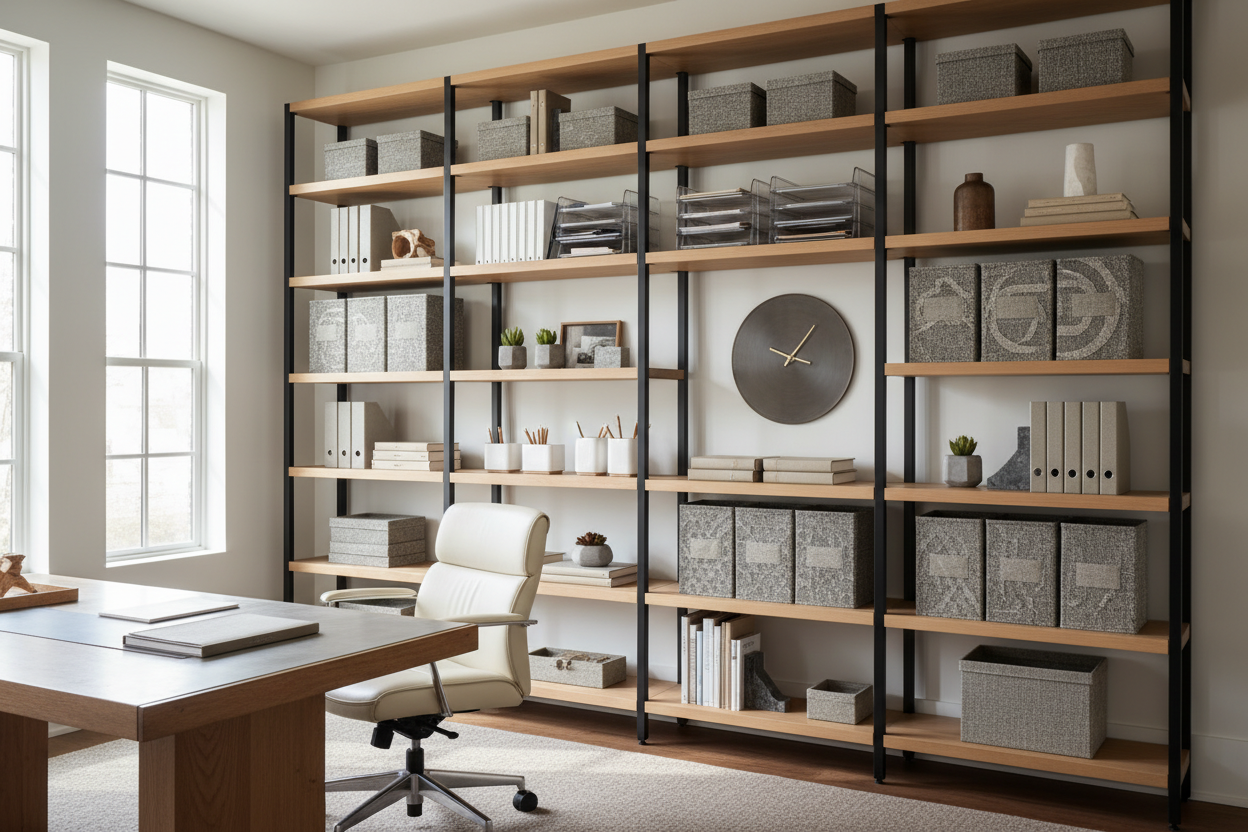
We've all been there: you spend hours curating the perfect desk and ergonomic chair, only to realize your workspace is drowning in stray papers, rogue chargers, and half-empty coffee cups. The immediate reaction is usually to buy the first storage solution you see online. But before you do, let's talk about office organizer shelves. When chosen poorly, they just become another cluttered surface. When chosen correctly, they give your workspace structure, breathing room, and a sense of quiet focus.
Quick Decision Guide
- Measure your vertical clearance: Always leave at least 18 inches between your desk surface and the lowest shelf to accommodate monitors and task lighting.
- Match the material to your workflow: Solid wood handles heavy binders, while powder-coated metal is better for lightweight, modular trays.
- Incorporate negative space: Aim for a 60/40 rule—60% functional storage and 40% empty space or styling objects to avoid a heavy, cramped look.
- Prioritize adjustable shelving: Your storage needs will evolve; fixed shelves often become obsolete within a year.
Maximizing Your Workspace Layout
Understanding Vertical Proportion
Most North American home offices are carved out of secondary bedrooms or awkward alcoves. In these smaller footprints, bringing storage upward is essential. However, the visual weight of your shelving matters. If you have an eight-foot ceiling, avoid taking heavy, dark cabinetry all the way up. Instead, opt for floating designs or open-frame metal systems that let the wall color peek through.
Desk Clearance and Reach Zones
Ergonomics aren't just for your chair. The items you reach for daily should sit comfortably within your primary reach zone—typically no higher than 15 to 20 inches above your seated shoulder height. Reserve the upper tiers of your office shelf organizers for archival boxes, reference books, or trailing plants.
Choosing Materials That Last
Solid Wood vs. Engineered Alternatives
If your daily routine involves pulling heavy reference manuals or thick client binders, engineered wood (like MDF) will eventually bow. I always recommend solid oak, walnut, or high-grade plywood with a veneer for heavy-duty storage. For lighter duty—like displaying decorative objects or holding a few pen cups—powder-coated steel or acrylic shelf organizers for office setups offer a sleek, minimalist silhouette that won't visually overwhelm a small room.
Styling Without Sacrificing Function
The Art of Concealment
The quickest way to ruin the look of a home office is treating it purely like a commercial cubicle. Storage needs to blend with the rest of your home's architecture. Not everything deserves to be on display. Pair your open shelving with matching opaque boxes or woven baskets. This allows you to hide the visually noisy items—like extra printer ink, tangled cables, and sticky notes—while keeping the open surfaces reserved for matching binders, sculptural bookends, and task lighting.
Lessons from My Own Projects
A few years ago, I designed a stunning mid-century modern home office in a suburban basement. I spec'd these gorgeous, custom-built floating walnut shelves right above the client's desk. They looked incredible in the portfolio photos. But I learned a hard lesson about practicality. Because I didn't account for the client's dual 32-inch monitors, the lowest shelf was completely blocked. We had to patch the drywall and raise the entire system by six inches. On top of that, the matte walnut finish showed every single fingerprint and dust particle. I now always verify exact monitor heights before drilling a single hole, and I frequently steer clients toward satin finishes or powder-coated metals for high-touch storage zones.
Frequently Asked Questions
How deep should office shelves be?
For standard home offices, a depth of 10 to 12 inches is ideal. This is deep enough to hold standard binders, magazine files, and most storage boxes without intruding too far into the room's footprint.
Are floating shelves strong enough for books?
Yes, but only if installed correctly. Floating shelves must be anchored directly into wall studs or mounted using heavy-duty toggle bolts. If you plan to load them with textbooks, look for designs with hidden steel bracket rods rather than simple keyhole mounts.
How do I keep my shelves from looking messy?
Stick to a consistent color palette for your storage containers and use the 60/40 rule mentioned earlier. Group similar items into solid boxes or baskets to hide the visual clutter, leaving only curated items out in the open.

Dejar un comentario
Este sitio está protegido por hCaptcha y se aplican la Política de privacidad de hCaptcha y los Términos del servicio.