










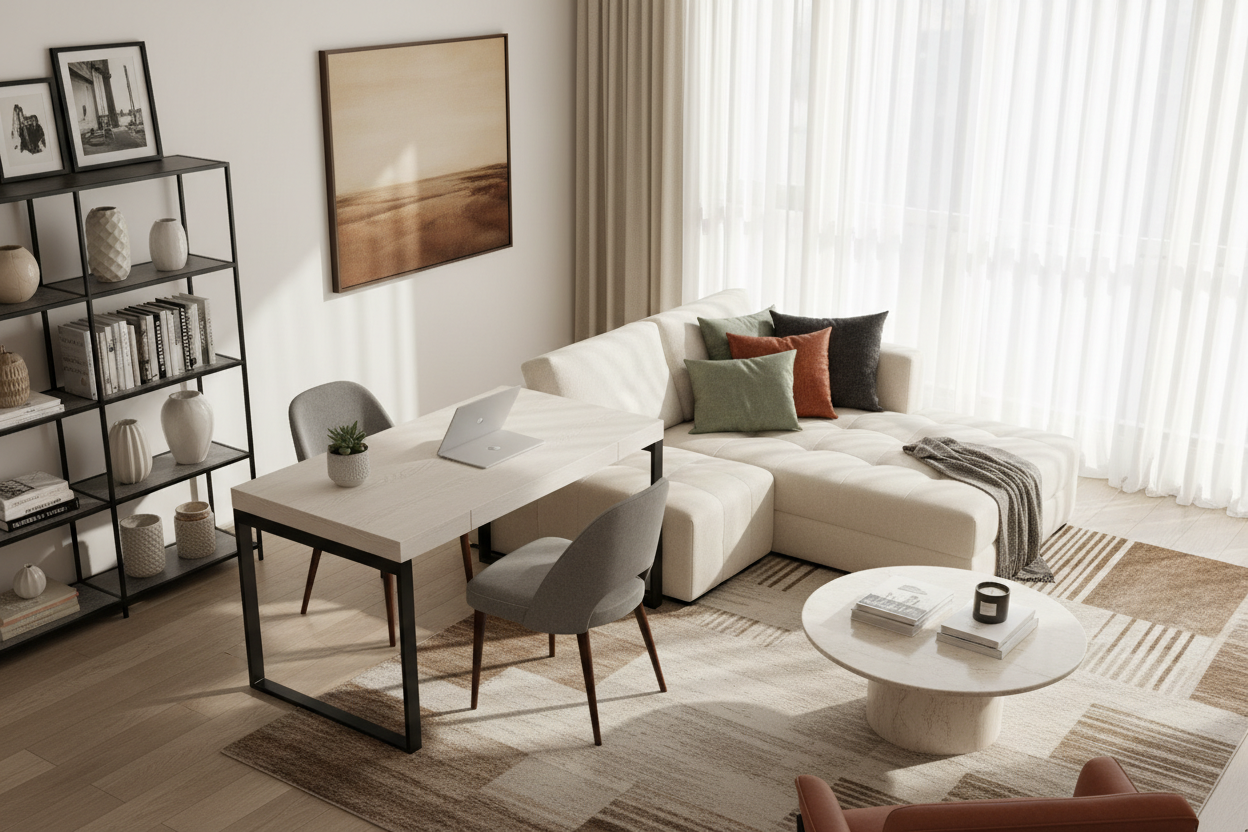
The era of hiding a workspace in a dark closet is over. In modern urban design, the challenge isn't just finding space; it is about creating a symbiotic relationship between relaxation and productivity. Many of my clients struggle with the visual chaos that a workspace introduces to a sanctuary meant for rest. However, designing an **apartment living room with desk** integration does not mean sacrificing your aesthetic. It requires a shift in perspective: treating the desk not as office equipment, but as a piece of case goods that rivals your credenza or coffee table in beauty and craftsmanship.
Quick Decision Guide: Key Features for Living Room Desks
- Scale & Proportion: Ensure the desk depth does not obstruct traffic flow; 20-24 inches is often sufficient for a laptop setup.
- Material Continuity: Select finishes (walnut, oak, brass) that mirror your existing coffee or side tables to avoid a "cubicle" look.
- Cable Management: Look for integrated modesty panels or hidden grommets; visible wires ruin the ambiance of a formal living room.
- Visual Weight: In smaller footprints, opt for legs with negative space (parson style) rather than heavy pedestal bases.
Strategic Placement: Where to Put a Desk in a Living Room
Spatial planning is the backbone of interior design. Before buying furniture, analyze your room's sightlines and traffic patterns. The goal is to make the desk feel intentional, not like an afterthought.
The "Console" Approach: Desk Behind Couch Apartment Layouts
This is arguably the most sophisticated layout for open-concept apartments. Placing a desk behind couch apartment style acts as a console table. It visually anchors the sofa and creates a distinct "zone" without building walls.
When utilizing this layout, ensure the desk height aligns with or sits slightly below the sofa back. If the desk is too tall, it disrupts the visual horizon. Style the surface with a structured lamp and stack of books when not in use to disguise its utilitarian purpose.
The Alcove and Nook: How to Fit a Desk in a Small Living Room
Architectural quirks are opportunities. A desk next to sofa placement works exceptionally well if you have a recessed wall or a bay window. Here, custom millwork or a floating shelf desk is superior to a standalone piece. By mounting the desk to the wall, you keep the floor visible, which tricks the eye into perceiving the room as larger—a critical tactic for any living room and desk area.
Materiality and Aesthetics: Elevating the Design
To successfully integrate a living room with work desk elements, the materials must speak the language of a home, not a corporate headquarters.
Solid Wood vs. Veneer
For a formal living room with desk requirements, I always steer clients toward solid wood or high-grade architectural veneers. A cheap melamine surface will stand out starkly against a velvet sofa or wool rug. Solid walnut or white oak ages beautifully and can be refinished, offering longevity. If you are placing a desktop in living room areas, consider a desk with a leather inlay top; it acts as a built-in mousepad and adds a layer of acoustic dampening.
The Chair Dilemma
Nothing kills a vibe faster than a massive, plastic gaming chair in a curated living space. Prioritize an ergonomic chair upholstered in residential fabrics—bouclé, linen, or cognac leather. It should look like an accent chair that happens to swivel.
My Personal Take on Apartment Living Room with Desk Layouts
In my years of designing high-density urban apartments, I have learned a hard lesson about "convertible" furniture. A few years ago, I specified a drop-front secretary desk for a client who wanted a living room with computer desk ideas that could vanish.
On paper, it was perfect. In reality, the client never closed it. The hassle of moving the laptop, the coffee cup, and the monitor meant the flap stayed down permanently, exposing the hinges and clutter. The unpolished truth is that if you use a desk daily, you won't hide it. Now, I advise clients to embrace the desk. I focus on cable management solutions—specifically, drilling into the back of antique cabinets to route power strips—so the tech is usable but the mess is invisible. A beautiful desk that is always open is better than a "hidden" desk that looks like a messy, half-open cabinet.
Conclusion
Integrating a workspace into your living area is an exercise in balance. By prioritizing high-quality materials, respecting the scale of your room, and choosing a layout that favors flow, you can create a living room with work desk functionality that feels luxurious rather than cluttered. Your home should serve your life, and with the right design choices, it can do so beautifully.
Frequently Asked Questions
Computer desk in living room or bedroom: Which is better?
This depends on your sleep hygiene and social habits. If you have trouble disconnecting, keep the desk out of the bedroom. However, if your living room is a high-traffic zone for family, the bedroom might offer the quiet needed for deep work.
What is the best desk for a formal living room?
A writing desk with slender legs or a secretary desk is best for formal spaces. Avoid bulky storage desks. Look for pieces with finished backs, as the desk may be visible from multiple angles.
How do I hide my computer monitor in the living room?
The "black mirror" effect of a monitor can be harsh. I recommend placing the desk so the monitor faces away from the main seating area, or using a monitor arm to swing it flat against a wall or into a cabinet when not in use.

Dejar un comentario
Este sitio está protegido por hCaptcha y se aplican la Política de privacidad de hCaptcha y los Términos del servicio.