










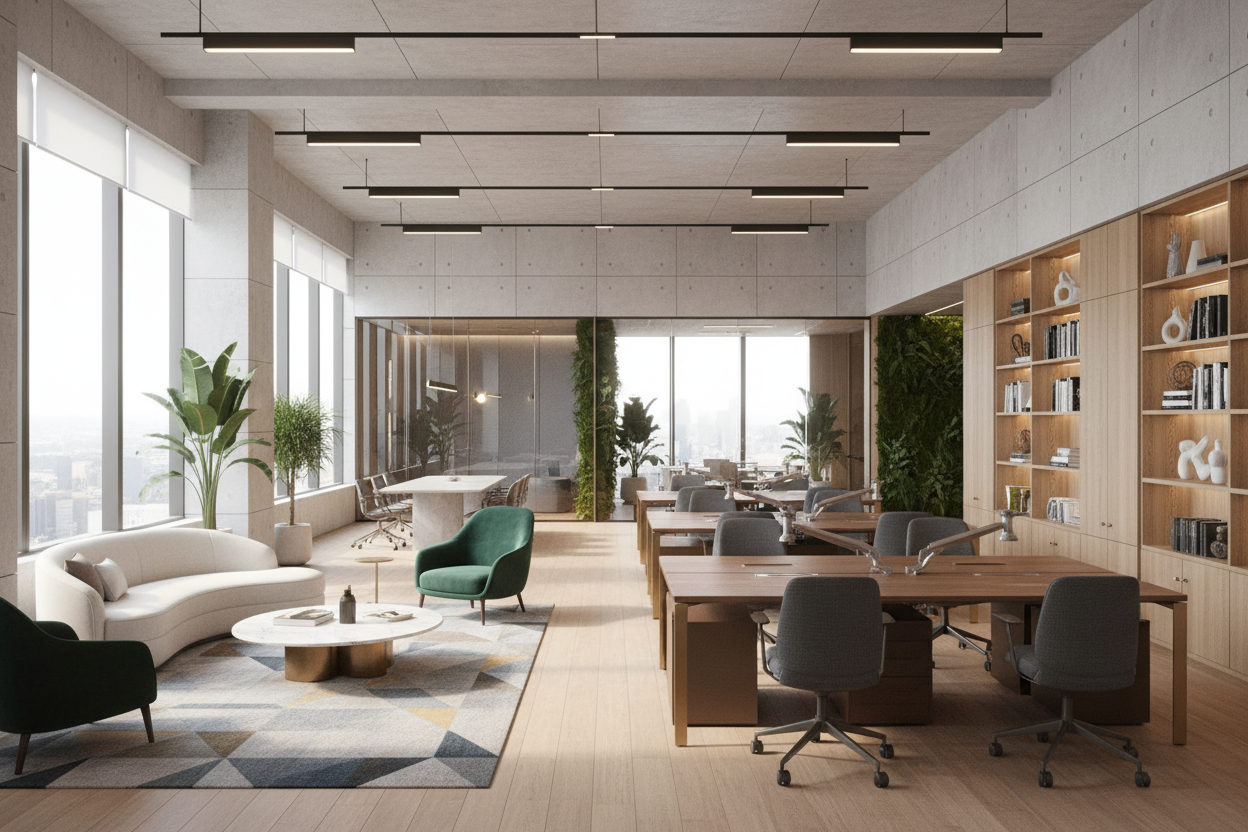
We have all experienced the fatigue of a workspace that fights against us—poor lighting, clutter, and a layout that kills creativity. Whether you are curating a corporate headquarters or a boutique home study, the difference between a generic room and a high-performance environment lies in the details. The best office designers do not merely select furniture; they engineer human behavior through spatial planning and materiality. This guide bridges the gap between high-concept architectural firms and your personal design execution.
Key Pillars of Professional Workspace Design
- Ergonomics First: Prioritize chairs with lumbar adjustability and seat-depth regulation over pure aesthetics.
- Lighting Layering: Combine ambient (overhead), task (desk), and accent lighting to reduce eye strain.
- Acoustic Control: Integrate soft materials (rugs, acoustic panels, drapery) to dampen echo and improve focus.
- Biophilic Elements: Incorporate living plants or natural wood grains to lower stress levels.
- Traffic Flow: Ensure a minimum of 36 inches of clearance behind desks for comfortable movement.
Beyond the Desk: Curating the Coolest Office Interiors
When we look at the coolest office interiors featured in architectural digests, there is a common thread: they avoid the "corporate beige" trap. However, creating a "cool" space requires restraint. It is not about adding a ping-pong table; it is about resimercial design—bringing the comfort of residential living into a commercial context.
Materiality and Texture
The tactile experience of an office defines its luxury level. Avoid high-pressure laminates (HPL) that feel plastic to the touch. Instead, look for commercial-grade veneers or solid woods like walnut or white oak. These materials age gracefully and add visual warmth.
For seating, consider the abrasion rating (Double Rubs). A velvet chair might look stunning, but unless it is a high-performance contract fabric, it will crush and bald within a year of daily use. Top-tier designers often opt for premium wool blends or full-grain leathers that develop a patina over time rather than wearing out.
Mastering the Layout
Space planning is where the amateur mistakes happen. A common error is pushing the desk against the wall. This commands the least authority and limits visual scope. If space permits, float the desk in the center of the room or perpendicular to a wall. This command position allows you to see the entrance and maximizes natural light without creating glare on your screens.
Visual Balance and Storage
To achieve cool office interiors that remain functional, you must manage visual weight. If you have a heavy, solid wood desk, balance it with a lighter, open-frame shelving unit. Concealed storage is vital; open shelves should be reserved for curated decor, while paperwork and tech clutter should be hidden behind cabinet doors to maintain mental clarity.
My Personal Take on Best Office Designers
I learned a hard lesson early in my career regarding "high-gloss" finishes. I was obsessed with the look of a black lacquer executive desk I saw in a Milan showroom. It was sleek, reflective, and undeniably expensive looking. I specified it for a client who did heavy sketching and drafting.
Two weeks after installation, I got the call. The desk was a nightmare. The overhead recessed lighting created a blinding glare off the glossy surface that caused headaches, and—worse yet—every single fingerprint, dust mote, and coffee cup ring was visible from the doorway. It looked messy five minutes after the cleaners left. Since then, I always advise clients to choose matte or satin finishes for horizontal working surfaces. Leave the high-gloss for vertical cabinetry or accent pieces where it won't interfere with your work or sanity.
Frequently Asked Questions
How do I make a small office feel larger?
Use vertical space. Floor-to-ceiling cabinetry draws the eye up, making the ceiling feel higher. Additionally, choosing a desk with legs rather than a solid block base allows light to pass through, increasing the sense of floor space.
Is custom furniture worth the investment?
For built-in storage, absolutely. Custom millwork maximizes every inch of an awkward niche. However, for freestanding desks and chairs, purchasing high-quality production pieces from reputable manufacturers often offers better ergonomic warranties and resale value.
What is the 60-30-10 rule in office design?
This is a classic color rule: 60% of the room should be a dominant neutral color (walls), 30% a secondary color (upholstery or rugs), and 10% an accent color (artwork or accessories). This ensures the space feels cohesive without being monotonous.

Dejar un comentario
Este sitio está protegido por hCaptcha y se aplican la Política de privacidad de hCaptcha y los Términos del servicio.