










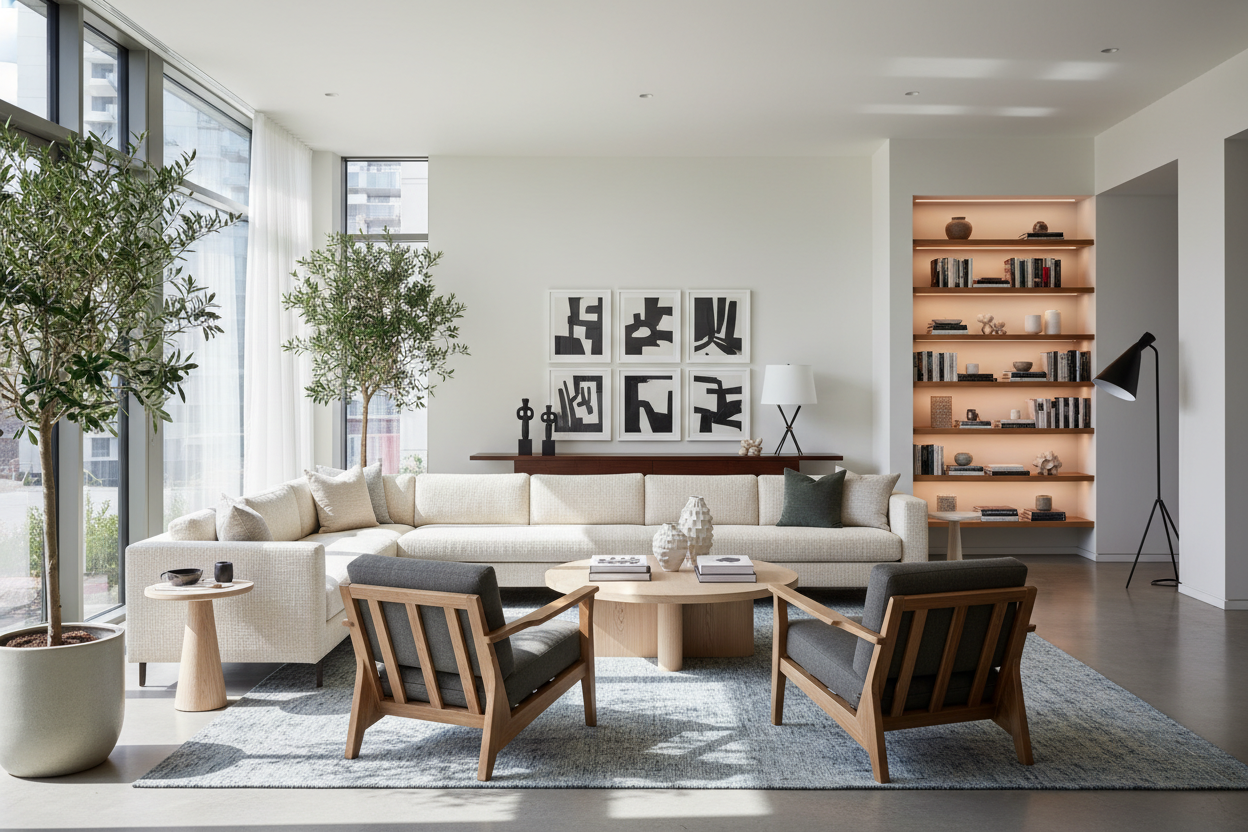
There is arguably no piece of furniture more critical to a home's ecosystem than the sofa. It is the architectural anchor of a living area, dictating the flow, function, and formality of the space. Yet, I often see clients paralyzed by the sheer volume of choices, oscillating between aesthetic desires and practical necessities. Whether you are furnishing a formal sitting area or a high-traffic family den, choosing the right rooms sofas requires balancing visual weight with structural integrity.
Quick Decision Guide: What Matters Most
If you are rushing through a showroom or browsing online, prioritize these four technical specifications to ensure longevity and comfort:
- Frame Construction: Look for kiln-dried hardwood frames (maple or oak) rather than plywood or particleboard to prevent warping over time.
- Suspension System: An 8-way hand-tied spring system is the gold standard for longevity, though high-gauge sinuous springs are a solid runner-up for modern silhouettes.
- Cushion Fill: High-resiliency (HR) foam wrapped in down provides the best balance of structure and 'sink-in' comfort; pure foam can feel stiff, while pure down requires constant fluffing.
- Fabric Durability: Check the 'double rub' count. For daily use, aim for 15,000+ rubs, or opt for performance weaves like Crypton for stain resistance.
Mastering Scale and Spatial Planning
The most frequent error in interior design isn't color choice; it is scale. A sofa that looks modest in a warehouse showroom can easily overwhelm a standard living room. When sourcing sofas for room layouts, you must account for 'negative space'—the breathing room around the furniture.
The Traffic Flow Rule
Ergonomics dictate that you need a minimum of 30 to 36 inches of clearance for walkways. If your sofa pushes this boundary, the room will feel claustrophobic regardless of how elegant the upholstery is. For smaller footprints, consider a sofa with a 'tight back' (no loose cushions) and narrow track arms. This maximizes seating width without expanding the physical footprint of the piece.
Material Selection: Beyond the Swatch
While velvet adds a luxurious tactile element and reflects light beautifully, it can be unforgiving in homes with pets. Conversely, linen offers a sophisticated, organic drape but is prone to wrinkling and staining.
The Performance Fabric Revolution
Gone are the days when 'performance fabric' meant scratchy outdoor canvas. Modern solution-dyed acrylics and polyester blends mimic the hand-feel of natural fibers like cotton and linen but offer molecular-level stain protection. For clients who entertain frequently, I almost exclusively specify these textiles. They maintain their saturation and texture even after aggressive cleaning.
Visual Weight and Silhouette
Consider the 'leg line' of the piece. A sofa with a skirt reaches the floor, creating a heavy, grounded look suitable for traditional or grand spaces. In contrast, a sofa on exposed legs allows light to pass underneath, increasing the perception of floor space. This is a crucial trick for making compact rooms feel expansive.
Lessons from My Own Projects: The Depth Dilemma
I learned a hard lesson early in my career regarding seat depth that I now pass on to every client. I once specified a gorgeous, deep-seated aesthetic sofa (44 inches deep) for a client's narrow Victorian row house. On the floor plan, it fit. In reality, it was a disaster.
The depth forced users to slouch significantly, which was perfect for napping but terrible for conversation. When the client hosted a book club, guests ended up sitting on the edge of the cushions because their feet couldn't touch the floor if they sat back. We had to replace it with a standard 38-inch depth piece within six months. Furthermore, getting that deep frame through the narrow hallway resulted in a scuff on the doorframe that required repainting. Now, I always measure the diagonal depth for delivery clearance and interview the client strictly about how they sit, not just where the sofa goes.
Creating a Cohesive Home
Investing in quality upholstery is a commitment to your daily comfort. By focusing on kiln-dried frames, appropriate scale, and performance textiles, you ensure that your investment serves your home for decades, not just seasons. Measure twice, check the rub count, and trust the architecture of your room to dictate the style.
Frequently Asked Questions
How much space should be between the sofa and the coffee table?
The ideal distance is between 14 and 18 inches. This is close enough to set down a drink comfortably but far enough to allow for adequate legroom when sitting or rising.
What is the difference between a sectional and a standard sofa for room flow?
Sectionals define a space and are excellent for lounging, but they can block traffic flow in open-concept homes. Standard sofas paired with accent chairs offer more flexibility and allow for better circulation in formal layouts.
How long should a high-quality sofa last?
A well-constructed sofa with a hardwood frame and quality suspension should last between 15 to 25 years. While fabric may need recovering after 10 years depending on use, the structural integrity should remain sound.

Dejar un comentario
Este sitio está protegido por hCaptcha y se aplican la Política de privacidad de hCaptcha y los Términos del servicio.