










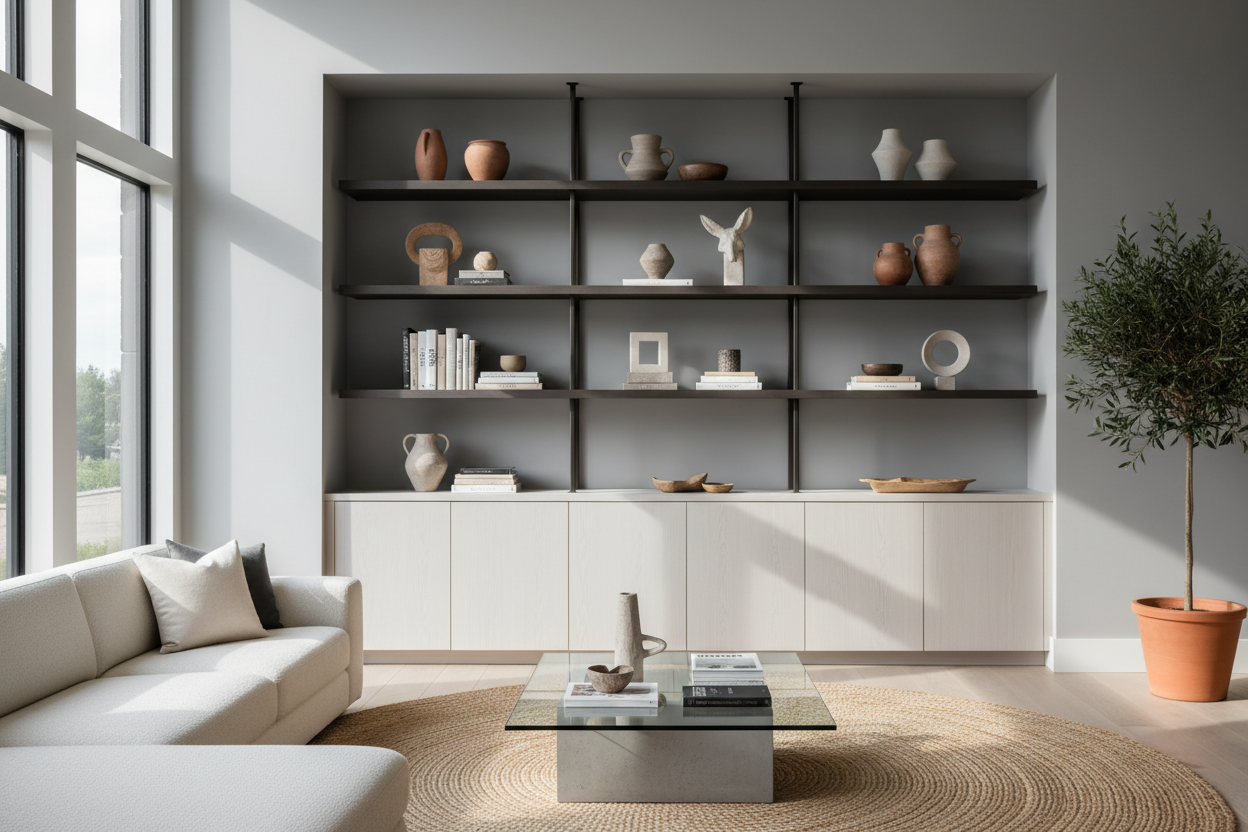
We all love the look of perfectly curated open shelving in magazines. But let's be honest about living in a real house: you have everyday items you simply need to hide. Board games with torn boxes, router cables, and stacks of utility bills don't exactly make for a beautiful display. This is exactly why a shelf with cabinets is one of my most frequently recommended pieces of furniture.
By combining open display space on top with closed storage on the bottom, you get the best of both worlds. You can show off your favorite ceramics and art books while hiding the visual noise behind solid doors. In this guide, I will walk you through how to choose, size, and style this hybrid storage solution so it looks intentional and fits your daily life.
Quick Decision Guide: Why Hybrid Storage Works
- Conceals visual clutter: Hide electronics, paperwork, and kid's toys while keeping decorative items at eye level.
- Anchors the room: The solid cabinet base adds necessary visual weight to the lower half of your wall, preventing the piece from looking top-heavy.
- Versatile placement: Works beautifully in dining rooms as a modern china cabinet, or in home offices for hiding bulky printers.
- Requires clearance planning: You must account for the swing radius of the lower cabinet doors when measuring tight spaces.
Mastering Proportions in North American Homes
Finding the Right Scale
Scale is everything when introducing a large vertical piece into a room. In a standard home with eight-foot ceilings, you want to leave at least 12 to 18 inches of breathing room between the top of your shelving and the ceiling. If the piece goes all the way up, it needs to be properly built-in with crown molding to look intentional. Otherwise, it just looks like it was crammed into the room.
Space Planning and Clearances
When placing a shelving with cabinet unit in a living room or office, pay close attention to the walkway. You need a minimum of 36 inches of clearance in front of the piece. This ensures you can comfortably open the lower doors and crouch down to retrieve items without backing into a coffee table or sofa.
Styling Shelves With Cabinet Bases Like a Pro
Curating the Open Sections
The secret to styling the upper shelves is mastering negative space. Do not pack every square inch with decor. Instead, group items in odd numbers and vary their heights. Lean a tall piece of framed art against the back panel, place a low stack of horizontal books next to it, and cap it with a textured ceramic bowl. This creates a natural triangle for the eye to follow.
Choosing the Right Finish
If your room already has a lot of heavy, dark furniture, consider a painted finish for your shelves with cabinet storage. A soft olive green or warm taupe can break up a sea of brown wood tones. Conversely, if your space is incredibly neutral and airy, a rich walnut or white oak unit brings much-needed warmth and organic texture to the room.
What to Look for in Construction
Because these pieces are inherently top-heavy, build quality is non-negotiable. Solid wood is excellent for longevity, but high-quality engineered wood with a thick wood veneer is actually more resistant to warping in humid climates. Pay close attention to the hardware. The hinges on the lower cabinets should be adjustable in at least three directions (up/down, left/right, in/out) so you can fix sagging doors over time.
Lessons from My Own Projects
In a recent suburban family room project, I specified a beautiful arched walnut shelf with cabinets at the base. It looked incredible on installation day, perfectly balancing the large sectional across the room. But I learned a hard lesson about modern hardware: the push-to-open cabinet mechanisms were entirely too sensitive.
Every time the client's golden retriever brushed past the base of the unit, the doors popped open. We eventually had to retrofit the cabinets with traditional edge pulls and standard soft-close hinges. It was a frustrating extra step, but it taught me that in high-traffic homes with pets or toddlers, traditional hardware is always more reliable than fancy touch-release systems.
Frequently Asked Questions
How do I clean and maintain a shelf with cabinets?
Dust the open upper shelves weekly with a microfiber cloth to prevent buildup on your decor. For the cabinet doors, especially if they have a matte or wood finish, use a slightly damp cloth with mild soap, wiping in the direction of the grain. Avoid harsh chemical sprays that can degrade the clear coat over time.
Are shelves with a cabinet base good for small apartments?
Absolutely. In a small space, vertical storage is your best friend. A tall unit draws the eye upward, making the ceilings feel higher, while the closed lower cabinets give you a place to hide unsightly essentials that would otherwise clutter your limited floor space.
What is the standard depth for the cabinet portion?
The lower cabinet base is typically deeper than the upper shelves, usually ranging from 15 to 20 inches deep. The upper shelves usually step back to about 10 to 12 inches deep. This staggered depth keeps the piece from feeling imposing while still providing deep storage for larger items below.

Dejar un comentario
Este sitio está protegido por hCaptcha y se aplican la Política de privacidad de hCaptcha y los Términos del servicio.