










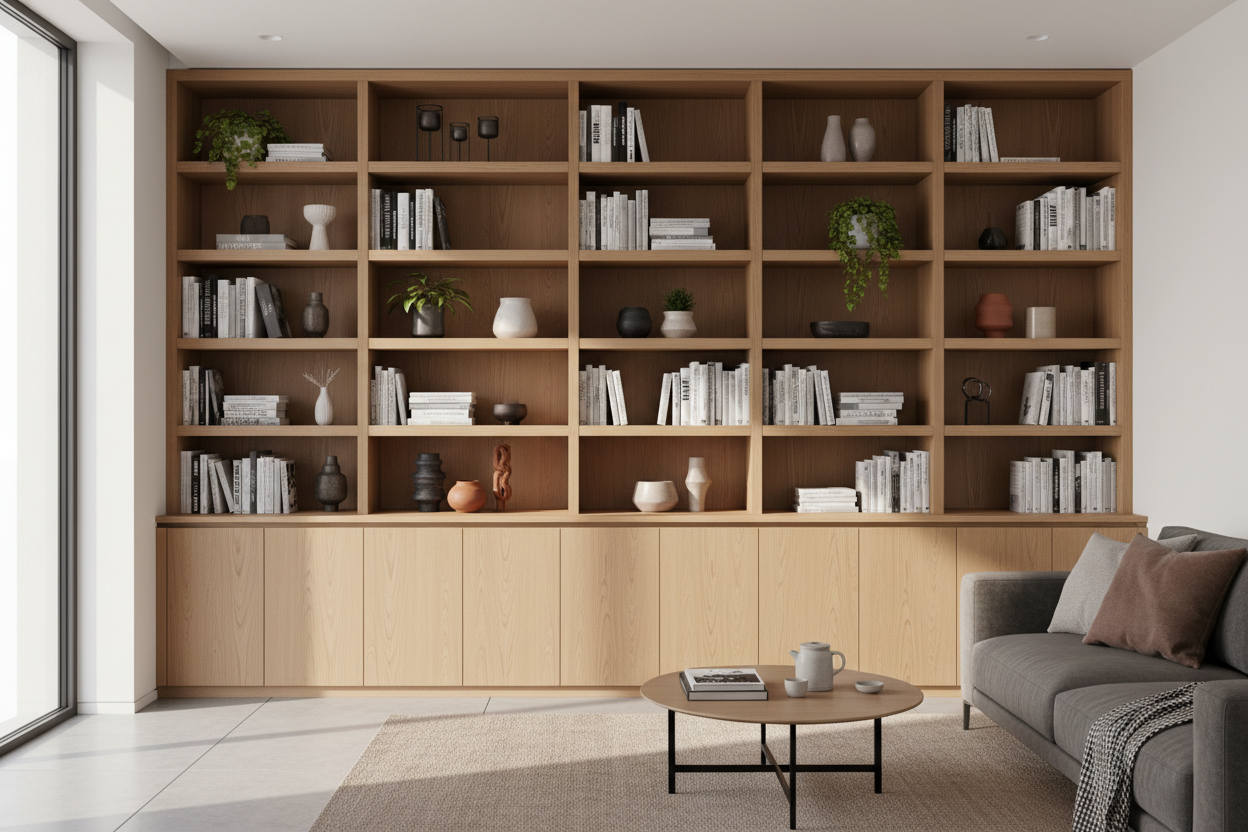
We have all walked into a living room that feels more like a warehouse than a home. The culprit is rarely the sofa or the rug—it usually comes down to how we handle our everyday items. When you rely entirely on open bookcases, a room can quickly feel chaotic. Conversely, when you use massive, solid armoires, the space feels heavy and closed off. Striking the right balance with shelves and cupboards is the secret to a room that feels both curated and livable. In this guide, I will walk you through how to mix open display areas with concealed storage to give your home a custom, high-end finish without the architectural price tag.
Quick Decision Guide
- Keep heavy or purely functional items in the lower third of your wall using a solid storage cupboard.
- Reserve open shelving at eye level for curated decor, books, and plants to maintain visual lightness.
- Maintain a 60/40 ratio: 60 percent closed cabinetry to 40 percent open display to easily hide everyday clutter.
- Ensure a minimum of 36 inches of clearance in front of any base cabinets so doors can open fully without hitting other furniture.
Space Planning & Layout
Getting the layout right is mostly about managing visual weight. A solid block of cabinetry from floor to ceiling can make a standard eight-foot room feel cramped. On the flip side, floating shelves on a massive blank wall can look disproportionately small and unmoored.
The 60/40 Rule for Balance
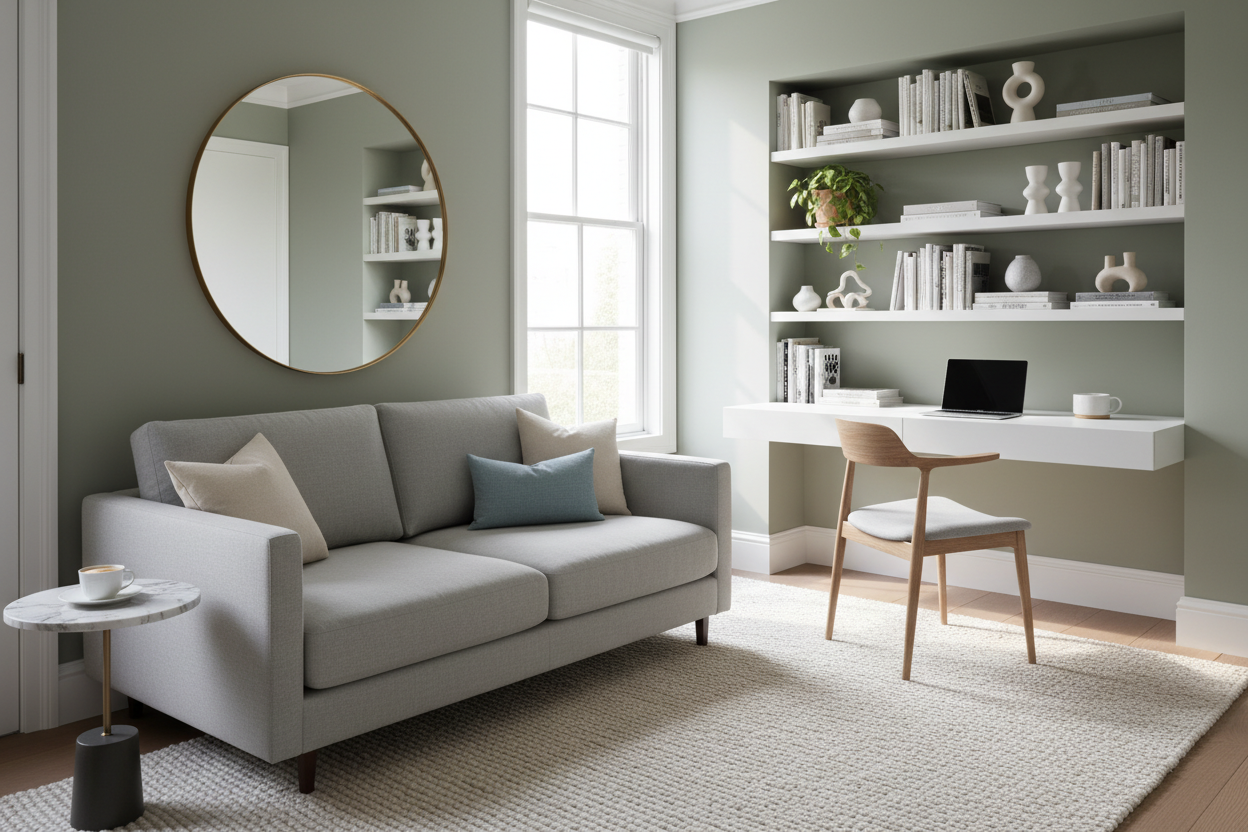
In most North American family rooms and home offices, I recommend anchoring the room with closed base cabinets and floating shelves above them. This gives you the ideal mix. You get a deep storage cupboard for board games, routers, and ugly paperwork, while reserving the upper half of the wall for display. This setup naturally draws the eye upward, making the ceilings feel higher and the room more expansive.
Style & Coordination
The transition between your open and closed storage dictates the style of the room. For a transitional or modern farmhouse look, consider adding shaker-style doors to your base units and thick, floating wood shelves above. If you prefer a mid-century aesthetic, a standalone storage shelf cupboard unit in rich walnut with sliding bypass doors offers a sleek, period-appropriate silhouette.
Creating a Faux Built-In Look
You do not need a custom carpenter to get a high-end look. By purchasing modular units and adding a continuous baseboard or crown molding, you can trick the eye. Painting the entire unit—both the open upper sections and the cupboard storage below—the same color as your walls creates a seamless, architectural feel that instantly anchors the room.
Material & Build Quality
Storage furniture takes a beating. While upper displays can often be made of lighter materials or engineered wood with a good veneer, the lower cabinets need to withstand daily use, especially in homes with kids and pets.
Why Hardware Matters Most
The biggest giveaway of cheap furniture is not always the wood—it is the hinges. Always look for soft-close, adjustable European hinges on any lower cabinet. Over time, doors will sag due to gravity and use. If your hinges are not adjustable, those uneven gaps will become a permanent eyesore. Additionally, ensure the interior platforms are adjustable to accommodate everything from tall vases to stacks of magazines.
Lessons from My Own Projects
Early in my career, I designed a stunning home office for a client in Chicago. They insisted on wall-to-wall open shelving because they loved the look of a traditional library. It looked incredible on installation day. But six months later? It was a nightmare. Without any concealed storage, every printer cartridge, loose cable, and messy stack of mail was on full display. The room always felt untidy, no matter how much they cleaned.
We ended up retrofitting the bottom thirty inches with custom doors to hide the functional mess. It was an expensive lesson in practicality. Now, I refuse to design a primary living space or office without incorporating at least some closed lower cabinets. Open areas are for the things you want to see; closed units are for the things you need to use.
Frequently Asked Questions
How deep should a base cabinet be?
For general living room storage, a depth of 15 to 18 inches is ideal. This is deep enough to hold standard board games, vinyl records, and electronics without intruding too far into your floor plan. The open tiers above should be shallower, typically 10 to 12 inches deep.
Should the upper and lower sections match exactly?
They do not have to match perfectly, but they should coordinate. A popular and effective approach is a two-tone look: painted lower cabinets grounded in the space, paired with stained white oak floating shelves above to add warmth and texture.
How do I style open areas without looking messy?
Embrace negative space. Do not pack every inch with objects. Group items in odd numbers and vary the heights. Mix books—some stacked horizontally, some vertically—with organic shapes like ceramic bowls or trailing plants to soften the rigid lines of the millwork.


Dejar un comentario
Este sitio está protegido por hCaptcha y se aplican la Política de privacidad de hCaptcha y los Términos del servicio.