










There is a distinct, sterile chill that accompanies standard office design—the glare of overhead fluorescents, the cold touch of laminate, and the utter lack of personality. As we spend nearly a third of our lives working, the environment we inhabit dictates not just our productivity, but our mental well-being. The challenge lies in balancing professional function with residential comfort. If you are looking for how to make your work office more homey without sacrificing efficiency, you need to shift your approach from decoration to curation.
Key Elements for a Residential Workspace
- Lighting Temperature: Switch from cool 5000K bulbs to warm 2700K-3000K LEDs to mimic living room ambiance.
- Textural Layering: Introduce tactile materials like wool, linen, or velvet to soften hard architectural lines.
- Organic Silhouettes: Choose furniture with curved edges to break up the rigid boxiness of file cabinets and monitors.
- Grounding Rugs: Use area rugs to anchor the desk and dampen acoustic reverberation.
- Biophilic Accents: incorporate living plants to improve air quality and add visual vitality.
The Foundation: Materiality and Texture
The quickest way to strip the corporate feel from a room is to eliminate the abundance of plastic and metal. In high-end residential design, we prioritize honest materials. Swap a melamine desk for solid wood or a high-quality veneer with a visible grain. The visual complexity of wood grain acts as a natural stress reliever.
Don't stop at the furniture. Window treatments are often overlooked in home offices. Replace aluminum blinds with Roman shades or linen drapes. This adds vertical softness and helps control the acoustics, preventing that hollow "echo" often found in spare rooms.
Lighting: The Mood Setter
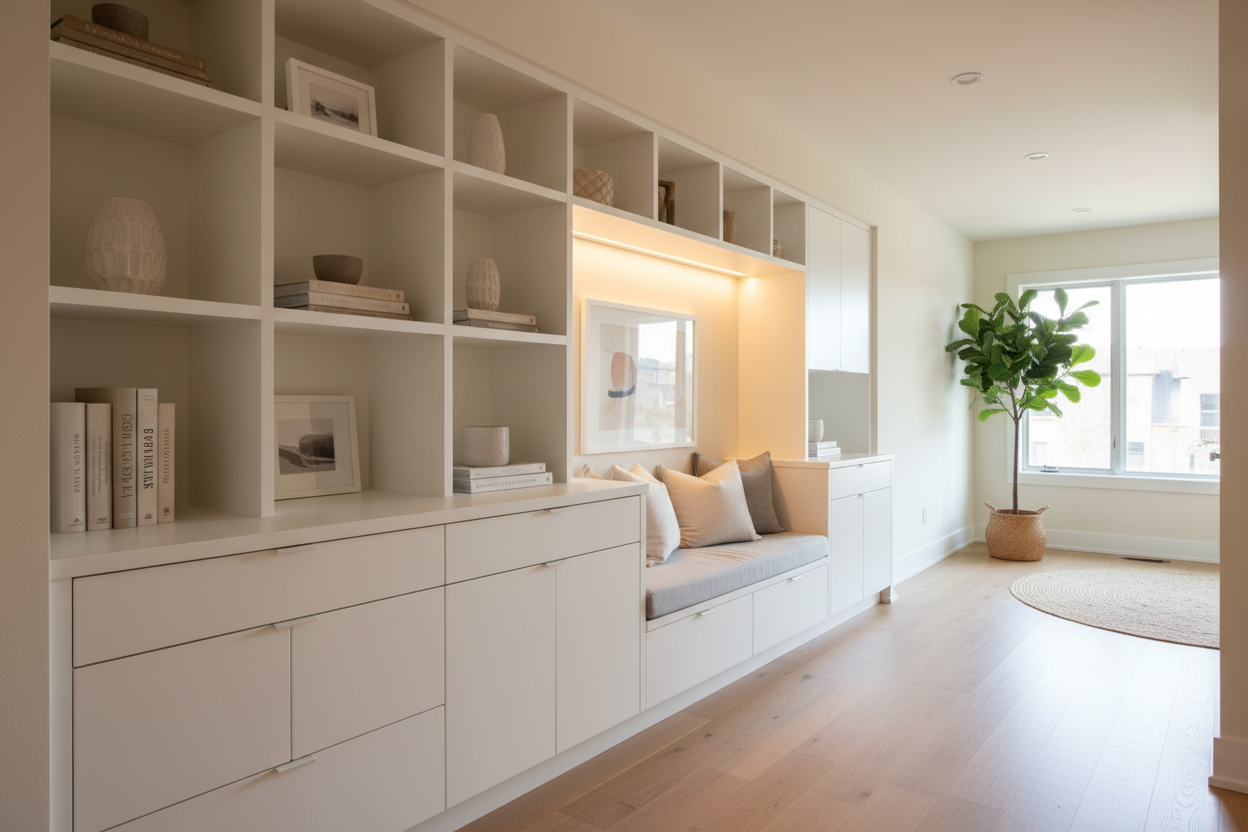
Corporate offices are lit for maximum visibility; home offices should be lit for focus and calm. Relying solely on a ceiling fixture creates harsh shadows that fatigue the eyes. Instead, layer your lighting. Start with ambient light (a floor lamp with a linen shade), add task light (a desk lamp with a directed beam), and consider accent light (a small picture light over artwork). This creates pockets of illumination that feel intimate rather than institutional.
Curating the Micro-Environment
While the room sets the mood, your immediate vicinity dictates your workflow. Learning how to make your work desk more homey comes down to accessories that serve a purpose but look beautiful. Ditch the wire mesh pencil cup for a ceramic tumbler or a vintage brass vessel. Use a leather or felt desk pad; not only does this protect the wood surface, but it also provides a soft resting place for your wrists, warming the space immediately upon touch.
Visual Balance and Layout
In commercial spaces, desks are often pushed against walls or clustered in pods. To elevate the design, consider "floating" your desk in the center of the room or perpendicular to a wall. This command position allows you to see the door and engage with the rest of the room, rather than staring at blank drywall. Anchor this floating arrangement with a vintage or high-pile rug. The rug defines the zone and introduces pattern and color, bridging the gap between "workspace" and "living space."
My Personal Take on how to make your work office more homey
I learned a hard lesson about "aesthetic vs. function" during a project for a client who wanted a moody, library-style office. We sourced a stunning, deep-pile Moroccan wool rug to sit under her executive chair. It looked incredible in the photos.
However, two weeks later, she called me. The casters on her ergonomic chair were getting hopelessly tangled in the wool fibers, and the friction made it impossible to slide in and out of the desk. We had to swap it for a low-pile, vintage-style flatweave. It was a reminder that "homey" shouldn't mean impractical. If you want the soft look, ensure your chair creates enough friction to be stable but not so much that you're fighting the floor. Also, a specific detail regarding lighting: I personally use a lamp with a dimmer switch right next to my monitor. As the sun goes down, I lower the lamp intensity to match my screen brightness—this simple habit has saved me from more headaches than any ergonomic chair ever has.
Conclusion
Creating a workspace that feels like home isn't about cluttering your desk with knick-knacks; it is about introducing warmth, texture, and thoughtful lighting into a functional space. By layering soft materials and choosing furniture with soul, you build an environment that invites you to sit down and create.
Frequently Asked Questions
Can I use a dining chair as an office chair for a better look?
While a dining chair offers a better aesthetic, it generally lacks the lumbar support and adjustability required for 8-hour workdays. A better compromise is to choose a high-end office chair upholstered in residential fabric (like boucle or leather) rather than standard black mesh.
How do I manage cables without ugly plastic strips?
Cable management is the enemy of a homey aesthetic. Use Velcro ties to bundle cords behind the desk legs. For floating desks, I recommend a fabric cable sleeve that matches your wall color or desk finish to camouflage the wires running to the outlet.
What are the best plants for a low-light office?
If your office lacks natural light, opt for a ZZ plant or a Snake Plant (Sansevieria). Both have sculptural, architectural shapes that look sophisticated and require very little light or water to thrive.

Dejar un comentario
Este sitio está protegido por hCaptcha y se aplican la Política de privacidad de hCaptcha y los Términos del servicio.