










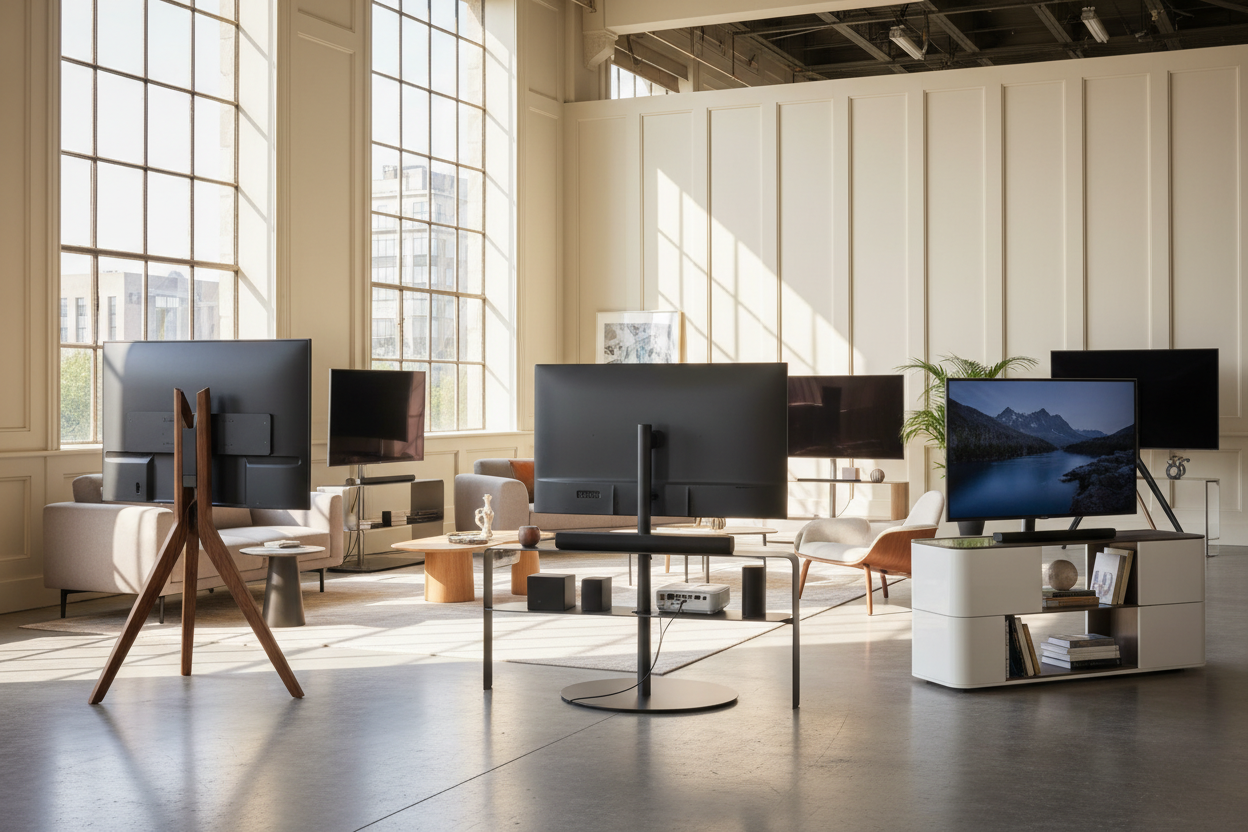
Setting up a home studio, a corporate presentation, or a pop-up event? You probably know the struggle. You spend hours perfecting your visual presentation, only to mount your screen on a wobbly, unsightly metal pole that ruins the entire aesthetic. Whether you are designing a sleek home office or outfitting a commercial space, finding reliable stands for tv monitors is harder than it looks.
I have spent over 15 years sourcing furniture for both residential lofts and commercial pop-ups, and I can tell you that the right television display stand makes or breaks your space's visual flow. A bad one is a tripping hazard; a good one feels like integrated architecture. Today, we are going to walk through exactly what to look for when buying a display stand for tv setups, from cable management to structural stability.
Quick Decision Guide
- Check the base footprint: A flat, heavy steel base prevents tripping in high-traffic areas much better than wide tripod legs.
- Prioritize hollow columns: Exposed wires look messy. Always choose a tv display stand with integrated cable management.
- Verify the VESA mount: Ensure the bracket matches your specific screen's mounting holes and weight capacity.
- Consider mobility: If you frequently reconfigure your space, look for tradeshow tv stands with heavy-duty, lockable casters.
Nailing the Layout with Your TV Display Stands
Trade Show Booths vs. Open-Concept Spaces
When you are planning a layout, the physical footprint of your tech matters immensely. A trade show booth with tv integration requires a minimal footprint to avoid eating into valuable square footage. In these tight quarters, a tv stand for trade show booth use needs a heavy, low-profile base that can slide under a rug or a display table. The same rule applies to modern, open-concept residential lofts where you might use a mobile stand instead of a traditional media console.
Clearance and Viewing Heights
Proportion and ergonomics dictate how comfortable your audience will be. For a seated audience in a living room or a small presentation space, the center of the screen should sit around 42 inches from the floor. However, if you are using tv stands for exhibitions where people are walking by, you need a taller profile. An exhibition tv stand should place the center of the monitor at eye level for a standing adult—typically around 60 inches high.
What Makes an Exhibition TV Stand Last?
Metal vs. Hybrid Builds
Material choice directly affects longevity, especially if you are moving the piece frequently. Aluminum monitor stands for trade shows are incredibly lightweight, making them easy to ship and carry. However, aluminum can dent easily and sometimes lacks the necessary ballast. Steel, on the other hand, provides the low center of gravity needed to safely support a heavy trade show monitor display. I often recommend hybrid builds: a solid steel base plate paired with an aluminum vertical column.
Finish and Wear
A glossy black finish might look sharp online, but it will show every single fingerprint and dust particle under bright event lighting. Instead, opt for a matte or powder-coated finish for your tv stand for presentations. Powder coating is highly resistant to scratches, which is crucial if your event tv stand is constantly being assembled, disassembled, and thrown into the back of a van.
Making Tech Look Intentional
Hiding the Clutter
A tv presentation stand shouldn't look like temporary construction scaffolding. The biggest giveaway of a cheap setup is a rat's nest of HDMI and power cables dangling down the back. When sourcing tv stands for trade shows, I exclusively look for models with wide, hollow vertical columns. This allows you to drop all cabling down the center, keeping the silhouette clean and professional.
Designer's Honest Take
A few years ago, I designed a pop-up commercial space for a high-end real estate client. I ordered a generic monitor stand for trade show use online because it had a beautiful, minimalist silhouette in the photos. I learned the hard way that a hollow aluminum base might be a dream to carry, but the moment someone brushed past the trade show display with monitor, the whole 55-inch setup wobbled terrifyingly.
We ended up having to weigh down the base with heavy sandbags, which I then had to frantically hide under a custom faux-wood pedestal I built on site. Since that day, I never buy a tv stand for exhibition without checking the exact weight of the base plate. If the base doesn't weigh at least 30 to 40 pounds, it is not stable enough for a high-traffic environment. It might be heavier to transport, but the peace of mind is non-negotiable.
Frequently Asked Questions
What size monitor is best for a trade show tv stand?
For most standard booths, a screen between 43 and 55 inches is the sweet spot. It is large enough to draw attention and display readable text, but not so heavy that it compromises the stability of standard display monitors for trade shows.
How do I hide cables on an event tv stand?
Always purchase a stand with integrated cable management (hollow poles). If your current tradeshow monitor stand lacks this, use black velcro cable sleeves to bundle the wires tightly against the back of the pole. Avoid zip ties, as they look cheap and have to be cut off after every use.
Are tv stands for exhibitions easy to transport?
It depends entirely on the design. If you need portability, look for modular trade show tv display stands that break down into three or four pieces. Many premium models come with their own padded carrying cases, which is essential to prevent the metal components from scratching each other in transit.


Dejar un comentario
Este sitio está protegido por hCaptcha y se aplican la Política de privacidad de hCaptcha y los Términos del servicio.