










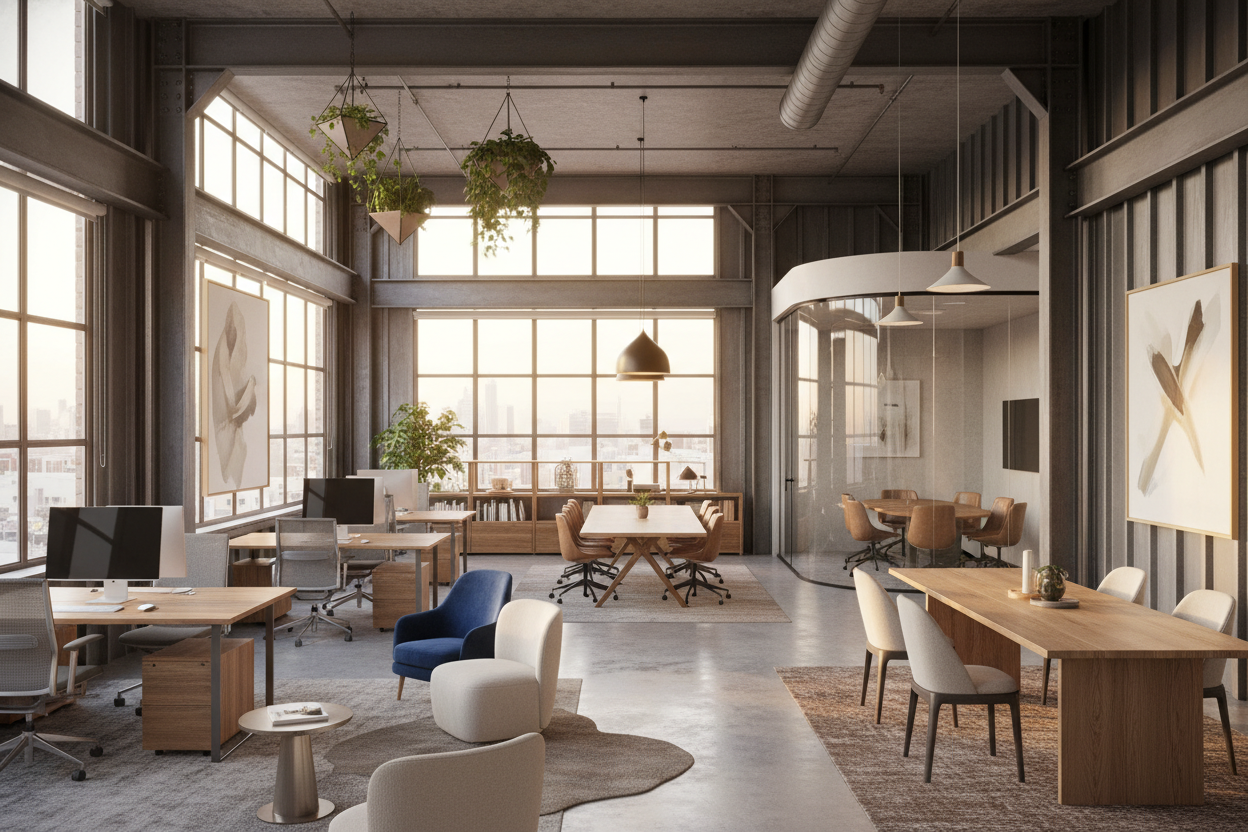
Walking into a newly constructed or converted workspace should feel inspiring, but often, the raw shell of a steel frame office building just feels cold, echoey, and intimidating. The soaring ceilings and exposed I-beams are visually striking, yet they lack the tactile comfort necessary for focused, daily work.
Whether you are outfitting a large backyard creative studio or designing a multi-level commercial hub, the challenge remains the same: how do you take an inherently rigid structure and make it a place where people actually want to spend eight hours a day? In this guide, I will break down exactly how to bridge the gap between heavy structural engineering and human-centric comfort, focusing on acoustics, spatial planning, and material contrast.
Quick Decision Guide
- Contrast is mandatory: Pair rigid steel columns with organic materials like natural wood, wool, and leather to prevent the space from feeling like a warehouse.
- Acoustics require early planning: Hard surfaces bounce sound relentlessly. Budget for suspended baffles, thick rugs, and upholstered partitions from day one.
- Zone with lighting: Use low-hanging pendants and floor lamps to create intimate, human-scale work areas within massive open spans.
- Mind the thermal bridge: Steel conducts cold. Keep stationary desks and seating areas pulled slightly away from exposed exterior structural beams.
Balancing the Architecture: Materials and Textures
The biggest mistake you can make in a raw industrial space is trying to match the architecture with your furniture. If the bones of the building are heavy and metallic, your interior selections need to pull in the opposite direction.
The Rule of Opposites in Steel Office Design
Successful steel office design relies on tension. If you have exposed matte black steel trusses overhead, ground the floor with wide-plank white oak rather than polished concrete. Bring in seating upholstered in heavy bouclé, soft chenille, or distressed cognac leather. The goal is to create visual friction. When you place a plush, residential-style sofa against a corrugated metal wall, both elements look better because of the stark contrast.
Space Planning Without Constraints
One of the primary architectural benefits of a steel structure office is the clear-span interior. Without the need for dozens of load-bearing wood columns, you are left with a massive, uninterrupted footprint. While this sounds ideal, too much open space can trigger a sense of vulnerability for the people working inside.
Defining Zones in an Open Plan
You have to create rooms within rooms. I rely heavily on visual anchors—like large, 9x12 wool area rugs—to define collaborative seating areas. Bookshelves that are open on both sides work beautifully as room dividers, allowing natural light to filter through while giving employees a psychological barrier between the bustling kitchen area and quiet workstation zones. Always leave at least 48 inches of primary walkway clearance so the open-concept flow isn't compromised by cramped furniture placement.
The Invisible Design Layers: Acoustics and Light
You can buy the most beautiful furniture in the world, but if the space sounds like a gymnasium and is lit like a grocery store, no one will want to work there.
Solving the Echo in Steel Structure Office Design
Corrugated steel decking and concrete floors create an acoustic nightmare. Sound waves bounce endlessly. To fix this, you need soft, porous materials everywhere. I specify high-NRC (Noise Reduction Coefficient) acoustic felt panels mounted directly between the ceiling joists. On the floor level, use heavy drapery along the exterior windows—even if you do not need them for privacy, the fabric absorbs ambient chatter beautifully.
Designer's Honest Take
A few years ago, I took on a massive adaptive reuse project in Portland—a beautiful, exposed-beam steel workspace. The client wanted to keep everything as raw as possible. The matte black I-beams and exposed decking looked incredible in our initial photos. But I learned the hard way that a purely industrial shell is entirely impractical for daily use.
On our first walkthrough after move-in, a single dropped pen echoed loudly across the room. We had to retroactively install suspended acoustic baffles, which slightly compromised that unbroken ceiling plane the client loved. Furthermore, we discovered that steel columns act as thermal bridges. If you sat too close to an exposed perimeter beam in January, you could physically feel the cold radiating off the metal. I now refuse to place a permanent desk within three feet of an exposed exterior steel column, no matter how good it looks on the floor plan.
Frequently Asked Questions
How do you make a steel frame space feel warm?
Introduce organic materials like natural walnut, wool area rugs, and heavy linen drapery. The contrast between the rigid metal and soft, tactile fabrics immediately grounds the room and makes it inviting.
Are steel buildings noisy inside?
Yes, without proper intervention. Hard surfaces reflect sound waves. You will need to incorporate acoustic ceiling panels, upholstered furniture, and thick rugs to absorb the reverberation common in these structures.
What flooring works best with exposed steel?
Engineered wide-plank oak is a favorite. It brings necessary visual warmth to counteract the coldness of the metal, and the engineered core holds up well to the climate fluctuations in large open-span spaces.


Dejar un comentario
Este sitio está protegido por hCaptcha y se aplican la Política de privacidad de hCaptcha y los Términos del servicio.