










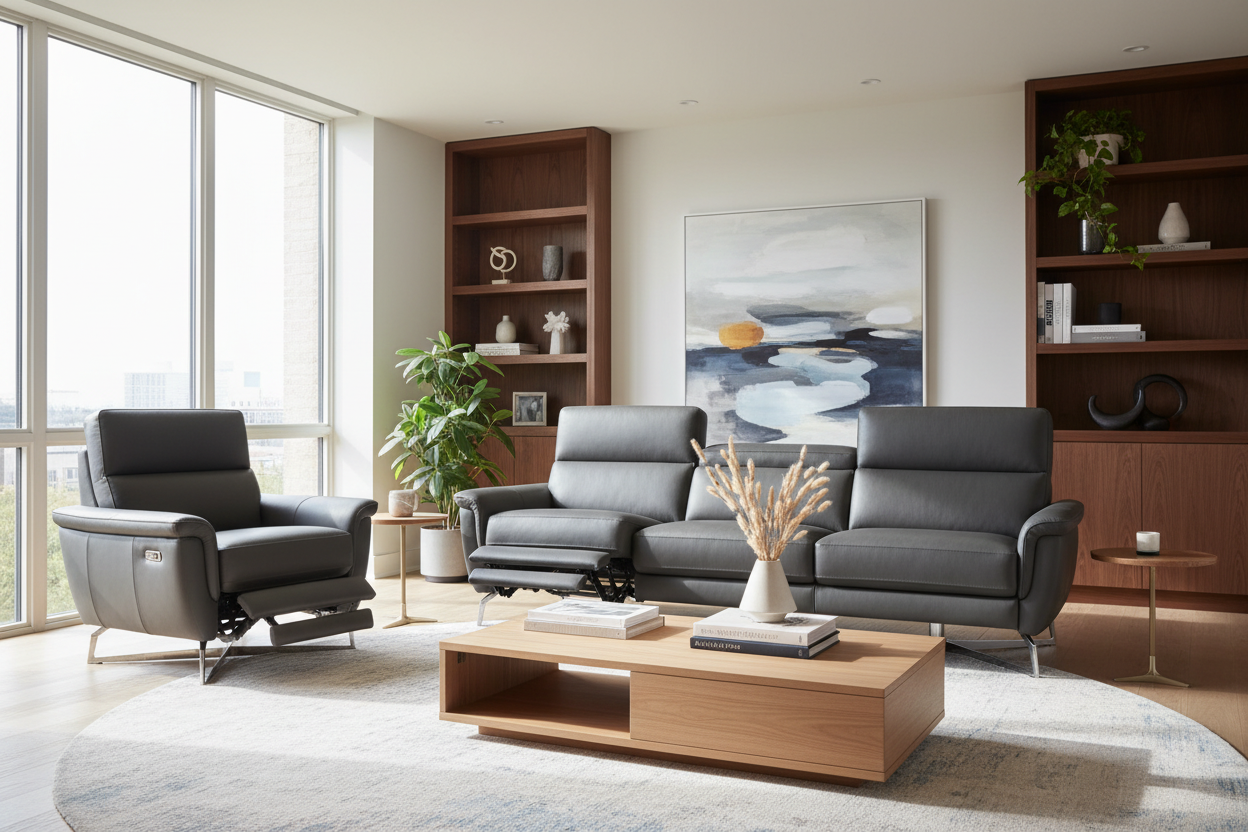
For years, the design community held a quiet prejudice against motion furniture. The assumption was that you had to sacrifice a sleek silhouette for comfort. However, the modern recliner sofa recliner has evolved significantly, shedding its bulky, overstuffed reputation for tailored lines and hidden mechanisms. As a designer, I constantly remind clients that you do not have to choose between a sophisticated living room and the ability to kick your feet up—you just need to know what to look for.
Key Features to Look For
- Wall Clearance: Determine if you need a "wall-hugger" (requires 2-4 inches) or a standard mechanism (requires 8-12 inches).
- Suspension System: Look for sinuous spring construction or 8-way hand-tied springs for longevity, rather than simple webbing.
- Upholstery Durability: Check the "double rub" count; aim for 50,000+ for high-traffic family rooms.
- Power vs. Manual: Power offers infinite positions but requires floor outlets; manual is cord-free but offers limited angles.
- Seat Density: High-resiliency foam wrapped in down provides the best balance of structure and softness.
Balancing Aesthetics and Mechanics
The biggest challenge with any furniture recliner sofa is the visual weight. Traditional motion furniture tends to look heavy and ground the room too aggressively. To counter this, I advise clients to look for models with legs raised off the floor. This negative space creates an illusion of lightness, making the room feel larger.
Material Selection
When selecting upholstery, consider how the fabric behaves when the mechanism is extended. Top-grain leather is a classic choice for a luxury aesthetic, but be aware that lower-quality bonded leathers will crack at the stress points where the footrest unfolds. For a softer, warmer tactile experience, performance velvets or heavy-weight linens can hide the mechanical nature of the sofa while offering superior durability against spills.
Space Planning & Layout Strategy
Placement is where most homeowners make critical errors. Unlike a static sofa, a recliner changes its footprint. You must account for the "pitch"—the distance the back moves when fully reclined. In open-concept floor plans, ensure you have at least 36 inches of clearance behind the sofa if it is floating in the room, or ensure you purchase a zero-clearance model if it is placed against a wall.
The Power Cord Dilemma
If you opt for a power recliner, you must plan for cable management. Nothing ruins a high-end design faster than a black power brick trailing across a beautiful rug. If floor outlets aren't an option, consider battery-pack upgrades, which are now available from most high-end manufacturers. These allow you to float the furniture recliner sofa in the center of a room without tethering it to a wall.
My Personal Take on Recliner Sofa Recliners
I want to share a specific detail that specs sheets won't tell you, based on a project I completed last year in a media room. We installed a stunning, Italian-leather power reclining sectional. It looked immaculate on day one. However, after six months, I visited the client and noticed something specific: "Leather Puddling."
Because reclining puts unique pressure on the seat leather (stretching it as you slide down), the leather had loosened slightly, creating a lived-in ripple effect. This isn't a defect; it's a characteristic of natural hide. But, had I not warned the client that this patina would develop, they might have been upset. Also, be warned: the gap between the seats in a sectional recliner is a magnet for phones and remotes. It sounds trivial, but digging a remote out of a motorized track is a frustration you want to avoid—I now recommend styles with sewn-in fabric guards between the cushions for this exact reason.
Conclusion
Investing in motion furniture is an investment in your downtime. By focusing on the mechanical quality, the visual weight of the frame, and the practicalities of your layout, you can secure a piece that supports your back without compromising your home's design language. Comfort is the ultimate luxury, provided it is planned correctly.
Frequently Asked Questions
How much space do I need behind a reclining sofa?
It depends on the mechanism. "Wall-huggers" or zero-gravity models need as little as 2 to 4 inches. Standard reclining mechanisms typically require 8 to 12 inches of clearance to fully extend without hitting the wall.
Are power recliners better than manual ones?
Power recliners offer infinite adjustability and are generally easier to operate for people with mobility issues. However, manual recliners are lighter, have fewer electrical components that can fail, and do not require proximity to a power outlet.
Can I put a slipcover on a recliner sofa?
Generally, no. Because the footrest and backrest move independently, standard slipcovers will tear or bunch up in the mechanism. If you need protection, look for custom-fitted covers specifically designed for motion furniture, or opt for performance fabrics that resist staining.


Dejar un comentario
Este sitio está protegido por hCaptcha y se aplican la Política de privacidad de hCaptcha y los Términos del servicio.