










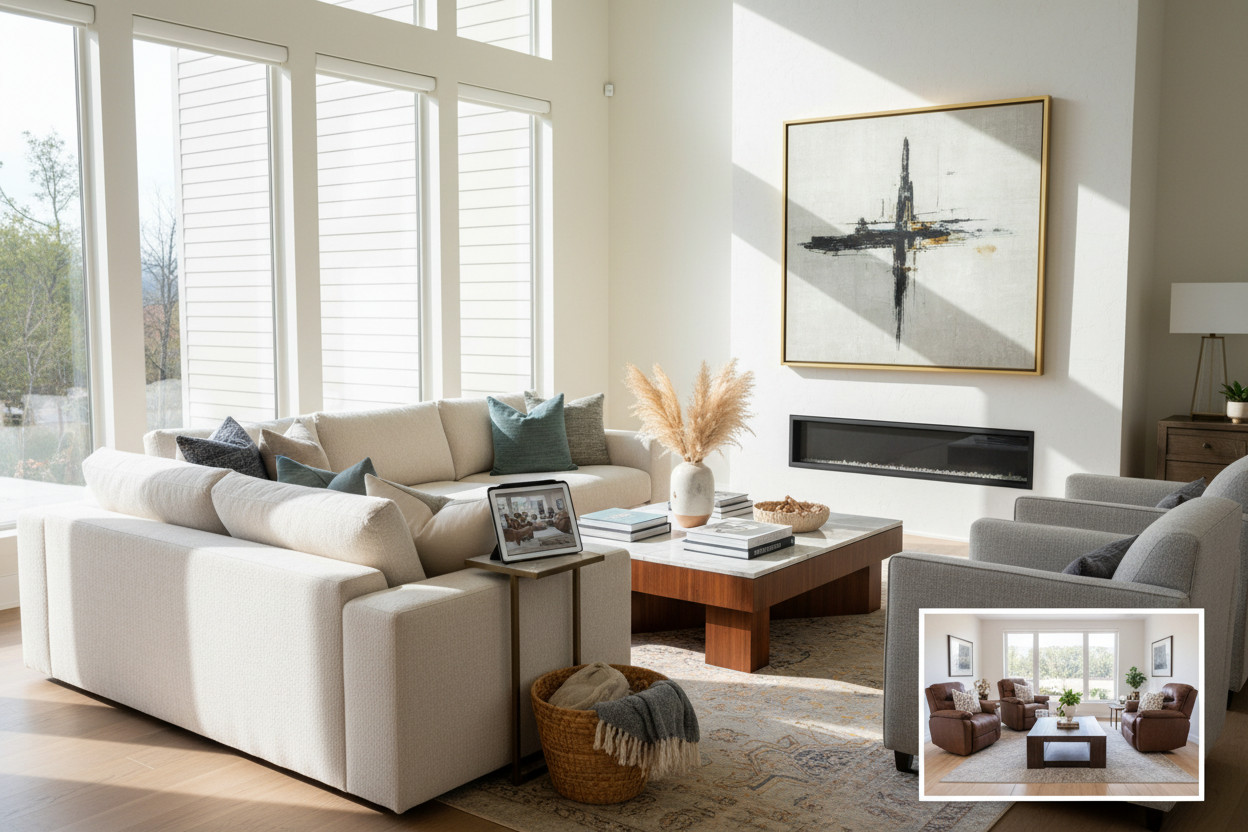
We have all been there: seduced by a perfectly lit, high-contrast image on a screen, only to have the actual piece arrive looking lackluster or fitting poorly in our space. As a designer, my job is often to act as the filter between a highly stylized living room furniture photo and the reality of daily life. The disconnect between a staged editorial shoot and a functional home is where costly mistakes happen. This guide will teach you how to look past the filters and assess the true quality, scale, and suitability of the pieces you are admiring.
Key Features to Analyze in Design Images
Before you commit to a purchase based on visual inspiration, use this checklist to decode what you are actually seeing:
- Scale and Proportion: Compare the furniture height against standard architectural elements like window sills or electrical outlets visible in the shot.
- Texture and Weave: Zoom in to identify if the fabric is a flat weave (prone to wrinkling) or a heavy pile (durable but heat-retentive).
- Joinery Details: Look for visible seams or welting on upholstery, which indicate construction quality.
- Lighting Context: Determine if natural or artificial light is altering the color fidelity of the wood or fabric.
Decoding the Visuals: Material vs. Marketing
When you are looking at a picture of furniture for living room layouts, you are often looking at a "hero shot." These are composed to highlight the silhouette but often hide the construction. To judge quality visually, look at how the light hits the surfaces. Real solid wood absorbs and refracts light differently than veneer or laminate, which tends to have a uniform, plastic-like sheen.
Furthermore, pay close attention to the "drape" of the upholstery. In a high-quality picture of living room furniture, the fabric should pull tight around corners without puckering. If a sofa looks slightly loose or wrinkled in a professional studio shot, it will look significantly worse after three months of actual sitting.
Space Planning: The Perspective Trap
Wide-angle lenses are standard in interior photography because they make spaces feel expansive. However, they also distort the size of the furnishings. When browsing sitting room furniture images, do not trust the negative space you see around the coffee table or sofa.
A common issue is the "low-profile" trend. In a photo, a low-back sofa looks sleek and unobtrusive. In a room with 10-foot ceilings, that same sofa can look like a dollhouse miniature. Always cross-reference the visual impression with the spec sheet dimensions, specifically seat height and overall depth.
Color Theory and Ambient Reflection
Colors in room furniture images are rarely 100% accurate due to color grading. A grey velvet sofa might read as cool blue in a photo taken during the 'blue hour' (twilight) but appear muddy warm grey in your living room's 2700K warm white bulb lighting. Always request a physical swatch, using the photo only for silhouette inspiration.
Lessons from My Own Projects
I learned the hard way that a photo captures a moment, not a lifestyle. I once sourced a stunning, sculptural bouclé armchair for a client based on a high-resolution editorial spread. In the photo, the texture looked rich and inviting.
However, the photo didn't convey the tactile reality or the maintenance. Once it arrived, we realized the "nubby" texture that looked so good in the lighting was actually a magnet for denim dye transfer. Within two weeks, the pristine white chair had blue hues on the seat. Furthermore, the photo was taken from a low angle, making the chair look substantial. In reality, the seat depth was so shallow that my 6-foot-tall client felt like he was perched on a stool. Now, I never trust a visual without seeing a video of a person actually interacting with the piece to gauge the ergonomics.
Conclusion
Using photography for inspiration is the first step in the design process, not the last. By learning to analyze the technical details hidden within a beautiful image, you can curate a living room that feels as good as it looks. Trust your eye, but verify with your tape measure.
Frequently Asked Questions
How can I tell if furniture is comfortable just from a photo?
Look at the "crown" of the cushion. If the seat cushion looks perfectly flat and rigid, it is likely firm foam. If it has a slight dome or looks softer at the edges, it likely contains down or a down-wrap, which offers a sink-in comfort level.
Why does the furniture size look different in my room than in the picture?
Studio photos often use "floating" layouts in massive warehouses with false walls. This lacks the visual compression of a real home. Always tape out the dimensions on your floor using painter's tape before buying.
Are interior design photos color-accurate?
Rarely. Between professional editing, studio lighting, and your own screen's calibration, the color can shift dramatically. Use the image to judge the palette harmony, but rely on physical fabric samples for the specific hue.


Dejar un comentario
Este sitio está protegido por hCaptcha y se aplican la Política de privacidad de hCaptcha y los Términos del servicio.