










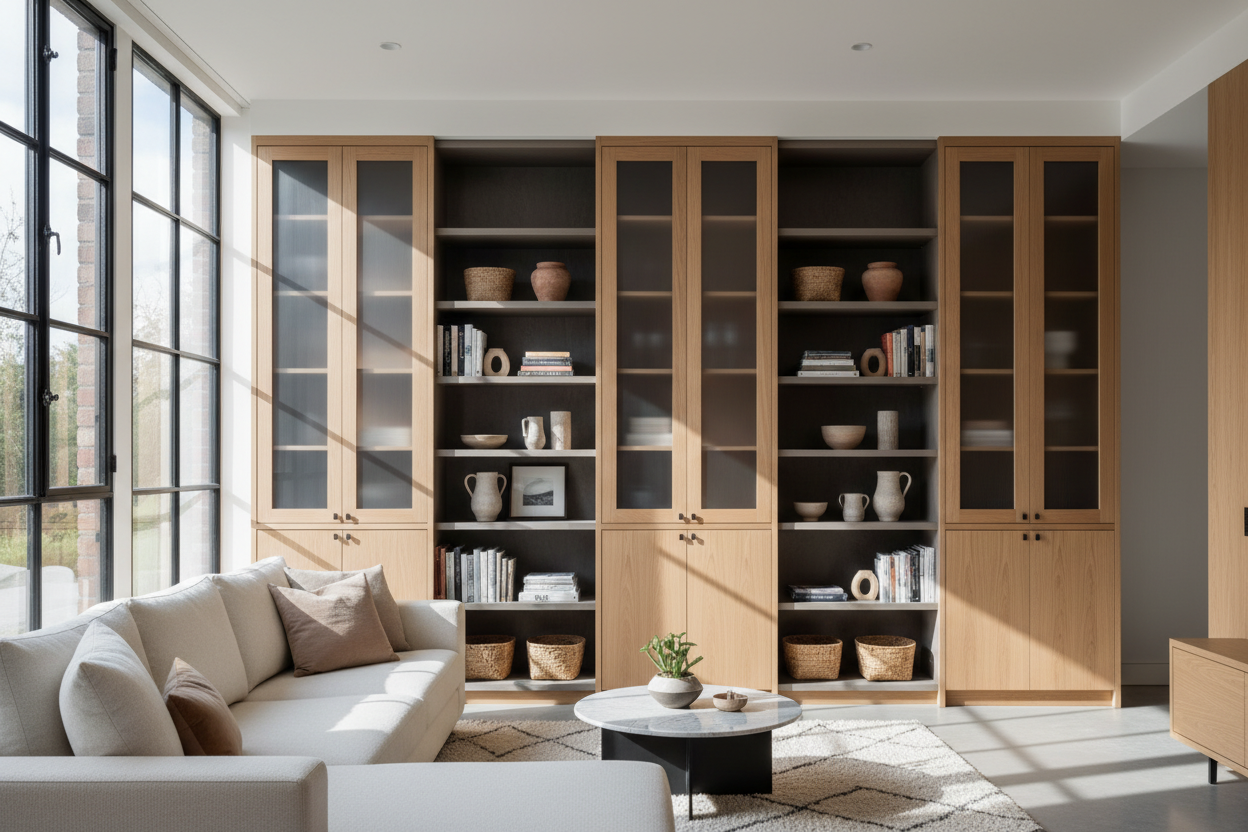
We've all stared at that one awkward wall. It feels too empty for just artwork, but throwing a bulky console table there only creates a dumping ground for mail and keys. You want storage, but you also want a display area that doesn't feel heavy. This is exactly where cabinets with shelves shine. They bridge the gap between hidden utility and curated display. By the end of this guide, you will know exactly how to size, place, and style these pieces so they look intentional rather than like an afterthought.
Quick Decision Guide
- Match height to ceilings: Keep tall furniture at least 12 to 18 inches below the ceiling to preserve negative space and keep the room from feeling cramped.
- Check shelf depth: 12-inch deep shelves are ideal for books and decor, while 15 to 18 inches work best for larger baskets, dinnerware, or vinyl records.
- Balance hidden vs. open: Aim for a 60/40 ratio of closed cabinet space to open shelving to hide everyday clutter while displaying curated items.
- Anchor the piece: Always secure tall units to the wall to prevent tipping, especially on carpeted floors or in homes with children.
Space Planning: Nailing the Visual Weight
Finding the right proportion is the hardest part of selecting storage furniture. A piece that looks perfectly scaled in a massive showroom can easily overwhelm a standard suburban living room.
Clearance and Walkways
Before bringing a large piece into your home, tape out its footprint on the floor. You need a minimum of 36 inches of clearance in front of any cabinet with shelf space hidden behind outward-swinging doors. If you are placing it in a narrow hallway or a tight dining room, consider sliding doors to save floor space. Pay attention to the silhouette; a piece with raised legs feels lighter and allows the eye to travel underneath, which is a crucial trick for small apartments.
Vertical Scale
Do not be afraid to go tall. Utilizing vertical space draws the eye up and makes a room feel larger. However, leave breathing room at the top. If your ceilings are eight feet high, cap your furniture height around 78 inches. This negative space prevents the room from feeling top-heavy.
Material Matters: Build Quality and Longevity
Your lifestyle should dictate your material choice. While we all love the look of natural materials, they require different levels of care and environmental stability.
Solid Wood vs. Engineered Wood
Solid wood offers unmatched longevity and can be refinished, but it reacts to humidity changes. If you live in a climate with extreme seasonal shifts, solid wood doors might warp slightly over time. High-quality engineered wood with a thick wood veneer often provides better stability for the core structure of cupboards with shelves, ensuring doors and adjustable shelves remain perfectly aligned year after year.
Styling Your Shelf Cabinet Unit
Once the piece is in your home, the next challenge is styling it without creating visual chaos. The goal is to curate, not clutter.
The Rule of Thirds
When styling the open sections of a shelf cabinet unit, I rely on the rule of thirds. Dedicate one-third of the space to books, one-third to sculptural objects or greenery, and leave one-third completely empty. This negative space gives the eye a place to rest. Group items in odd numbers, and vary the heights to create a dynamic, layered look.
Designer's Honest Take: Lessons from My Projects
Early in my career, I specified a stunning, matte-black oak cabinet for a client's dining room. It looked incredible on installation day. But I learned a hard lesson about deep, open shelving. The shelves were 18 inches deep, and because the wood was so dark, the back half of the shelf became a black hole. Anything placed past the front six inches practically disappeared.
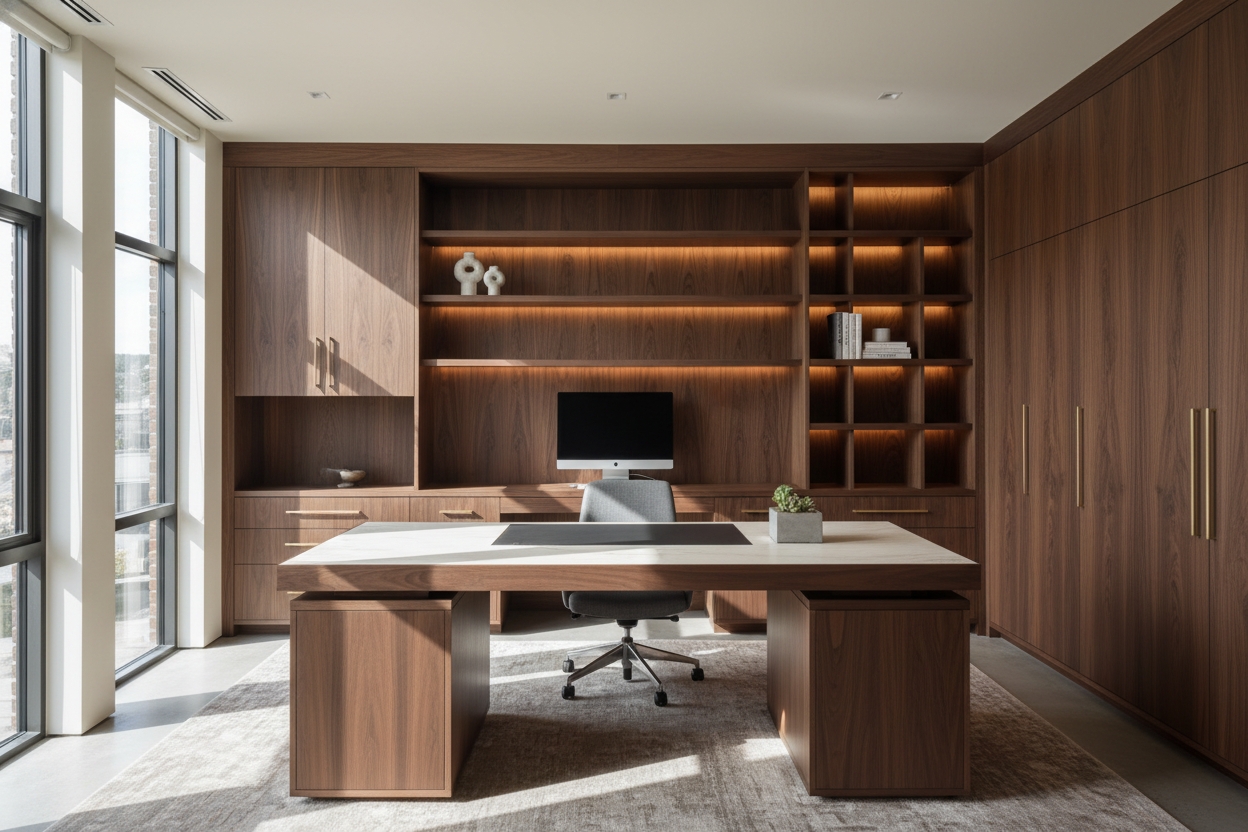
Now, I almost always recommend adding integrated LED strip lighting if the shelves are deeper than 12 inches or finished in a dark stain. Another honest caveat: glass-front lower doors are a mistake in homes with toddlers or energetic dogs. Stick to solid wood for the bottom half to hide the inevitable scuffs, smudges, and hidden toy stashes.
Frequently Asked Questions
How deep should cabinets with shelves be?
For general decor and books, a depth of 12 to 14 inches is standard. If you plan to store vinyl records, large serving platters, or bulky storage bins, look for a depth of 16 to 20 inches.
Are cupboards with shelves better than drawers?
Shelves offer more flexibility for tall or awkwardly shaped items like vases and small appliances. However, drawers are superior for organizing small, loose items. The best storage units combine both: drawers at waist level and shelves above and below.
How do I secure a tall unit to the wall?
Always use the anti-tip hardware included with the piece. Locate a wall stud using a stud finder, and drive a heavy-duty screw through the bracket directly into the wood. Plastic drywall anchors are not reliable enough for heavy furniture.

Dejar un comentario
Este sitio está protegido por hCaptcha y se aplican la Política de privacidad de hCaptcha y los Términos del servicio.