










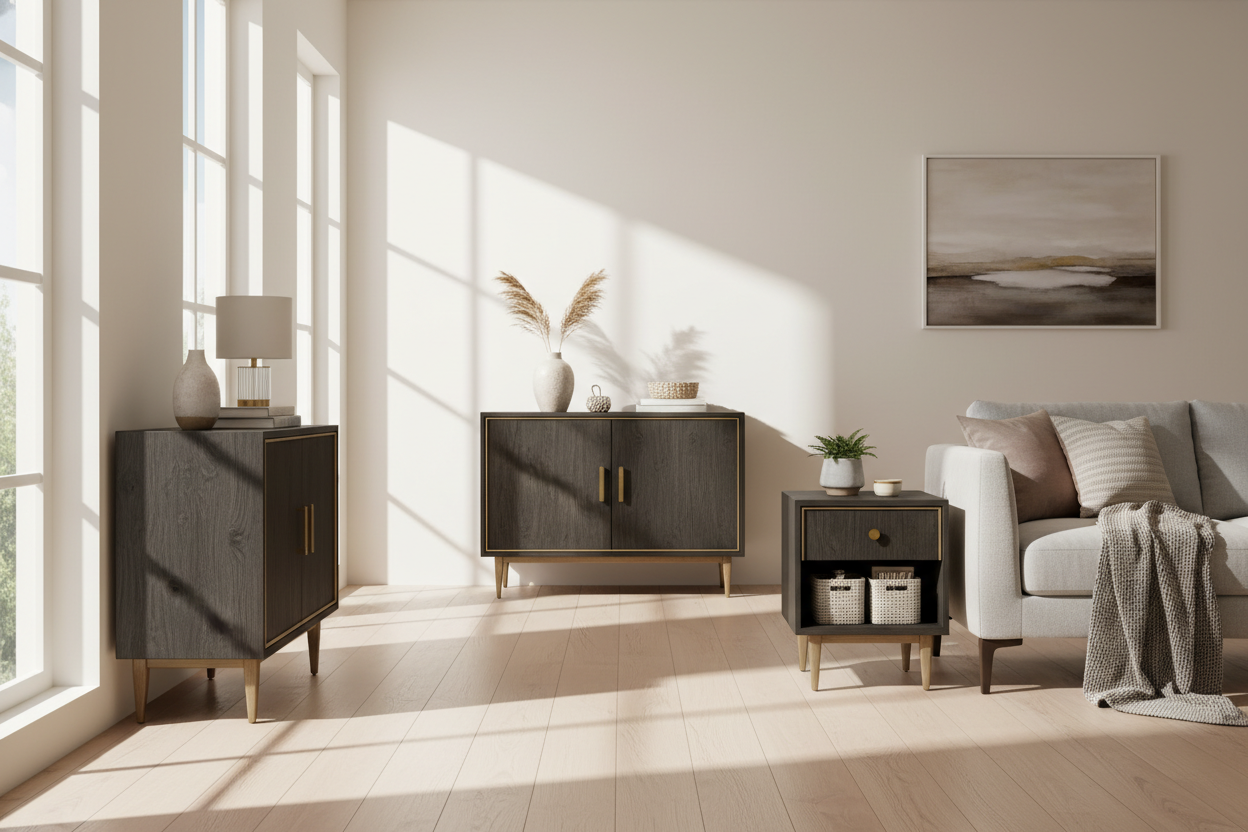
I spent three years pretending my entryway console table looked like a curated Pinterest board. It didn't. It looked like a graveyard for junk mail, half-used Chapsticks, and tangled dog leashes that I’d inevitably kick across the room every time I walked in. I thought the problem was my lack of discipline, but the real culprit was the furniture itself. Open shelving is a lie sold to us by people who don't actually live in their houses.
The moment I ditched that spindly table for a 22 inch wide accent cabinet, my blood pressure dropped ten points. Suddenly, the chaos had a door to hide behind. It turns out, you don't need more organization—you need better camouflage. If you’re currently drowning in visual noise, it’s time to stop looking for a 'slimmer' table and start looking for a cabinet that actually works for a living.
Quick Takeaways
- Open consoles are clutter magnets that look messy in real-life use.
- A 22-inch width provides enough presence without blocking narrow hallways.
- Depth is the most overlooked stat; aim for 12-15 inches for actual utility.
- Closed storage allows for a 'drop and go' routine that keeps your home looking clean.
The Open Console Table Is a Clutter Trap
Let’s be honest: those beautiful entryway tables with the thin metal legs and the single, perfectly centered vase are a scam. They are designed for people who have assistants to carry their mail and dogs that don't use leashes. For the rest of us, that open bottom shelf becomes a dusty purgatory for shoes you’re too lazy to put in the closet and Amazon boxes you haven't broken down yet.
The visual weight of an open table is also deceptive. Because you can see through it, your eyes are constantly drawn to the wall behind it—and the tangled mess of lamp cords and Wi-Fi routers lurking there. A cabinet solves this instantly. It provides a solid block of color or texture that grounds the room. Instead of seeing a pile of 'to-do' items, you see a deliberate piece of furniture. It’s the difference between a messy desk and a closed drawer; one stresses you out, and the other lets you breathe.
Why This Specific Measurement Is the Sweet Spot
When you're measuring for a small space, every inch feels like a mile. I’ve tried the ultra-small route before. A 20 inch wide cabinet is a lifesaver in a tiny kitchen nook or a bathroom alcove, but in an entryway or a living room, it often looks like a piece of dollhouse furniture. It lacks the 'heft' needed to feel like a permanent fixture. It looks like you bought it because you had to, not because you wanted to.
On the flip side, a 27 inch wide accent cabinet can be surprisingly intrusive. Most standard hallways are about 36 to 42 inches wide. Once you account for baseboards and the swing of a front door, that extra five inches of width can make the difference between walking comfortably and constantly bumping your hip. The 22-inch mark is the Goldilocks zone. It’s wide enough to hold a decent-sized lamp and a tray for your keys, but compact enough that it won't feel like a roadblock in your own home. It’s a deliberate choice that says 'I have taste' rather than 'I have no space.'
Navigating Depth: What Actually Fits Inside?
Depth is where most people get burned. I once fell in love with an 8 inch deep accent cabinet because it looked incredibly sleek in the photos. When it arrived, I realized I couldn't even fit a standard-sized book in it straight-on; I had to tilt everything at a 45-degree angle. It was essentially a wall-mounted shelf with doors that served no purpose. Unless you are strictly storing envelopes and credit card statements, skip the ultra-shallow stuff.
On the other end of the spectrum, you’ll find the extra deep accent cabinet. These are usually 18 inches or deeper. While they’re great for hiding a printer or a stack of board games, they stick out like a sore thumb in a transition space. You want a depth of 12 to 15 inches. This is the magic number that allows you to store actual things—like a basket for winter scarves or a stack of oversized coffee table books—without the cabinet feeling like a bulky chest of drawers that belongs in a bedroom.
Styling a Small Cabinet Without Looking Stumpy
The biggest risk with a compact cabinet is that it can look a bit 'stumpy' if you don't style it correctly. You want to draw the eye upward to create the illusion of height. I always recommend a tall, skinny buffet lamp rather than a squat table lamp. If the lamp is nearly as tall as the cabinet is wide, it creates a vertical line that makes the whole setup feel more grand.
Don't be afraid of dark finishes, either. A black cabinet with glass doors can add a ton of sophistication to a small corner. The dark color gives the piece weight and 'authority' in the room, while the glass doors prevent it from feeling like a heavy black box. If you're worried about seeing the mess inside through the glass, use fabric liners or decorative baskets. It’s an easy way to get that high-end look while still having a place to hide your unsightly essentials.
When You Actually Do Need to Size Up
As much as I love the 22-inch footprint, I have to be the bearer of bad news: it won't fix a massive, empty wall. If you have an expansive living room or a long, 15-foot hallway, putting a small cabinet in the middle of it will make your house look like a staged set for a play about giants. This is where you need to size up to a 50 inch wide accent cabinet.
Proportion is everything in interior design. If you have the horizontal real estate, use it. A 60 inch wide storage cabinet with doors acts as a focal point and can even replace the need for multiple smaller pieces of furniture. It’s better to have one large, intentional piece than three small, cluttered ones. Save the 22-inch units for the awkward corners, the narrow entryways, and the spots where every square inch is a premium.
Personal Experience: The Wobbly Console Incident
A few years ago, I bought a cheap, open-leg console table for my first apartment. It was made of that lightweight, hollow-core MDF that feels like cardboard. Every time I closed my heavy front door, the table would shimmy, and my keys would slide an inch closer to the edge. It felt temporary and cheap. When I finally replaced it with a solid, 22-inch wide cabinet, the difference was immediate. The new piece didn't move. It felt like part of the architecture. I realized then that I’d rather have a small piece of furniture that feels substantial than a large piece that feels like it’s going to collapse if I sneeze too hard.
Frequently Asked Questions
Can I use a 22-inch cabinet as a nightstand?
Absolutely. In fact, if you have a high mattress, a small accent cabinet often works better than a traditional nightstand because they tend to be a few inches taller. Just make sure the door swing doesn't hit your bed frame.
Is assembly harder for cabinets than tables?
Yes, mostly because of the hinges. Aligning cabinet doors so they sit perfectly straight requires patience and a screwdriver. If you're not handy, look for pieces that come 'partially assembled' or be prepared to spend an hour tweaking the hinge screws.
Should I get a cabinet with legs or a solid base?
If you want the room to feel larger, get one with legs so you can see the floor underneath. If you want to hide a floor outlet or a bunch of cables, a solid base (plinth) is the way to go.

Dejar un comentario
Este sitio está protegido por hCaptcha y se aplican la Política de privacidad de hCaptcha y los Términos del servicio.