










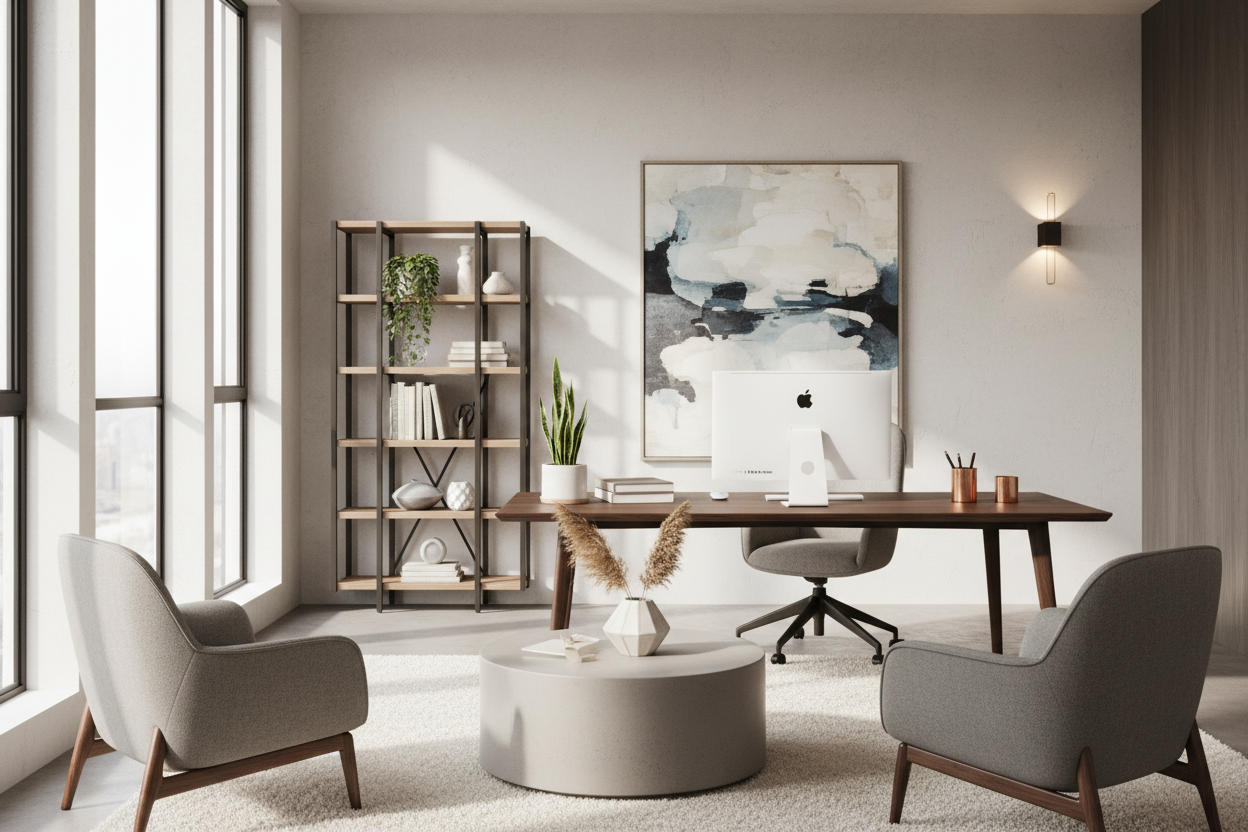
We have all experienced the sterility of a generic workspace—the beige walls, the harsh overhead fluorescent lighting, and the complete lack of personality. It is not just boring; it actively suppresses creativity and increases fatigue. However, the solution isn't simply to fill every empty corner with knick-knacks. True design lies in curation, not accumulation. When selecting decorations for an office, you are not merely filling space; you are engineering an environment for focus, efficiency, and mental well-being.
Key Features to Look For in Office Decor
- Acoustic Properties: Prioritize items like thick rugs, canvas art, or acoustic panels that absorb sound and reduce echo during calls.
- Lighting Temperature: Ensure decorative lamps support bulbs between 3000K and 4000K for alert focus without the harshness of blue light.
- Biophilic Elements: Look for planters or terrariums; integrating nature is proven to lower cortisol levels.
- Scale and Proportion: Decor must respect the size of the furniture; a tiny frame on a massive wall looks lost, while oversized sculptures on a small desk create clutter.
Balancing Aesthetics with Functionality
When sourcing decorations for the office, the primary error I see clients make is prioritizing form over function. In a workspace, every object should earn its keep. This doesn't mean every item must be utilitarian, but it should contribute to the room's "workability."
Visual Weight and Flow
Consider the visual weight of your office decorations for work. Darker colors and heavy materials (like solid walnut or cast iron) ground a space but can make a small room feel claustrophobic. Conversely, glass, acrylic, and light woods expand the visual field. If you are working with a compact footprint, opt for floating shelves rather than bulky bookcases to maintain an airy silhouette.
The Curated "Zoom Background"
In the modern era, your background is your business card. Office decor for work now serves a dual purpose: personal enjoyment and professional signaling. The area visible behind you on video calls requires a specific strategy known as "staging depth."
Avoid placing a flat bookshelf directly against the wall behind your head; it creates a mugshot effect. Instead, angle a floor lamp or place a large plant to create shadows and dimension. When selecting new office decor for shelves, follow the "rule of three": group items in odd numbers, mixing vertical objects (books standing up) with horizontal ones (books stacked flat with a small object on top) to guide the eye comfortably.
Materiality and Tactile Feedback
We often forget that we touch our environment. Personal office decor should introduce texture to break up the monotony of smooth screens and laminate desks. A leather desk blotter not only defines your primary work zone but provides a superior writing surface and dampens the sound of your keyboard. Similarly, replacing standard blinds with linen drapery softens the light and improves the room's acoustic profile, making the space feel less like a cubicle and more like a studio.
Lessons from My Own Projects
I want to share a specific realization from a project I completed last year for a tech executive. We went all-in on high-gloss, lacquer finishes for the shelving and decorative boxes to achieve a sleek, modern look. It looked incredible in the portfolio photos.
However, three months later, the client called me. The issue wasn't the style—it was the maintenance and the glare. Every time he turned on his ring light for a conference call, the high-gloss decor reflected a blinding spot of light into the camera lens. Furthermore, the dark glossy finish showed every single fingerprint and speck of dust. I had to go back and swap out the high-gloss items for matte ceramic vases and textured wood elements.
The lesson? When choosing decor, always test it under your specific working lighting conditions. A matte finish is almost always more forgiving and practical for a daily-use workspace than a polished one.
Conclusion
Designing your workspace is an investment in your own productivity. By selecting pieces that offer the right balance of texture, scale, and acoustic benefit, you move beyond simple decoration and into environmental design. Start with one focal point—perhaps a piece of art or a statement lamp—and build outward, ensuring every addition allows you to breathe easier and work smarter.
Frequently Asked Questions
How do I decorate a small office without cluttering it?
Focus on verticality. Use wall-mounted organizers and floating shelves to keep the floor and desk surface clear. Choose one large piece of wall art rather than a gallery wall, which can make a small room feel busy and chaotic.
What is the best color for office decorations to promote focus?
Greens and blues are scientifically shown to improve efficiency and focus due to their low wavelength, which is less straining on the eyes. You can introduce these colors through plants, artwork, or accent ceramics rather than painting the whole room.
How much should I mix personal items with professional decor?
The 80/20 rule works best here. Keep 80% of the decor professional (books, plants, abstract art) and 20% personal (family photos, travel souvenirs). This maintains a polished look while ensuring the space still feels like yours.

Dejar un comentario
Este sitio está protegido por hCaptcha y se aplican la Política de privacidad de hCaptcha y los Términos del servicio.