










We have all attempted the "kitchen counter compromise," trying to balance a laptop on a surface meant for meal prep. It rarely ends well. To cultivate deep work and maintain physical health, a dedicated environment is non-negotiable. However, curating the right furniture home office is not simply about buying a desk and a chair; it is about understanding how scale, material, and ergonomics interact with your specific residential architecture.
Quick Decision Guide: Key Features to Look For
- Ergonomics First: Prioritize adjustable seat height and lumbar support over pure aesthetics.
- Material Durability: Look for scratch-resistant laminates or sealed solid wood for high-traffic surfaces.
- Scale and Proportion: Ensure home office furnishings leave at least 30 inches of clearance for chair movement.
- Cable Management: Integrated grommets and wire trays are essential for maintaining visual calm.
Balancing Aesthetics with Ergonomics
When selecting office furniture for home use, the greatest challenge is finding pieces that support your body without making your sanctuary look like a corporate cubicle. Good home office furniture bridges this gap. We often look for "resimercial" design—commercial-grade durability wrapped in residential textures.
The Desk: The Anchor of the Room
Your desk dictates the workflow. For heavy computer users, deep home desks furniture (minimum 30 inches depth) are crucial to prevent eye strain from monitors sitting too close. If you are dealing with a tight floor plan, consider a writing bureau or a wall-mounted ladder desk. These pieces offer utility without dominating the visual footprint of the room.
The Seating: An Investment in Health
Never compromise on your chair. While a velvet accent chair might look stunning as study furniture, it lacks the kinetic support required for an eight-hour day. Look for a synchro-tilt mechanism and breathable fabrics. If the technical look of an ergonomic chair clashes with your decor, opt for high-end performance fabrics in neutral tones like charcoal or oatmeal to soften the industrial silhouette.
Materiality and Texture
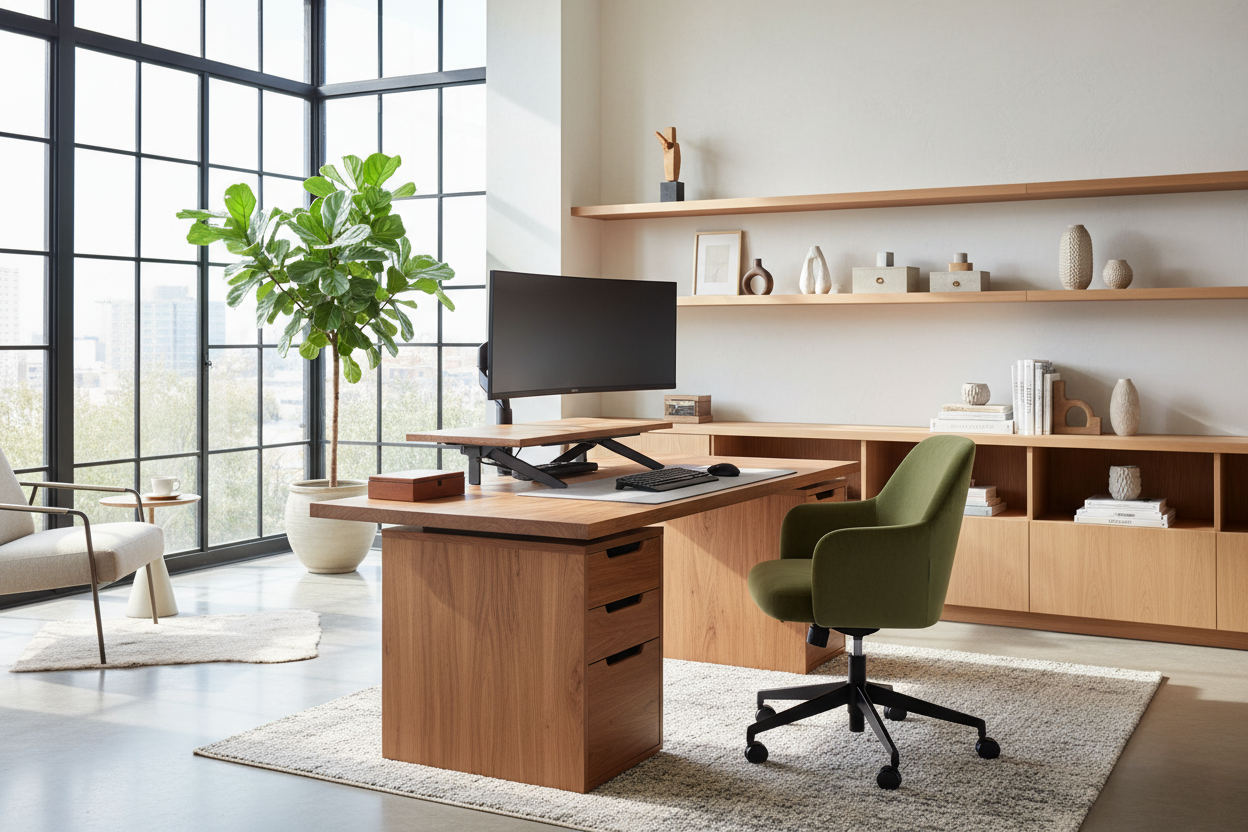
The tactile experience of nice home office furniture contributes significantly to your mental state. Cold surfaces like glass or metal can feel sterile and amplify sound. Conversely, walnut or oak veneers add warmth and acoustic dampening qualities.
When transitioning home to office furniture standards, pay attention to the finish. A matte or satin finish is preferable to high-gloss, which can cause distracting glare under overhead lighting or during video calls. Natural wood grains also hide dust and fingerprints better than solid lacquers.
Spatial Planning and Flow
The placement of your office room furniture is just as critical as the pieces themselves. Avoid pushing your desk directly against a wall if possible. "Floating" the desk in the center of the room, or positioning it perpendicular to a window, commands authority and allows you to benefit from natural light without the glare on your screen. This layout also allows for better traffic flow and makes the room feel more expansive.
My Personal Take on furniture home office
I learned a hard lesson early in my career regarding desk aprons (the vertical piece of wood directly under the tabletop). I once specified a stunning, vintage mid-century desk for a client who wanted a high-end look. It was beautiful, but I failed to measure the clearance between the floor and the bottom of the apron.
When the client sat in their ergonomic chair, their thighs were wedged against the wood, making it impossible to cross their legs or adjust the seat height properly. We had to install risers on the desk legs, which ruined the silhouette. Now, I always carry a tape measure specifically to check that "knee clearance" height. It’s an unpolished detail that specs online rarely mention, but it makes the difference between a productive day and cramped legs.
Conclusion
Building a workspace is an iterative process. By investing in high-quality materials and prioritizing ergonomic function, you create a space that invites focus rather than fatigue. Treat your workspace with the same design consideration as your living room, and your productivity will thank you.
Frequently Asked Questions
1. How do I fit office furniture into a small apartment?
Focus on verticality. Use tall shelving units to draw the eye up and select home office furnishings with exposed legs (rather than solid bases) to maintain a sense of openness and visible floor space.
2. Is solid wood always better than veneer for a desk?
Not necessarily. While solid wood is durable, high-quality wood veneers over MDF are often more stable and resistant to warping in fluctuating home temperatures. They also allow for nice home office furniture designs at a more accessible price point.
3. What is the best way to hide cords?
If your desk lacks built-in management, use velcro ties to bundle cables against the leg of the desk furthest from the door. Magnetic cable channels that stick to the metal frame of a desk are also a designer favorite for a clean look.


Dejar un comentario
Este sitio está protegido por hCaptcha y se aplican la Política de privacidad de hCaptcha y los Términos del servicio.