










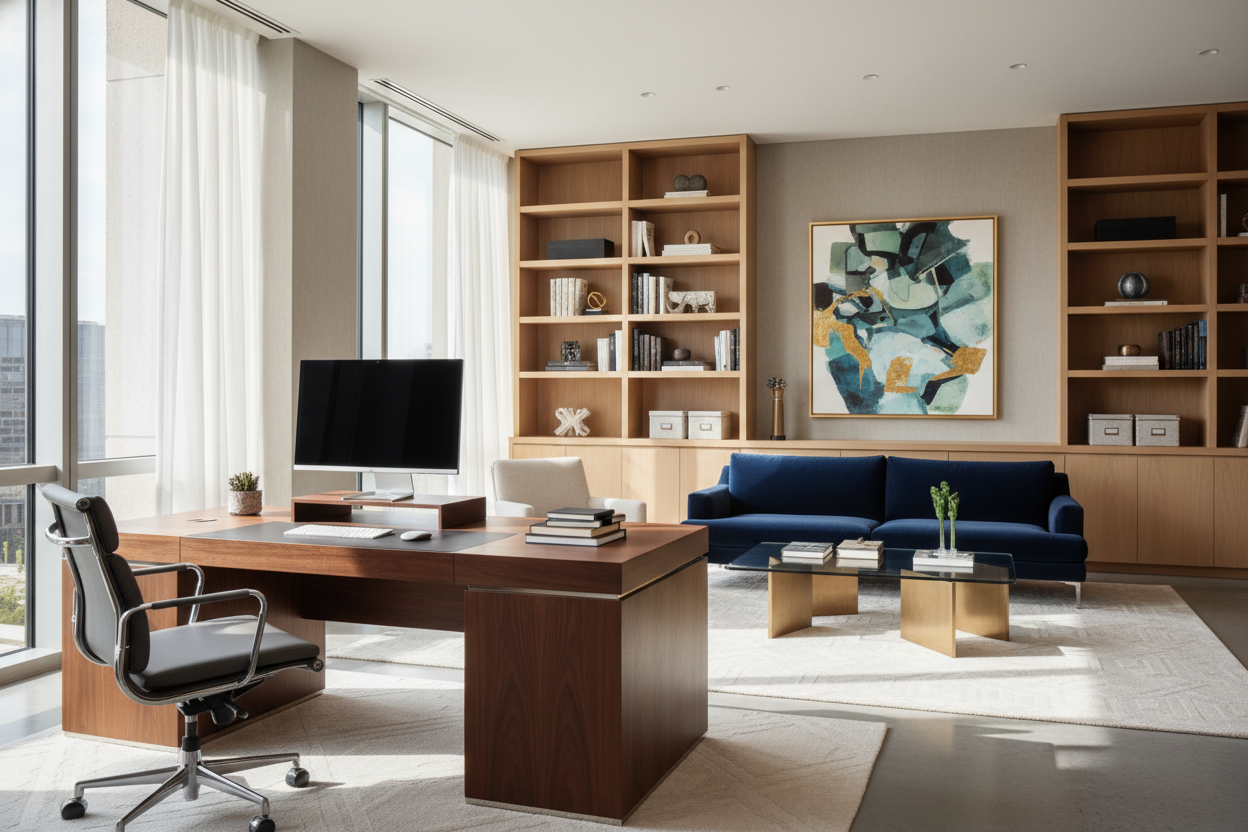
The home office has evolved from a dusty corner of the guest room into the command center of our professional lives. Yet, bridging the gap between high-performance ergonomics and residential aesthetics remains a significant challenge for most homeowners. While many office furniture articles focus solely on budget or trends, true design success lies in understanding the symbiotic relationship between form and function.
Quick Decision Guide: What Matters Most
If you are rushing to furnish your workspace, do not compromise on these four pillars. Here is what professional designers prioritize before making a purchase:
- Ergonomic Rating: Look for synchronous tilt and adjustable lumbar support, not just plush cushioning.
- Material Integrity: Prioritize commercial-grade laminates or sealed solid woods that resist heat from electronics.
- Scale & Proportion: Ensure at least 48 inches of clearance behind your desk for chair movement.
- Wire Management: A beautiful silhouette is ruined by cable clutter; look for integrated grommets and modesty panels.
Curating Materials: Beyond the Aesthetic
When selecting pieces, the tactile experience is just as vital as the visual impact. In my years designing executive suites, I have found that material selection dictates the longevity of the workspace.
Solid Wood vs. High-Pressure Laminate
While a solid walnut desk offers undeniable gravity and warmth, it requires maintenance. It reacts to humidity and can watermark easily. For high-traffic home offices, I often steer clients toward high-pressure architectural laminates with a textured grain. These offer the visual depth of wood but possess the durability to withstand coffee spills and heavy monitor mounts without marring.
The Textile Touch
Avoid generic bonded leathers that peel within a year. For seating, look for high-rub-count fabrics or top-grain leathers that develop a patina over time. Mesh backing is functional for airflow, but for a luxury residential feel, a tailored wool blend often softens the "corporate" look of the room.
The Ergonomic Equation
A well-written office furniture article should always address the mechanics of the human body. The chair and desk are a system, not separate entities. Your elbows should rest at a 90-degree angle, and your screen should be at eye level. If you fall in love with a vintage writing desk that lacks adjustability, pair it with a highly adjustable technical task chair to compensate for the fixed height. Balance the vintage charm with modern engineering.
Space Planning and Visual Flow
Placement dictates productivity. Never push your desk directly against a wall if you can avoid it. Floating the desk in the center of the room, or perpendicular to a window, commands authority and allows for a better visual break. This layout also allows you to introduce a credenza behind you, creating a professional backdrop for video calls while keeping clutter out of the camera's view.
My Personal Take on Office Furniture Articles
I need to share a mistake from early in my career that standard buying guides won't tell you. I once specified a stunning, high-gloss black lacquer desk for a client's minimalist study. It looked architectural and sleek—perfect for the photo shoot.
Two weeks later, the client called. The desk was a nightmare. Every fingerprint showed, the optical mouse wouldn't track on the glossy surface without a pad, and the glare from the overhead lighting caused eye strain. That project taught me a valuable lesson: matte absorbs, gloss reflects. In a workspace, you want absorption. Now, regardless of how sleek a glossy finish looks in a catalog, I always test the surface for glare and tactile resistance. Real luxury is furniture that supports your workflow, not furniture you have to tiptoe around.
Conclusion
Curating your workspace is an investment in your own efficiency and peace of mind. By focusing on durable materials, proper scale, and true ergonomic support, you elevate your daily routine. Don't settle for temporary solutions; build a space that respects your work.
Frequently Asked Questions
How do I mix modern office tech with traditional furniture styles?
The key is concealment. Use traditional desks with hidden cable management channels or modify antique armoires to house printers. Keep the tech wireless where possible to maintain the period aesthetic.
Is a standing desk actually worth the investment?
From a health perspective, absolutely. However, visually, they can look industrial. Look for "executive" standing desks that encase the lifting legs in wood or finished panels to maintain a sophisticated look.
What is the ideal desk depth for a multi-monitor setup?
Aim for a minimum depth of 30 inches. Standard 24-inch writing desks place monitors too close to the face, causing eye strain and leaving little room for a keyboard and notepad.

Dejar un comentario
Este sitio está protegido por hCaptcha y se aplican la Política de privacidad de hCaptcha y los Términos del servicio.