










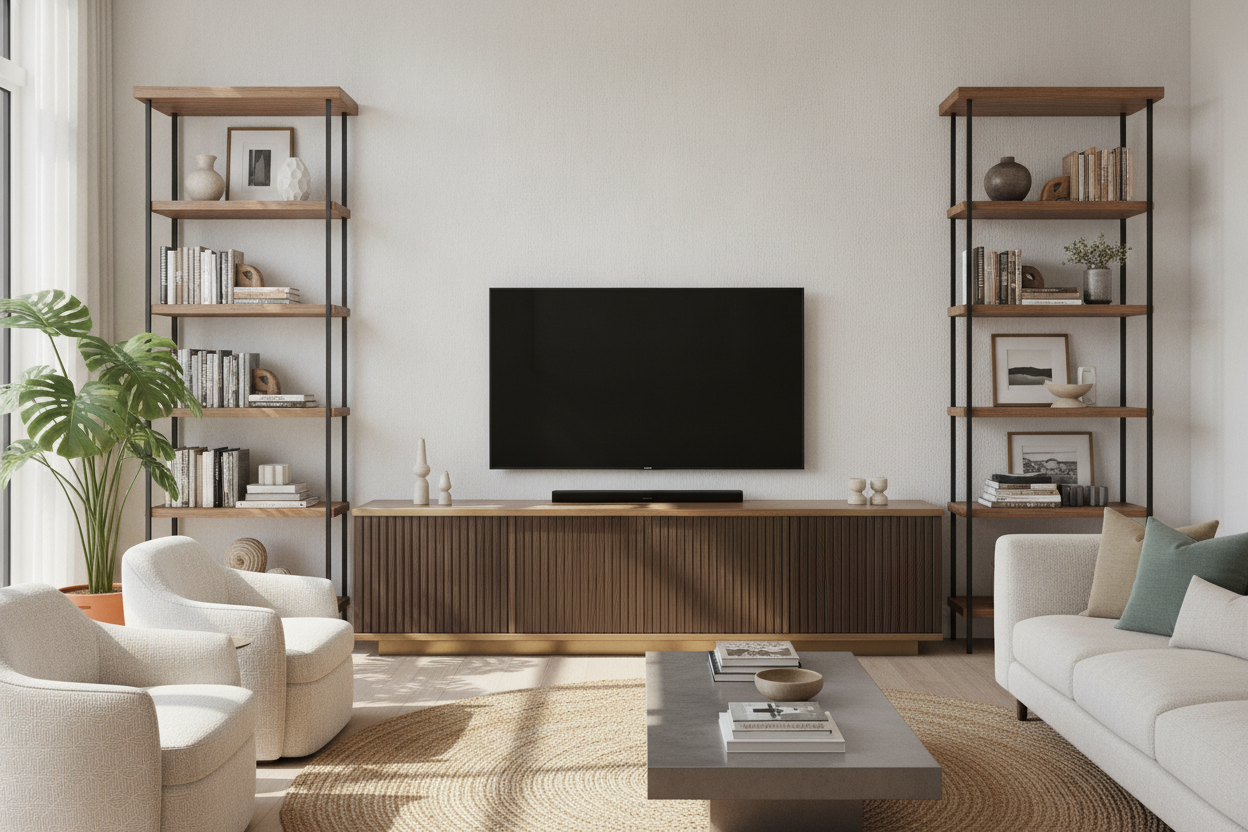
I recently visited a friend who just dropped three grand on a 77-inch OLED. It was glorious—until I saw what it was sitting on. A flimsy, $40 particle board rack from a big-box store that was literally bowing under the weight of the screen. It looked like a Ferrari parked in a cardboard shed. We spend weeks researching refresh rates and black levels, but we treat the furniture for tv like a total afterthought.
If your media console wobbles when the dog walks by, you do not have a living room; you have a tech graveyard. It is time to stop buying 'stands' and start buying actual furniture. When you treat your entertainment center as a foundational piece, the whole room finally starts to make sense.
Quick Takeaways
- Weight matters: If you can lift the box with one hand, it is not real furniture.
- Proportions are key: Your console should be at least 6-10 inches wider than your TV.
- Closed storage is mandatory: No one needs to see your tangled nest of HDMI cables.
- Material check: Look for kiln-dried hardwoods or high-quality veneers over MDF.
The 'Afterthought' Problem in Most Living Rooms
Most people design their living room around the sofa, then realize they have nowhere to put the screen. They scramble to find a cheap television set furniture solution that fits the remaining five feet of wall space. The result? A massive black rectangle perched precariously on a spindly table. It creates a visual disconnect that makes the room feel unfinished and cheap.
A TV and furniture should work in a symbiotic relationship. When the console is too small, the TV looks like a giant head on a tiny body. It is awkward. I have seen beautiful rooms ruined because the owner thought a wire rack was 'minimalist.' It is not minimalist; it is just unfinished. You want a piece that has enough visual weight to anchor the wall. If the TV is the star of the show, the furniture is the stage—and a shaky stage makes for a bad performance.
What Separates a 'Stand' from Actual Furniture?
A 'stand' is something you buy in a flat box at a pharmacy or a discount warehouse. It is usually made of 'engineered wood'—which is just a fancy term for sawdust and glue—covered in a paper-thin laminate that peels the second you spill a drop of water. Real furniture tv sets, on the other hand, are built to last a decade, not a semester.
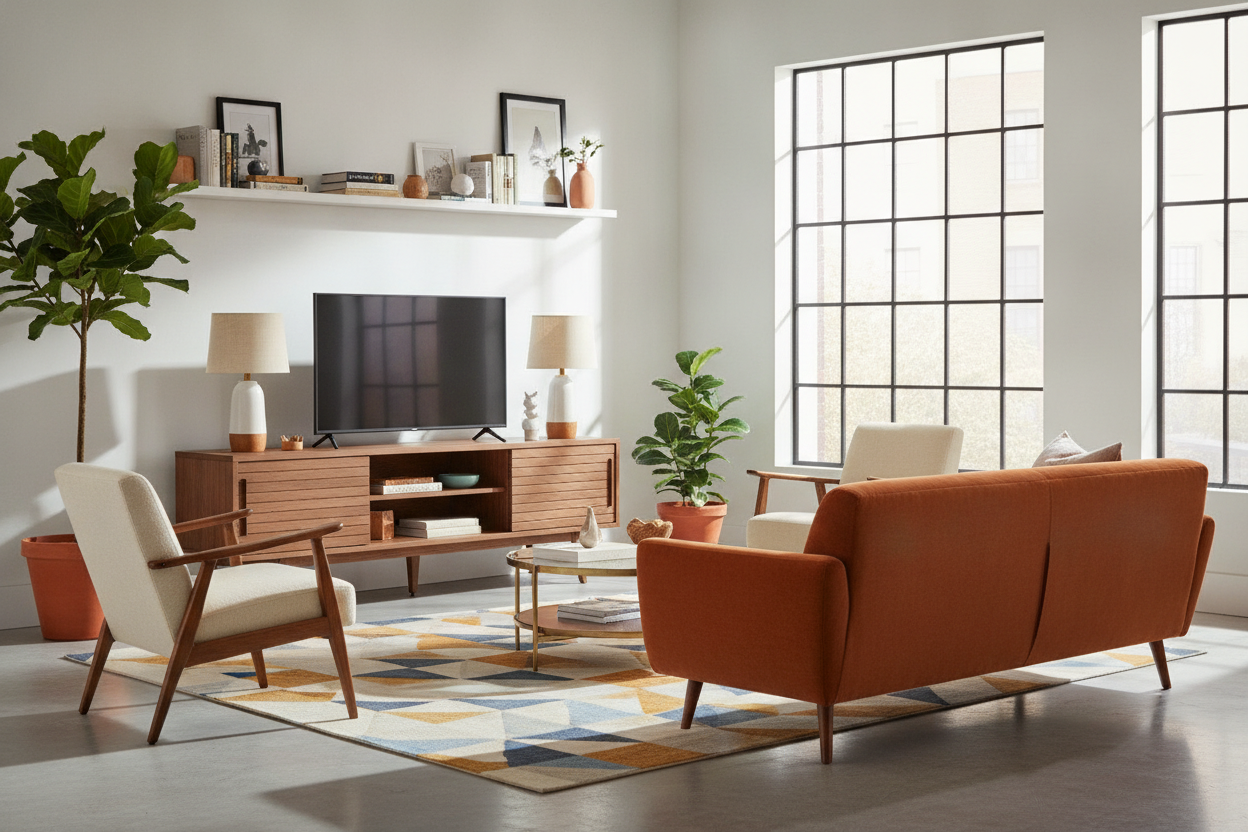
I look for pieces with actual joinery, like dovetail drawers or mortise-and-tenon joints. You want something that weighs enough to stay put. A solid oak or walnut credenza has a presence that a metal-and-glass rack simply cannot match. It needs to look like real furniture rather than a piece of office equipment. When you run your hand across the top, you should feel the grain of the wood, not the texture of a plastic sticker. This is the difference between a temporary fix and a permanent home fixture.
The Holy Grail: Storage That Actually Hides the Mess
We are living in the golden age of streaming, but we still have boxes. Pro-tip: if your console has glass doors, you are doing it wrong. Unless you are a professional cable manager with a lot of patience, glass doors just put your 'spaghetti' of wires on display for every guest to see. You want solid doors and deep drawers.
Investing in a modern TV stand with cabinets and drawers allows you to shove the router, the gaming consoles, and those three remotes you never use out of sight. I personally look for pieces with built-in cable management grommets in the back panel. If it doesn't have them, I am taking a hole saw to it. There is nothing more satisfying than a clean surface where the only visible cord is the one you couldn't avoid.
Making Your Media Wall Work Twice as Hard
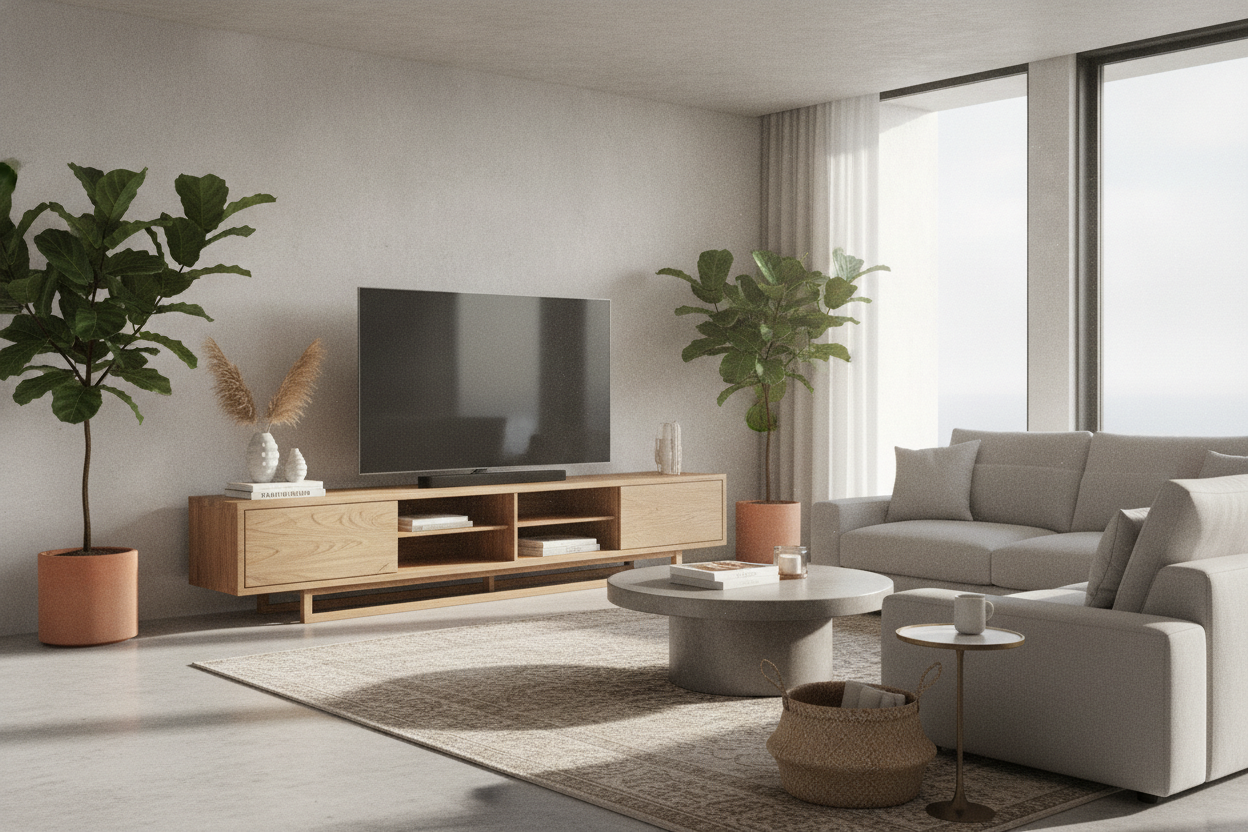
In smaller apartments, you cannot afford to have a piece of furniture that only does one thing. If you are shopping for furniture for tv set arrangements, think about how that piece can multitask. I have seen people use long, low sideboards as both a media center and a buffet for their dining area. It creates a seamless flow that makes a small floor plan feel twice as big.
You can even find pieces that solve lifestyle problems. For example, if you are tired of a plastic kennel taking up half your floor, you might look into large dog crate furniture that doubles as a media base. It is about being intentional with your square footage. Your media zone should serve your life, not just your Netflix habit.
Can't Upgrade Yet? How to Elevate What You Have
I get it—a solid wood sideboard can cost as much as the TV itself. If a total replacement isn't in the budget this month, you have to get creative with proportions. The biggest mistake is having a TV that sits too low, making you slouch like a gargoyle on your sofa. You can get a TV stand riser to add some much-needed height and create a little extra cubby space for a soundbar.
Another trick? Flank your existing stand with tall plants or bookshelves. This 'fakes' the width and makes the whole setup feel more substantial. It draws the eye outward, so you aren't just staring at a tiny, lonely table in the middle of a big wall. It’s a band-aid, but it’s a stylish one.
My Personal Lesson in 'Cheap' Furniture
Years ago, I bought a 'mid-century' console online because the price was too good to pass up. It looked great in the professional photos. When it arrived, it weighed about 20 pounds. The first time I tried to move it to plug in a new gaming console, the legs literally buckled. I ended up with a scratched floor and a cracked TV bezel. Now, I check the shipping weight before I hit 'buy.' If it's under 80 pounds for a 60-inch piece, I stay far away. Solid construction isn't just about aesthetics; it's about not having your tech end up on the floor.
FAQs About Media Furniture
How high should my TV actually be?
Your eyes should be level with the middle of the screen when you are seated. Most people mount their TVs way too high—the 'TV over the fireplace' look is a recipe for neck strain. Aim for a console height of 22 to 28 inches.
Should the furniture be wider than the TV?
Yes, absolutely. A TV that overhangs the edges of the furniture looks top-heavy and unstable. You want at least 3-5 inches of breathing room on each side of the screen to balance the visual weight.
Is open shelving better for electronics?
Electronics need airflow so they don't overheat, but open shelving is a dust magnet. Look for furniture with ventilated back panels or slatted 'slat-style' doors that allow IR signals and air to pass through while keeping the clutter hidden.

Dejar un comentario
Este sitio está protegido por hCaptcha y se aplican la Política de privacidad de hCaptcha y los Términos del servicio.