










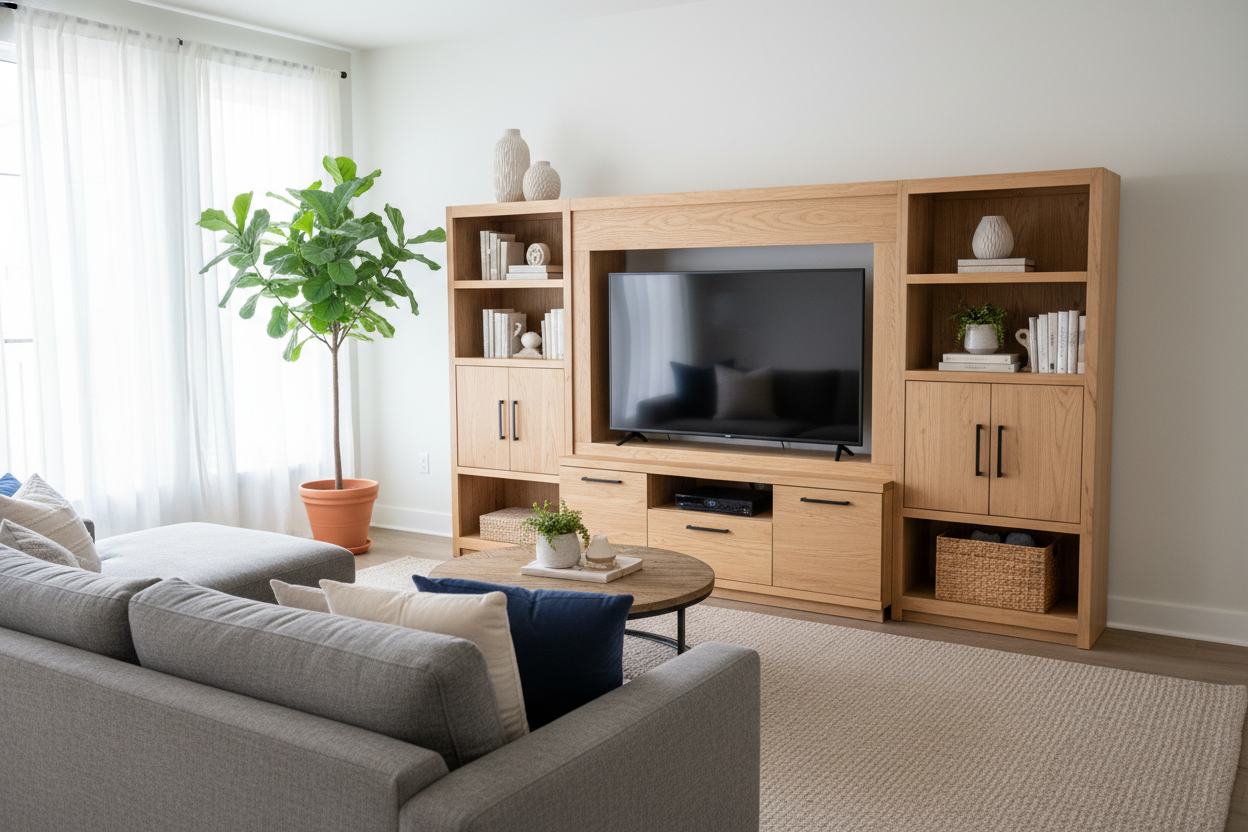
I spent three hours last June patching sixteen holes in a drywall because I thought a floating TV was the only way to look like a 'grown-up.' My landlord still took $150 off my deposit because the spackle didn't match the eggshell paint. That was the moment I realized my cupboard tv design obsession wasn't just about storage; it was about my sanity.
We have been conditioned to think that if a screen isn't hovering mid-air, we’ve failed at interior design. But after living through the 'floating' era, I’m back to the basics. A solid, freestanding cupboard is the unsung hero of the living room.
Quick Takeaways
- Save your security deposit by avoiding heavy-duty wall anchors.
- Hide the 'cable spaghetti' behind closed doors without cutting into the wall.
- Gain actual storage for things like board games, routers, and extra blankets.
- Create a focal point that doesn't look like a sterile doctor's office waiting room.
The Wall-Mounting Delusion (Why We Risk Our Drywall)
There is this weird pressure to make our living rooms look like a tech showroom. We want that ultra-minimalist look, but we forget that TVs come with cables, power bricks, and streaming boxes. Unless you are ready to fish wires through your studs—a nightmare in most rentals—you end up with a black cord dangling like a tail.
I’ve seen so many people try to overcompensate with an overcomplicated TV cabinet design that tries too hard to be 'modern.' They buy these thin, spindly shelves that can't actually hold a soundbar. It ends up looking cluttered rather than clean. The stress of trying to hide cords without drilling is a losing battle. A cupboard solves this by providing a physical barrier between your mess and your guests.
What Actually Makes a Good Cupboard Design for TV?
If you are looking for a cupboard design for tv, don't just look at the height. Look at the depth. Most modern electronics—especially gaming consoles like the PS5—are massive. You need at least 15 to 18 inches of depth if you want to actually close the doors. I once bought a 'slim' unit that was only 12 inches deep, and my HDMI cables were bent at such a sharp angle I thought they’d snap.
You also need visual weight. A 65-inch TV is a giant black void when it’s off. If you put it on a tiny, flimsy stand, the room feels top-heavy. I prefer a large TV cabinet spacious storage setup because it anchors the wall. It gives the eye somewhere to rest. Plus, having dedicated cable management holes in the back panel is non-negotiable. If it doesn't have them, you'll be out in the garage with a hole saw bit within twenty minutes of unboxing it.
Finding a TV Cupboard Design That Doesn't Scream 1998
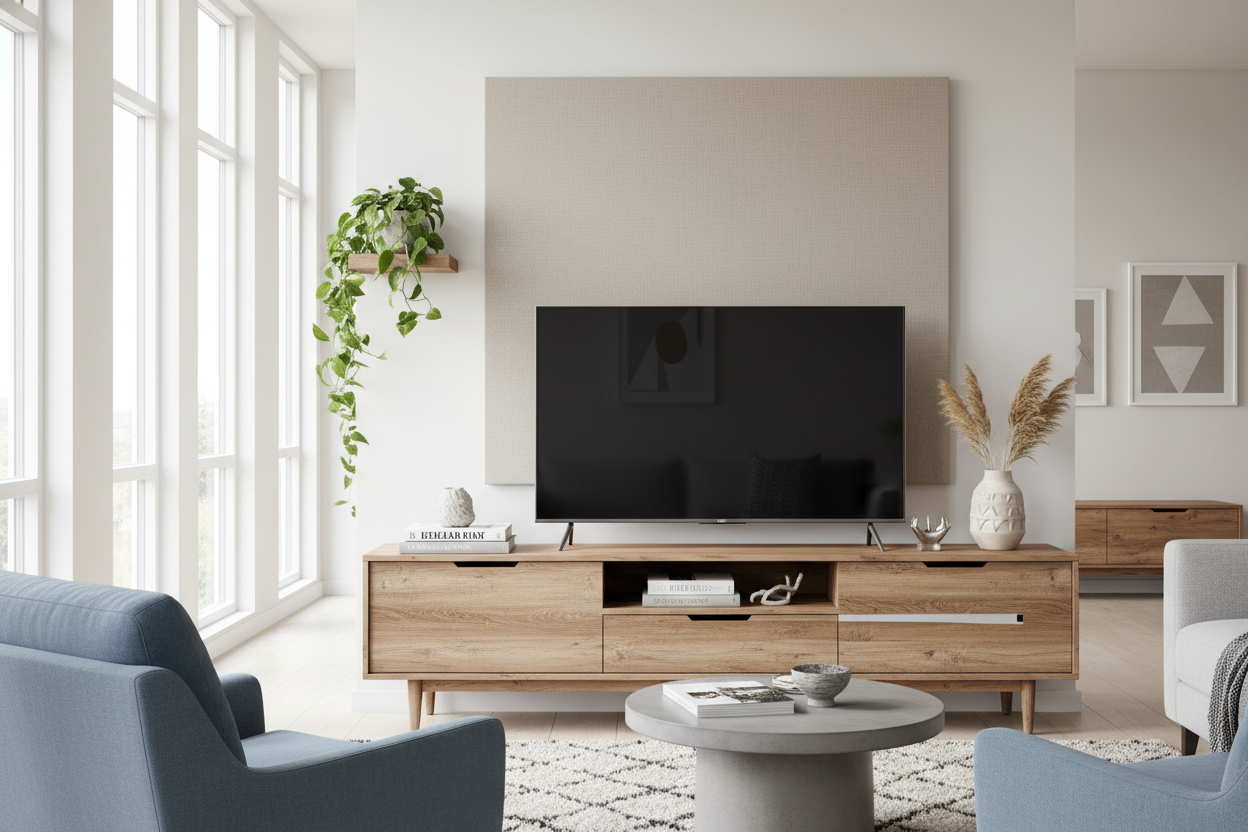
We all remember those massive, honey-oak entertainment centers that took up an entire wall. That’s not what we’re doing here. A modern tv cupboard design is about clean lines and intentional materials. Think fluted wood panels, matte black hardware, or even mid-century tapered legs to keep it from feeling like a literal box on the floor.
If you really hate looking at the screen when it's off, you can go the 'hide-away' route. A TV armoire a timeless solution is making a huge comeback for people who want their living room to feel like a library rather than a media hub. It’s about choosing a piece that looks like furniture first and a tech stand second.
My Favorite Renter-Friendly Setup (No Spackle Required)
My current setup involves a heavy, low-profile unit that I’ve styled to look like a built-in. I didn't touch a drill once. Instead, I used a modern TV cabinet table with enough surface area to lean a large piece of art behind the screen. This hides the few inches of cord that might peek out from the TV to the cabinet top.
I also added a pair of small, rechargeable lamps on either end. This creates 'task lighting' that makes the cupboard feel like an architectural feature of the room. It’s solid, it’s functional, and when my lease is up, I just empty the shelves and move it. No spackle, no sanding, and no lost deposit. It’s the ultimate win for anyone who moves every couple of years.
FAQ
How high should my TV cupboard be?
Your eyes should be level with the middle of the screen when you're sitting on your sofa. For most standard couches, that means a cupboard height of about 22 to 28 inches. Don't pull a 'TV too high' move.
Do I need ventilation for my consoles?
Yes. If you’re keeping a PlayStation or Xbox inside a cupboard, make sure there’s at least two inches of clearance on all sides, or leave the door cracked during heavy gaming sessions. Heat kills electronics.
Can I put a TV on a dresser instead?
You can, but check the weight limit. Dressers are often taller (30+ inches), which might strain your neck. Also, they rarely have cord holes, so you'll be looking at wires draped over the back.


Dejar un comentario
Este sitio está protegido por hCaptcha y se aplican la Política de privacidad de hCaptcha y los Términos del servicio.