










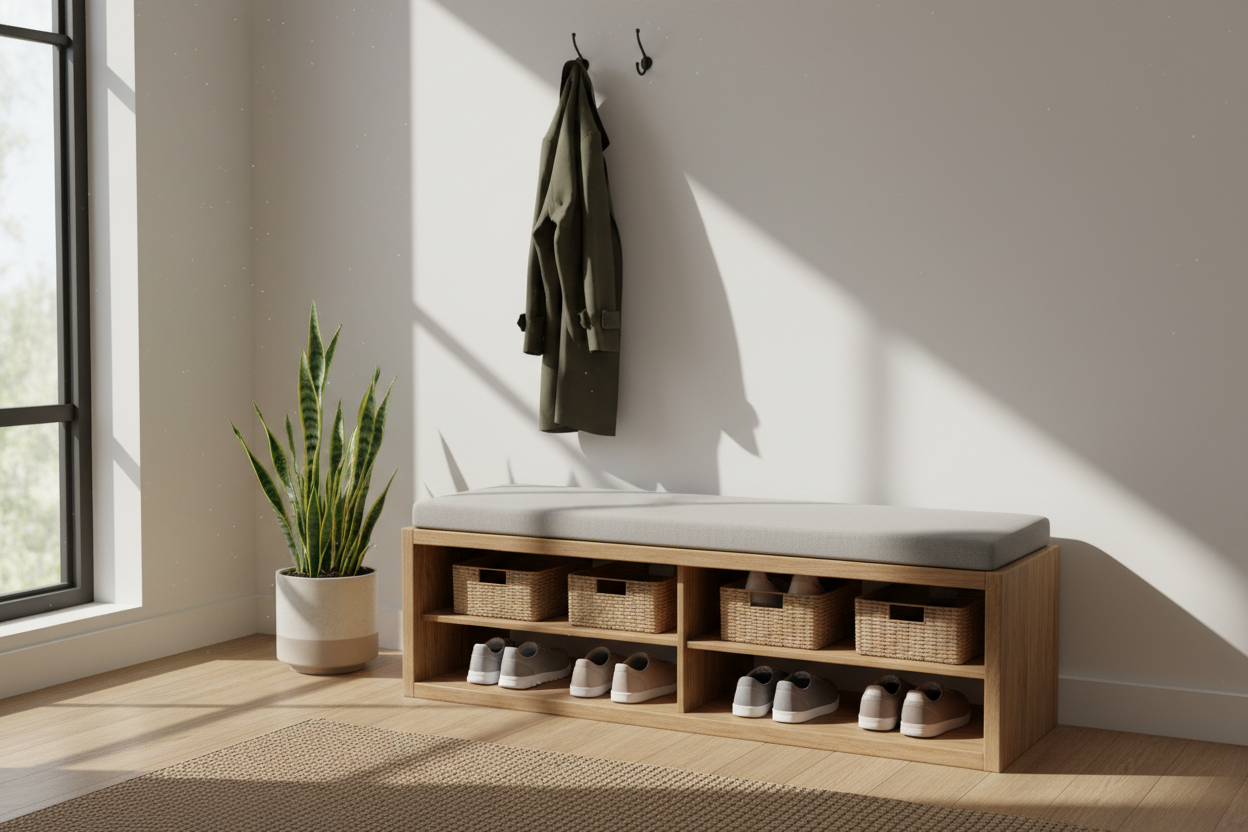
We have all been there. You rush out the door, late for an appointment, trying to jam your heel into a sneaker while balancing precariously on one leg. Or you come home with arms full of groceries, only to realize there is nowhere to set anything down to take off your muddy boots. This is where a well-placed bench in entryway layouts becomes the unsung hero of home design. It is not just about filling an empty wall; it is about creating a transition zone that actually functions the way you live.
The foyer sets the tone for the entire home. It is the first thing guests see and the last thing you see before facing the world. Yet, it often gets treated as an afterthought—a dumping ground for mail and stray shoes. By incorporating purposeful entryway seating, you transform a chaotic pass-through into a grounded, welcoming space. Whether you have a sprawling hall or a tiny nook, the right seat anchors the room and invites a moment of pause.
My Experience Finding the Right Balance
I learned the value of a foyer bench the hard way. In my previous home, the front door opened directly into the living room with almost no buffer zone. For years, shoes piled up on a rubber mat, and my family would sit on the stairs to put them on, blocking the way for anyone else trying to get by. It was visually cluttered and functionally frustrating. I eventually sourced a narrow, vintage church pew to place against the perpendicular wall. That simple addition changed everything. It defined the "entry" area without building walls, gave us a dedicated spot to sit, and surprisingly, the pile of shoes disappeared because we finally had a designated zone to manage them. That experience taught me that entryway seat solutions don't need to be massive to be effective; they just need to be intentional.
Assessing Your Space and Needs
Before you start shopping for furniture, you need to look at the traffic flow of your home. A foyer with bench setups works best when there is enough clearance for people to walk past comfortably. A good rule of thumb is to ensure you have at least 30 to 36 inches of walking path between the bench and the opposite wall or door swing. If your space is tight, look for shallow depth options—some benches are as narrow as 12 to 14 inches deep, which provides a perch without encroaching on the walkway.
Functionality is the next major consideration. Are you looking for pure aesthetics, or do you need heavy-duty storage? Families with young children often benefit from a storage bench with a flip-top lid or cubbies underneath. This hides the visual noise of backpacks and sneakers. However, if your entryway is more formal, an open-legged bench in foyer designs creates a sense of airiness and elegance, allowing the floor to be seen underneath, which makes the room feel larger.
Material Selection and Durability
Your entryway sees high traffic, wet coats, and dirty shoes. The materials you choose for your bench entryway furniture need to stand up to this abuse. Solid wood is a classic choice because it is durable and easy to wipe down. If it gets scratched, it often adds to the character rather than ruining the piece. Metal benches offer an industrial or modern look and are incredibly resilient against moisture, making them great for climates with heavy rain or snow.
Upholstered benches bring softness and texture, making the space feel cozy immediately. However, you have to be realistic about stains. If you love the look of fabric, opt for performance fabrics like Crypton or Sunbrella, or choose leather, which can be wiped clean. A velvet tufted bench might look stunning, but it might not survive a muddy dog shaking off after a walk.
Styling Your Entryway Seating
Once you have the furniture piece, styling connects it to the rest of your home's decor. A naked bench can look a bit stark. You can soften the look with throw pillows that introduce color or pattern. These aren't just decorative; they offer back support if the bench is deep enough. A throw blanket draped over the arm or seat adds a layer of casual invitation.
Consider the vertical space above the bench as well. A mirror is a practical addition, allowing for a final outfit check before leaving. It also reflects light, brightening what can often be a dark part of the house. Alternatively, a row of hooks above the bench turns the area into a full-service mudroom setup, perfect for hanging coats and scarves right where you take off your shoes.
The Psychological Impact of a Welcome Point
There is a subtle psychological shift that happens when you place a bench in entryway areas. It signals to guests that they are welcome to stay awhile. It says, "Take off your coat, sit down, relax." Without seating, an entryway is just a corridor—a place to move through rather than be in. Adding a seat humanizes the architecture.
For the homeowner, it creates a landing strip for mental transition. That brief moment you sit to unlace your boots allows you to shift gears from "work mode" to "home mode." It organizes the clutter of arrival and departure, reducing the stress of lost keys or misplaced bags. When everything has a place, the tone of the entire household is calmer.
Making It Work in Small Spaces
Not everyone is blessed with a grand entrance hall. If you are working with a tight apartment vestibule or a hallway, you might think you don't have room for furniture. This is rarely true. You just need to be creative with scale. A small ottoman or a single stool can serve as an entryway seat without taking up the footprint of a full bench. Floating benches—mounted directly to the wall—are another brilliant solution for small spaces. Because they have no legs, they keep the floor completely clear, allowing you to tuck shoes underneath while maintaining a minimalist visual profile.
Another trick for small foyers is to use a bench that serves double duty. Look for a piece that can act as a console table when not in use, or a bench that fits perfectly under a window. The goal is to integrate the seating so it feels like part of the architecture rather than an obstacle.
Final Thoughts on Foyer Functionality
Designing a foyer with bench seating is one of the highest-impact updates you can make to your home. It requires minimal construction but delivers maximum utility. By carefully selecting the right size, material, and style, you create a space that is efficient enough to handle the morning rush and beautiful enough to welcome your most important guests. It bridges the gap between the outdoors and your sanctuary, ensuring that the first step into your home is always a comfortable one.
Frequently Asked Questions
How tall should an entryway bench be?
Standard bench height typically falls between 18 and 20 inches. This is similar to a dining chair height, making it comfortable for the average adult to sit and tie their shoes. If you plan to add thick cushions, aim for a lower frame height (around 16 inches) so the final sitting height remains comfortable.
Can I put a bench in a narrow hallway entryway?
Yes, but depth is your most critical measurement. Look for benches that are 12 to 15 inches deep to prevent blocking the flow of traffic. Wall-mounted fold-down seats are also an excellent option for extremely narrow spaces where a permanent footprint isn't feasible.
What is the best way to protect a fabric bench in the foyer?
If you choose an upholstered bench, treat it with a fabric guard spray immediately upon purchase to repel liquids and dirt. Alternatively, choose a bench with a removable, washable slipcover, or stick to materials like leather and vinyl that can be wiped down with a damp cloth.


Dejar un comentario
Este sitio está protegido por hCaptcha y se aplican la Política de privacidad de hCaptcha y los Términos del servicio.