










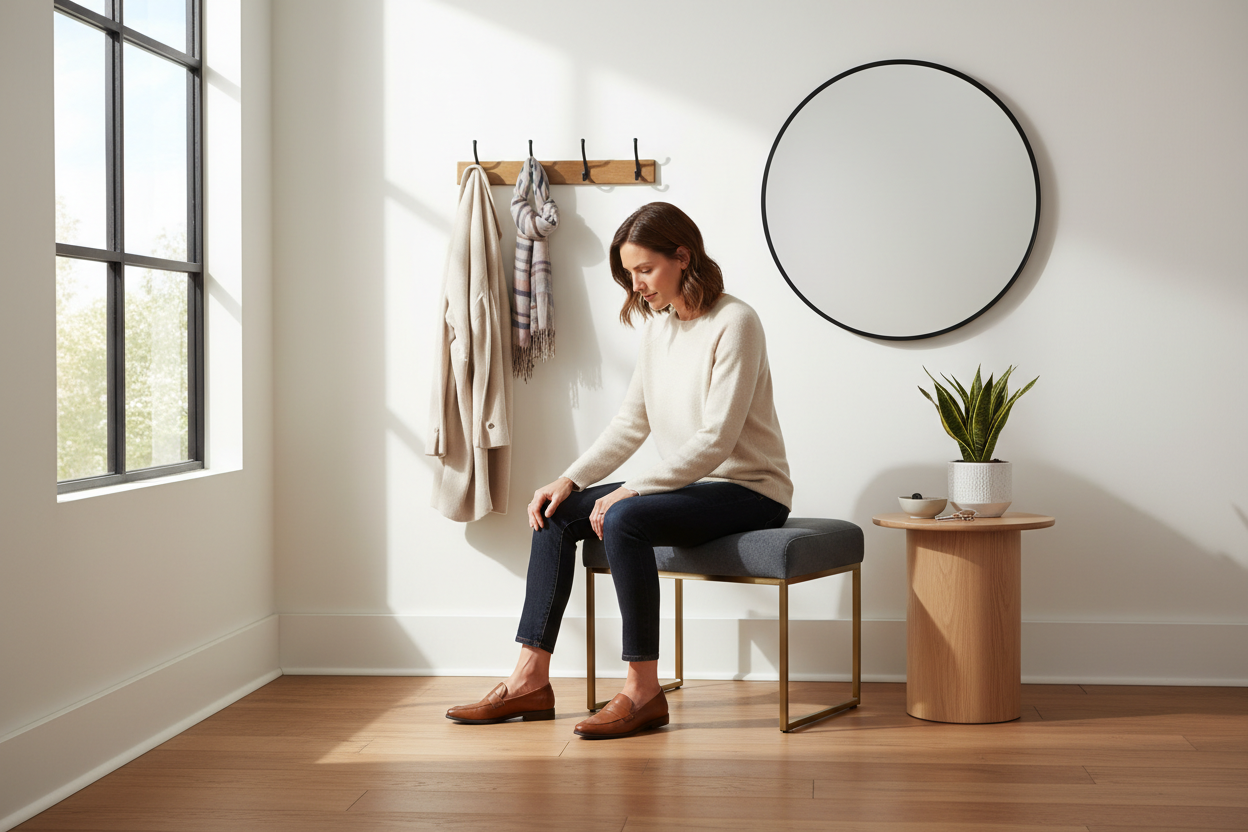
We have all performed the awkward "entryway hop." You know the move: balancing precariously on one leg, leaning a shoulder against the wall, and frantically tugging at a stubborn boot heel while trying not to topple over. It is a universal struggle that usually happens right when you are running late. The solution to this daily balancing act is surprisingly simple, yet often overlooked in favor of larger furniture pieces. You need a dedicated spot to sit, and specifically, an entryway stool is often the perfect fit.
While grand console tables and sprawling benches get a lot of attention on social media, they simply do not work for every home. Many corridors are too tight, and many foyers are oddly shaped. This is where the stool shines. It offers all the functionality of a seat without demanding the footprint of a bench. Whether you are working with a sprawling mudroom or a tiny apartment landing, adding a perch near the door changes the flow of your daily departure and arrival routine.
Why a Stool Beats a Bench in Tight Spaces
I learned the value of compact furniture the hard way. My first apartment had a "foyer" that was essentially a three-foot square landing at the top of a staircase. I was determined to have a welcoming entrance, so I bought a beautiful, long wooden bench. It looked great until I actually tried to open the front door, which promptly banged into the bench leg. I spent months squeezing past it before I finally swapped it out for a small stool for entryway use. The difference was immediate. The space felt open again, the door opened fully, and I still had a place to sit to tie my shoes. That experience taught me that scale is everything in interior design.
A small entryway stool provides that necessary function—a place to pause—without dominating the floor plan. In a narrow hallway, a bench becomes an obstacle course. A stool, however, can be tucked into a corner or slid under a floating shelf when not in use. It is the unsung hero of spatial efficiency.
Choosing the Right Style for Your Home
Selecting the right piece requires balancing aesthetics with durability. If your home leans toward contemporary design, a modern entryway stool with clean lines, metal legs, or a sculptural shape serves as a piece of art as much as a seat. These pieces often use materials like velvet, leather, or matte black steel, adding a touch of sophistication to the area immediately greeting your guests.
For homes with a farmhouse or bohemian vibe, a rustic wooden stool or a woven rattan piece adds warmth and texture. The goal is to view the stool for entryway placement as an anchor. It signals to guests that this is a home where they can relax. If you have a bit more room but not enough for a full sofa, an entryway stool bench—essentially a wider, backless stool—can bridge the gap, offering seating for two without the visual bulk of a high-back bench.
Material Matters: Durability in High-Traffic Zones
Your foyer sees more traffic than almost any other part of the house. Wet raincoats, muddy boots, and heavy grocery bags are part of the daily assault. If you are selecting a mudroom stool, prioritize materials that wipe clean easily. Treated wood, metal, or outdoor-grade fabrics are excellent choices. A delicate silk-upholstered antique might look stunning, but it will not survive the first rainy Tuesday of November.
A door stool also tends to become a catch-all surface. When you walk in with hands full of mail or keys, the stool is often the first place those items land. Hard surfaces like wood or metal are generally more practical here than soft upholstery, unless you are diligent about using trays.
Placement Strategies for Maximum Flow
Where you place your seating dictates how well your entry functions. A narrow entryway stool is best positioned against the longest uninterrupted wall, ideally paired with wall hooks above it. This creates a vertical "locker" effect where you can hang a coat and sit to remove shoes in the same square foot of floor space.
In larger spaces, a foyer stool can float. If you have a round entry table, tucking a pair of stools underneath it creates a symmetrical, designed look that can be pulled out when you have a house full of guests. This is one of the most versatile entryway stool ideas because it turns your foyer furniture into backup seating for your living room during parties.
Another smart placement is right next to the door frame on the handle side. A front door stool placed here acts as a waiting station for bags. You set your bag down, put on your coat, grab your bag, and leave. It streamlines the exit process.
Ergonomics: The Entryway Stool for Sitting
Design is important, but comfort is non-negotiable. An entryway stool for sitting needs to be at the right height. Standard chair height is roughly 18 inches. If the stool is too low (under 16 inches), it becomes difficult for older relatives or guests with bad knees to stand up again. If it is too high (over 20 inches), it becomes awkward to bend down and tie shoelaces.
When shopping for entryway stools, test the stability. Unlike a dining chair, you are often shifting your weight significantly while sitting on an entry stool—leaning forward to buckle a sandal or twisting to grab a jacket. A lightweight, top-heavy stool is a tipping hazard. Look for a hallway stool with a weighted base or splayed legs that provide a solid center of gravity.
Creative Styling Ideas
Once you have selected your piece, styling helps integrate it into the room. A small stool for entryway corners can look lonely if left by itself. Anchor it with a tall plant behind it or a large piece of art on the wall above. This draws the eye up and makes the stool part of a vignette rather than a piece of furniture forgotten in a corner.
For a cozy look, drape a sheepskin throw over a wooden stool. This softens the hard edges and adds texture. If you need storage, look for a box-style stool with a lid. This allows you to hide winter gloves, dog leashes, or reusable shopping bags inside the stool itself, keeping the area clutter-free.
Ultimately, the best furniture serves your life. Whether it is a sleek modern piece or a rugged mudroom companion, the right seat transforms your entrance from a chaotic pass-through into a welcoming destination.
Frequently Asked Questions
What is the ideal height for an entryway stool?
The ideal height is generally between 18 and 20 inches, which matches standard dining chair height. This allows most adults to sit comfortably with their feet flat on the floor, making it easy to bend over and put on or take off shoes without straining.
Can I use a stool in a very narrow hallway?
Yes, but you should look for a stool with a depth of 12 to 14 inches to ensure it does not block the walking path. Placing it under a floating console shelf or mounting hooks directly above it helps keep the footprint tight and efficient.
How do I keep a fabric stool clean in a mudroom?
If you choose a fabric stool for a high-traffic area, opt for performance fabrics like Crypton or outdoor canvas that resist water and stains. Alternatively, applying a fabric protector spray like Scotchgard can provide a barrier against mud and moisture.

Dejar un comentario
Este sitio está protegido por hCaptcha y se aplican la Política de privacidad de hCaptcha y los Términos del servicio.