










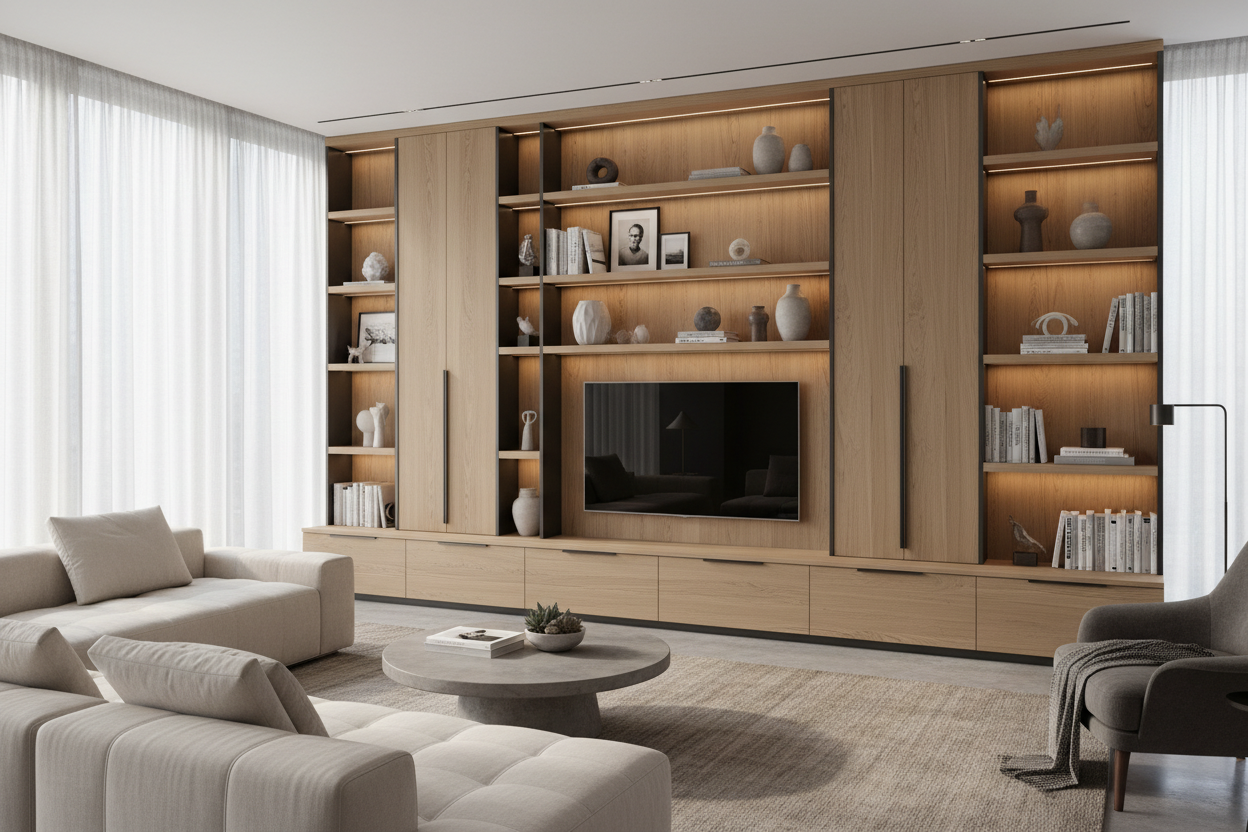
I spent three Saturdays in 2019 taped off like a forensic investigator, trying to get a perfect line on a navy blue accent wall. It looked okay for a month, then I realized it just made my rental living room look like a moody cave with zero purpose. I finally swapped the paint for a massive wall system furniture unit, and suddenly, the room didn't just have a color—it had a backbone.
- Paint adds color; furniture adds actual architectural structure.
- One large unit is often cheaper than buying five mismatched small consoles.
- Integrated storage hides the tech spaghetti of routers and cables.
- Wall systems make builder-grade rooms feel custom and expensive.
The 'Painted Accent Wall' Era is Officially Over
We have all been there. You see a Pinterest photo of a 'Forest Green' or 'Terracotta' wall and think that is the missing ingredient for your builder-grade box. But a 2D splash of color cannot fix a lack of architectural interest. In fact, it usually just draws attention to the fact that you have nothing else going on on that wall except a lonely TV stand and maybe a leaning floor lamp.
I have realized that the accent wall was always a shortcut for people who were afraid of big furniture. We thought a gallon of eggshell finish would provide a focal point, but it just created a flat plane that did not do any work. It did not hold books, it did not hide wires, and it certainly did not make the room feel more 'designed.' It just looked like a room with a colorful identity crisis.
Why 3D Architecture Beats a 2D Paint Job
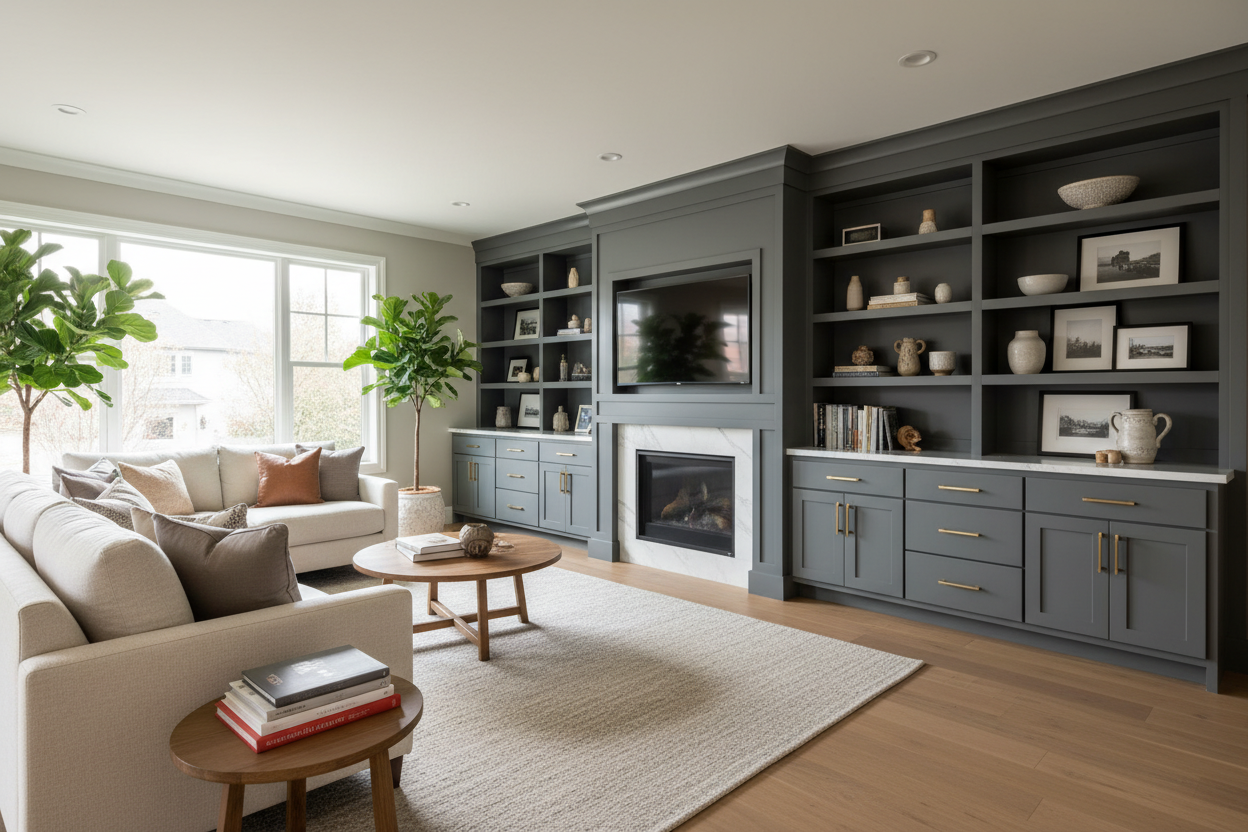
Physical depth is the secret sauce of high-end interior design. When you install wall systems furniture, you are not just decorating; you are adding a structural layer to the room. It creates shadows, provides ledges for lighting, and mimics the look of expensive custom millwork without the $10,000 contractor bill.
A few years ago, I faked a custom pantry wall by lining up several tall units and adding a unified top molding. The transformation was instant. The room suddenly felt like it was designed by an architect rather than just furnished by a sleep-deprived shopper. These systems bridge the gap between 'stuff I bought' and 'part of the house' in a way that a can of Sherwin-Williams never could.
It Finally Hides the Pet Gear and Wire Clutter
Let's be honest: gallery walls are a nightmare to keep straight, and they do absolutely nothing to hide your router. One of the biggest wins of a comprehensive wall system is the ability to use closed lower cabinetry to swallow up the visual noise of modern life. I am talking about the tangled mess of HDMI cables, the bulky gaming consoles, and the mountain of chargers we all pretend don't exist.
I have even started suggesting that people integrate their pet needs directly into the layout. You can easily fit a large dog crate furniture with divider into a lower section of a modular system so it looks like an intentional part of the cabinetry rather than a metal cage eyesore in the middle of the floor. You can even dedicate a specific lower cubby to hide cat furniture or litter boxes, keeping the floor plan clear and the aesthetic cohesive.
The Real Reason I Stopped Buying Random Consoles
I used to be the king of the 'random console' tax. I would buy a mid-century media stand, then a month later realize I needed a bookcase, then a month after that, I would buy a small chest for extra linens. By the time I was done, I had spent $2,000 on four different pieces of furniture that were all slightly different heights and wood tones. It was visual chaos.
Investing in one unified wall system is actually a budget win. Yes, dropping $1,500 on a large modular unit feels like a lot at once, but it replaces three or four smaller pieces. It creates a 'clean' look because the eye only has to process one large object rather than five small ones. It makes the room feel larger because the floor-to-ceiling verticality draws the eye upward, making your standard eight-foot ceilings feel much taller.
3 Rules for Making Your Setup Look Expensive
If you are going to do this, do it right. First, choose a unit that goes as high as possible. If it stops two feet from the ceiling, it looks like a bookshelf; if it hits the crown molding, it looks like a built-in. Second, swap out the stock hardware. Replacing basic plastic or cheap metal knobs with heavy brass or matte black pulls is the easiest way to trick people into thinking you hired a carpenter.
Third, and most importantly, check the build quality. I refuse to buy wall furniture without seeing it first because flimsy hinges and sagging shelves are the hallmarks of cheap flat-pack stuff that will look terrible in a year. Look for kiln-dried frames and sturdy tracks. My biggest mistake was once buying a 90-inch system made of thin particle board; the middle sagged under the weight of my books within three months. Never again.
Is a wall system too big for a small apartment?
Actually, no. In small spaces, one large piece of furniture is better than five small ones. It reduces visual 'noise' and makes the room feel more organized and intentional.
Can I take it with me when I move?
That is the beauty of a wall system over built-ins. You can disassemble it and take it to your next place. Just make sure to save the assembly instructions and keep the spare hardware in a labeled bag.
How do I stop it from looking like a library?
The trick is 'negative space.' Don't pack every shelf with books. Mix in some ceramics, a few plants, and leave some areas completely empty. It gives the eye a place to rest and keeps the system from feeling heavy.

Dejar un comentario
Este sitio está protegido por hCaptcha y se aplican la Política de privacidad de hCaptcha y los Términos del servicio.