










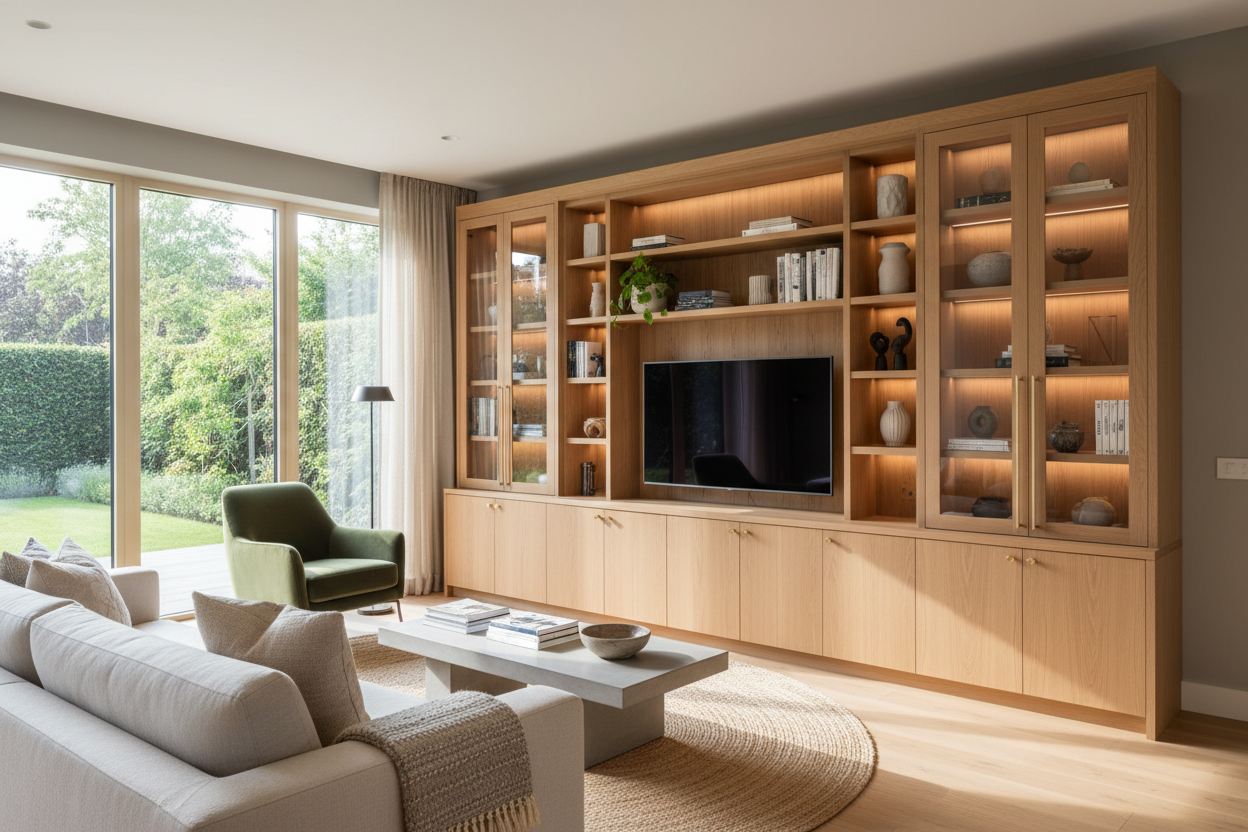
I spent three weeks staring at a gaping hole in my kitchen because I trusted a guy with a shiny website and a 4.9-star rating on a lead-gen site. I thought I was being smart by searching for a cabinet maker near.me. Instead, I got a salesman in a polo shirt who didn't know a dado joint from a hole in the wall. He was just a middleman with a laptop and a massive markup.
The reality of the cabinetry business is messy. Most of the people who rank at the top of your search results aren't actually sawdust-covered craftsmen. They are marketing machines. If you want actual quality that won't sag in three years, you have to stop clicking the first three ads you see and start acting like an investigator.
Quick Takeaways
- Top search results are often 'lead aggregators' who sell your info to random contractors.
- Real cabinet builders have a physical shop you can visit to see wood being cut.
- Custom means 3/4-inch plywood boxes, not 1/2-inch particle board.
- If they can't do a custom paint match, they are likely ordering pre-fab doors.
The Trap of the First Page of Google
When you search for local woodworkers, the first page is dominated by companies with massive advertising budgets. These aren't the guys building your boxes. These are 'dealers.' They rent a fancy showroom in a high-traffic area, show you a few glossy displays, and then outsource the actual labor to a massive factory three states away.
You aren't paying for craftsmanship; you're paying for their rent and their Google Ads bill. These marketing companies often use high-pressure sales tactics to get you to sign a contract before you've even seen a shop drawing. They promise 'custom' but what they really mean is 'customized'—you get to pick from a fixed menu of sizes and colors, and if your wall is 35.5 inches wide, they’ll just shove a 3-inch filler strip in the gap and call it a day.
The real cabinet builders—the ones who actually mill raw lumber into functional art—are usually buried on page four of the search results. Or, more likely, they don't have a website at all. They work on referrals from architects and interior designers. To find them, you have to look for 'architectural millwork' or 'woodworking shops' rather than the generic 'cabinet' keywords.
Middlemen vs. Actual Cabinet Builders
How do you tell the difference between a real carpenter and a glorified reseller? Ask to see their shop. A real builder will invite you to a place that smells like cedar and is covered in fine dust. A middleman will invite you to a showroom with pristine floors and zero saws in sight.
Middlemen are restricted by catalogs. If you want a specific black cabinet with glass doors and they tell you they only have three shades of 'off-black' because that's what the factory stocks, they aren't building anything for you. A true custom shop can match a scrap of fabric or a specific paint chip from 1994 if that's what you want.
Physical construction is the dead giveaway. Real builders use 3/4-inch furniture-grade plywood for the cabinet carcase. Middlemen often try to sneak in 1/2-inch MDF or particle board with a thin veneer. If the back of the cabinet is a flimsy 1/4-inch piece of hardboard held on by staples, you’re looking at a temporary solution, not a long-term investment. Real custom work uses pocket screws, dowels, or dovetail joints that are meant to outlast the mortgage.
What to Ask Custom Cabinet Builders In My Area
Before you let anyone take a deposit, you need to grill them. I’ve learned this the hard way after a 'custom' drawer front literally fell off in my hand six months after installation. You need to verify the hardware and the source of their materials.
First, ask: 'What brand of drawer slides and hinges do you use?' If they don't immediately say Blum, Grass, or Salice, walk away. Cheap, unbranded hardware is the first thing to fail. You want soft-close undermount slides rated for at least 75-100 lbs. If they use side-mount rollers, they are cutting corners on the most important moving parts of your kitchen.
Second, ask about the finish process. A professional cabinet maker near.me should be using a conversion varnish or a high-end waterborne lacquer applied in a dedicated spray booth. If they tell you they 'hand-paint' them on-site, you’re paying custom prices for a DIY-level finish that will chip the first time a vacuum hits it. Finding genuine custom cabinet builders in my area requires verifying that they handle the finishing in-house under controlled conditions.
When You Should Just Fake the Custom Look
Let’s be honest: true custom cabinetry is wildly expensive. We’re talking $1,000 to $2,000 per linear foot. Sometimes, hiring custom cabinets builders is a total waste of money, especially for a home office or a laundry room where the 'bespoke' factor isn't as critical as the 'functional' factor.
You can create a custom built in look by using high-quality modular units and finishing them with professional-grade trim. I’ve done this in my own home by taking solid-wood base units and adding thick crown molding that meets the ceiling. It hides the gaps and makes the piece look like it was built into the architecture of the house.
For example, a cabinet desk combo can look incredibly high-end if you bridge two standard cabinets with a heavy 1.5-inch thick butcher block or a custom-cut stone slab. By the time you add some designer hardware and a bit of caulk, nobody—not even your judgmental mother-in-law—will know it didn't come from a boutique woodworking shop. Save the $10k custom bill for the kitchen island where it actually matters.
Personal Experience: The 'Custom' Nightmare
A few years ago, I hired a guy who called himself a 'master builder.' He quoted me $4,000 for a mudroom bench and cubbies. When he showed up, he was carrying flat-pack boxes he'd bought from a big-box store. He was literally just assembling them and adding a piece of 1x4 pine on top to make it look 'built-in.' I was paying a 300% markup for him to do what I could have done on a Saturday with a cordless drill. My mistake was not asking to see his workshop. If I had, I would have realized his 'shop' was just the back of a beat-up Ford F-150.
FAQ
How much does a custom cabinet maker cost?
Expect to pay between $500 and $1,500 per cabinet box. A full kitchen usually starts at $15,000 and can easily hit $50,000 depending on the wood species and the complexity of the inserts. If someone quotes you $5,000 for a whole kitchen, they aren't building it; they're buying it from a warehouse.
How long does custom cabinetry take?
A real shop usually has a lead time of 8 to 16 weeks. They have to order the lumber, let it acclimate to the shop's humidity, mill it, build it, and finish it. Anyone promising a two-week turnaround is just ordering pre-made parts and slapping them together.
Is plywood better than MDF for cabinets?
For the boxes (the 'carcase'), yes. Plywood holds screws better and handles moisture better. However, for painted door panels, many pros actually prefer high-density MDF because it doesn't expand and contract like solid wood, which means your paint won't crack at the joints over time.

Dejar un comentario
Este sitio está protegido por hCaptcha y se aplican la Política de privacidad de hCaptcha y los Términos del servicio.