










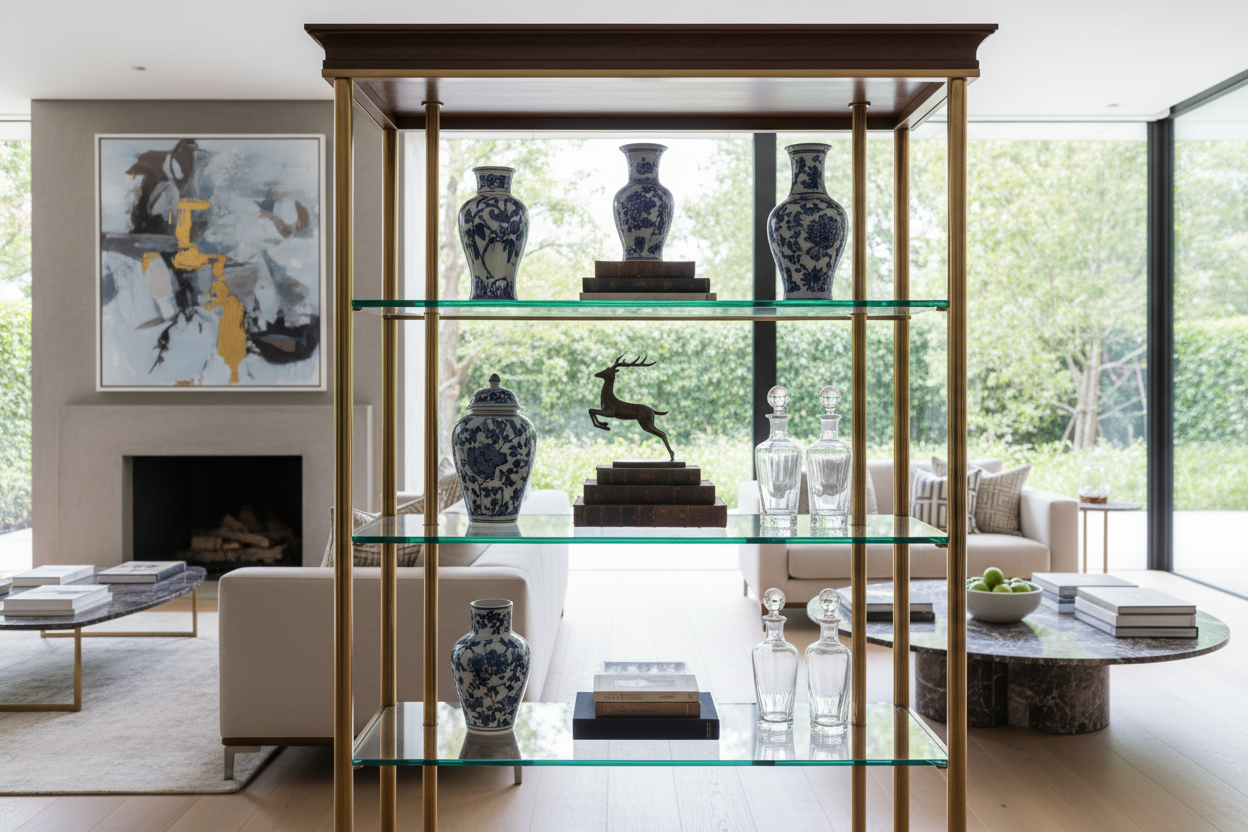
We have all been there. You are scrolling through design blogs or social media, and a perfectly styled living room catches your eye. You immediately start hoarding display cabinet images, imagining how a similar glass-front piece would solve your storage issues while looking effortlessly chic. But translating that curated, studio-lit photo into your actual North American home is where the real challenge begins.
The problem with relying solely on inspiration photos is that they often hide the realities of scale, material quality, and everyday maintenance. A cabinet that looks delicate and airy online might completely overwhelm a standard eight-foot-ceiling suburban room, or worse, arrive looking like flat-pack cardboard. In this guide, we are going to break down how to look past the styling smoke and mirrors, so you can choose a piece that actually works in your space.
Quick Guide to Decoding Furniture Photos
- Check the ceiling height: Studio photos often feature 10-to-12-foot ceilings. A tall cabinet will look much bulkier in a standard 8-foot room.
- Look for lighting tricks: Bright, blown-out photos can hide cheap, shiny veneers. Look for customer review photos to see the true finish.
- Analyze the negative space: Notice how much empty wall space surrounds the cabinet in the photo. Cramming the same piece between two windows in your home will change its visual weight entirely.
- Zoom in on the hardware: Flimsy hinges and painted plastic pulls are dead giveaways of poor construction, even if the silhouette looks high-end.
Scale and Proportion in Real Spaces
Why the Room Dimensions Matter
When analyzing display cabinet pictures, it is easy to forget that the room surrounding the furniture dictates how it feels. A massive, solid-oak curio cabinet might anchor an open-concept loft beautifully, but place that same piece in a narrow 1920s bungalow dining room, and it becomes an imposing monolith. Always map out the footprint on your floor with painter's tape, but do not stop there. Tape the height and width on your wall to understand the true volume of the piece.
Clearance and Traffic Flow
You need to account for the swing of the cabinet doors. If you are placing a display case near a dining table, ensure you leave at least 36 inches of walkway clearance, plus enough room to comfortably open the glass doors without hitting a dining chair. Sliding door cabinets are an excellent alternative if your square footage is tight.
Material Truths Hidden Behind the Lens
Spotting Veneer vs. Solid Wood
Online photography is incredibly forgiving to engineered woods and low-grade veneers. While there is nothing inherently wrong with a high-quality wood veneer over an MDF core—in fact, it resists warping from humidity better than some solid woods—you need to know what you are buying. Look closely at the edges of the shelves in the photos. If the wood grain abruptly stops or looks like a printed sticker, it will peel over time. For longevity, prioritize pieces with solid wood frames, even if the back panels are engineered.
The Reality of Glass and Metal
Matte black metal and ribbed glass are incredibly popular right now. They offer a fantastic transitional look that bridges modern and industrial styles. However, metal cabinets can be surprisingly loud when closing the doors, and non-tempered glass is a safety hazard in homes with children or large pets. Always check the specifications for tempered safety glass and soft-close magnetic catches.
Styling Your Cabinet Like the Pros
The Rule of Visual Weight
The reason the cabinets in those inspiration photos look so good is heavily tied to how they are styled. The secret is managing visual weight. Anchor the bottom shelves with your heaviest, darkest items—like large coffee table books, woven baskets, or heavy ceramic bowls. Keep the upper shelves lighter with delicate glassware, small sculptures, or trailing plants. If you fill every inch of every shelf, the cabinet stops being a display piece and just becomes visible clutter.
Lessons from My Own Projects
A few years ago, I had a client who fell entirely in love with a sleek, arched metal display cabinet she saw in a high-end magazine. She ordered it against my advice regarding her specific space. When it arrived, the matte brass finish was actually a painted, mustard-toned powder coat that chipped within weeks.
Worse, the glass shelves were incredibly thin. When we tried to load her collection of vintage art books onto the middle tier, the glass bowed visibly. We had to rush to a local glazier to get custom, quarter-inch tempered glass cut just to make the piece functional. The lesson? Always check the weight capacity per shelf, and never trust a metal finish until you see a close-up, unedited photo of the weld joints and hardware.
Frequently Asked Questions
How do I keep my display cabinet from looking cluttered?
Stick to a cohesive color palette for the items inside, and embrace negative space. You should leave about 30 to 40 percent of the shelf space empty. Group smaller items on trays or atop stacks of books to give them intention.
Is a glass display cabinet safe if I have toddlers?
It can be, but you must take precautions. Ensure the glass is tempered so it shatters into blunt cubes rather than sharp shards if broken. Most importantly, the cabinet must be securely anchored to the wall studs to prevent tipping.
What lighting is best for a dark display cabinet?
If your cabinet does not come with integrated lighting, battery-operated LED puck lights are an easy retrofit. Mount them out of sight at the top of the cabinet or under individual shelves. Opt for a warm white temperature (around 2700K to 3000K) to make the display feel inviting rather than stark.


Dejar un comentario
Este sitio está protegido por hCaptcha y se aplican la Política de privacidad de hCaptcha y los Términos del servicio.