










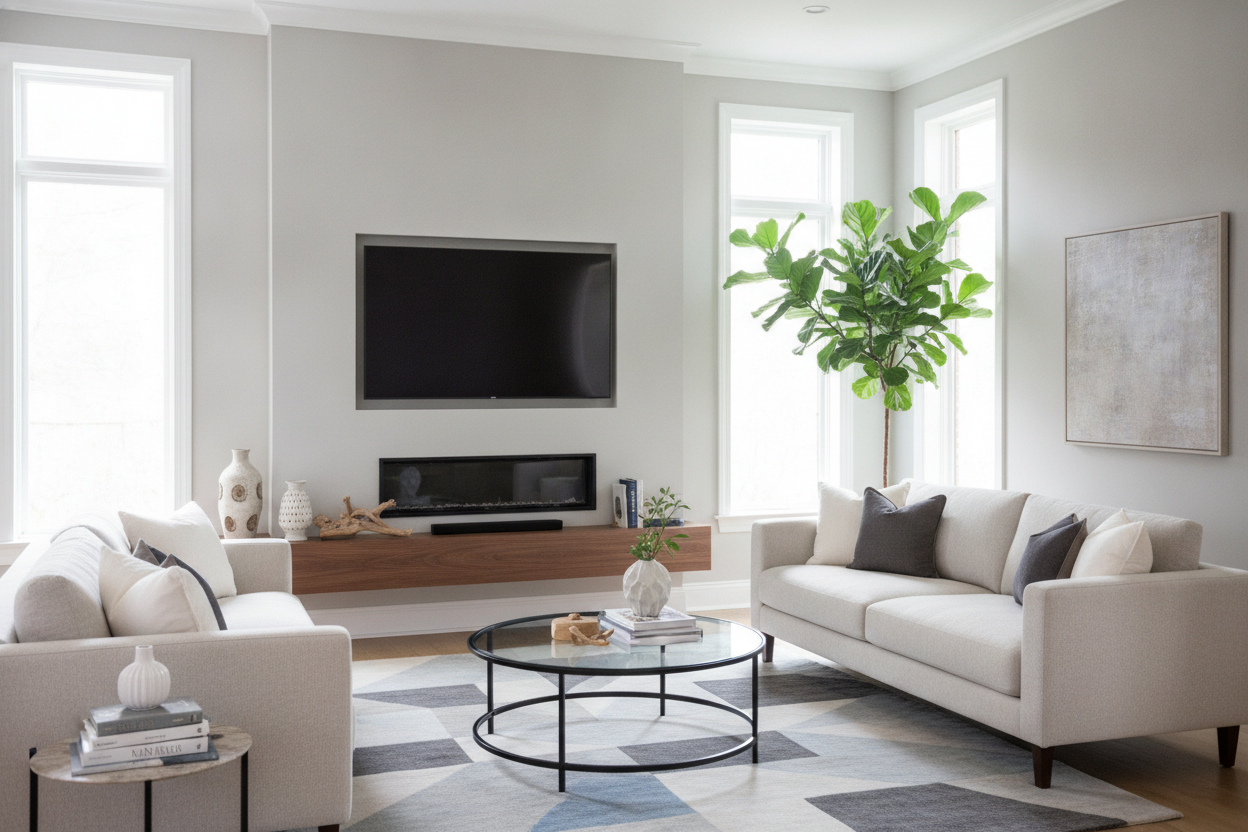
I recently spent three hours at a friend's house watching a movie with my chin pointed at the ceiling. They had attempted to balance a flimsy tv stand mantel setup directly onto their original 1920s brick fireplace. It looked like a physics experiment gone wrong, and my neck still hasn't forgiven me.
We have all been there—trying to force a layout that just doesn't work because we want that cozy focal point. But trying to place a tv stand on fireplace mantel ledges is a recipe for a broken screen or a trip to the chiropractor. There is a much better way to get the architectural vibe you want without the structural disaster.
- TVs mounted too high cause chronic neck strain and 'racetrack' eye fatigue.
- Heat from a functional fireplace can melt the sensitive internal components of your television.
- Exposed, dangling wires are the fastest way to ruin a room's aesthetic.
- A dedicated media mantel provides the hearth look at a safe, ergonomic viewing height.
The Neck-Craning Reality of the Above-Fireplace Screen
The 'TV Too High' phenomenon is the ultimate interior design sin. When you try to stack a stand on top of an existing mantel, you’re usually looking at a screen height of 60 inches or more. Unless you’re sitting in the front row of a movie theater by choice, this is a nightmare for your posture. Your eyes should naturally hit the bottom third of the screen when seated.
Then there’s the heat. Electronics and fire are not friends. I’ve seen $2,000 OLED panels develop 'heat bloom' because they were sitting four feet above a roaring wood fire. Even if you don't use the fireplace, the visual clutter of wires snaking down to the nearest outlet makes the whole setup look like an unfinished basement project.
Why a Standalone TV Stand Mantel is the Ultimate Compromise
If you love the look of a hearth but need a place for your 65-inch screen, a dedicated media mantel is the answer. These units are designed to be lower than a traditional architectural mantel, usually sitting between 28 and 32 inches high. This keeps the TV at eye level while still giving you that 'mantel' ledge to style.
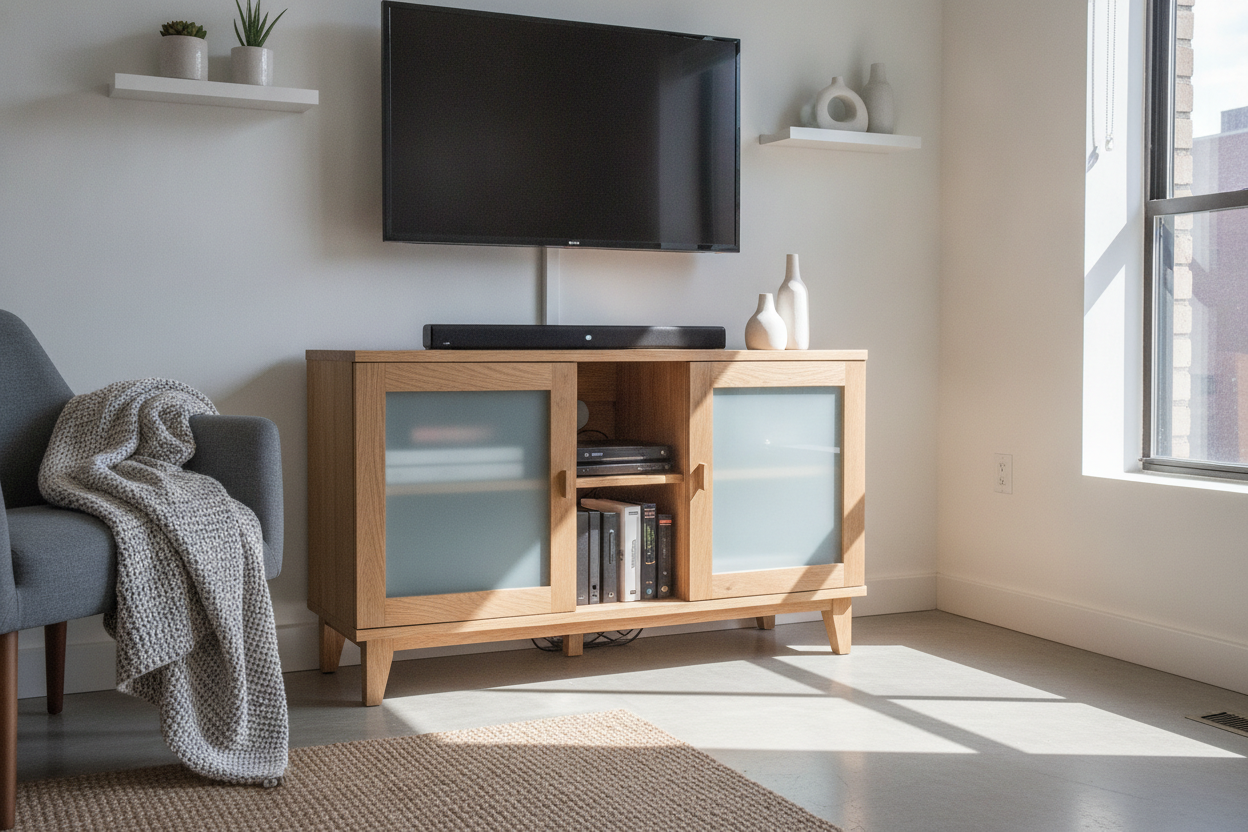
These pieces are built to hide the mess. They have integrated cable management channels and often feature 'cool-touch' surfaces so your tech stays safe even if the heater is running. When you choose the perfect tv stand with fireplace, you’re looking for something that mimics the scale of a real built-in. If you decide the mantel look is too much for your space, you can always browse dedicated TV stands that offer a more minimalist, low-profile silhouette.
Getting the Proportions Exactly Right
Nothing looks worse than a TV that is wider than the mantel it sits on. It makes the whole room feel top-heavy and unstable. The golden rule: your mantel should be at least 3 to 6 inches wider than your TV on both sides. This creates a visual 'frame' that grounds the screen and makes the setup feel intentional rather than accidental.
How to Decorate the Ledge (Without Blocking the Remote Sensor)
Once you have your unit, the temptation is to clutter the ledge with photos and trinkets. Don't do it. You need to keep the area directly in front of the TV clear, or you'll find yourself waving the remote in the air like a madman trying to hit the sensor. Stick to the edges.
I like using low-profile brass candlesticks or a trailing pothos plant on one end to soften the hard edges of the black screen. A few small, leather-bound books can add texture without adding height. If you have a larger ledge, leaning a piece of framed art *behind* the TV (if the screen is on a stand) can add depth and make the tech feel like part of a curated collection rather than just a black box on the wall.
My Favorite Units for Faking a Built-In Look
I’m a sucker for clean lines and matte finishes. Avoid the high-gloss 'cheap' stuff that reflects every light in the room. Look for units with realistic flame boxes—the ones with 3D glowing embers and adjustable brightness settings. It makes a world of difference when you're trying to set a mood.
The 59-inch white fireplace heater unit is a personal favorite for smaller living rooms. It has a crisp, modern feel that doesn't overwhelm the space, and the white finish helps it blend into the wall, making the room feel larger. It offers plenty of ledge space for styling while keeping the heater function tucked away safely.
Personal Experience: The Command Strip Disaster
I once tried to 'fix' a high-mantel TV by using about forty Command strips to hide the wires behind a plastic conduit. Within a week, the heat from the chimney (which I thought was well-insulated) caused the adhesive to fail. I came home to a 'wire waterfall' and a very expensive TV leaning at a 10-degree angle. It was the moment I realized that if you have to hack it that hard, the layout is just wrong. I switched to a dedicated media mantel the following month and never looked back.
FAQ
Is it safe to put a TV on a wooden mantel?
Only if the fireplace is decorative. If it’s a working fireplace, the rising heat can damage the TV's internal circuitry over time, even if the wood doesn't get hot enough to char.
How high is too high for a TV?
If the center of the screen is more than 42 inches from the floor, you’re likely going to experience neck strain. Most 'tv stand on fireplace mantel' setups put the screen well above 50 inches.
Do fireplace TV stands actually put out heat?
Yes, most have 4,600 to 5,200 BTU heaters that can comfortably warm a 400-square-foot room. You can also usually run the 'flame' without the heat for the vibe during summer.

Dejar un comentario
Este sitio está protegido por hCaptcha y se aplican la Política de privacidad de hCaptcha y los Términos del servicio.