










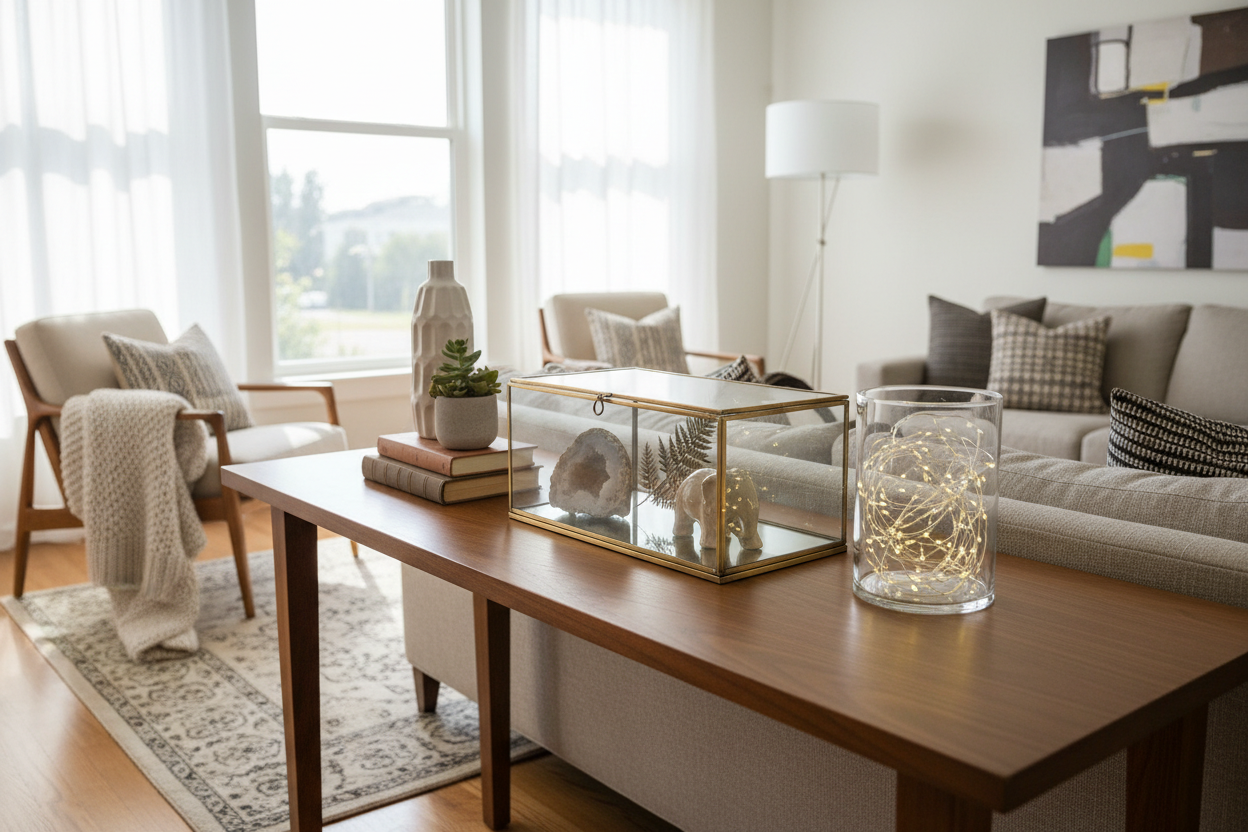
I used to be a tray person. I had one on the entryway table, one on my dresser, and one on the coffee table. I thought I was organized, but in reality, I was just corralling my junk into rectangles. Every time I looked at my dresser, I saw a bird's nest of loose change, dry cleaning receipts, and tangled necklaces. It didn't look like a 'vignette'; it looked like a garage sale.
Everything changed when I bought my first table top display box. By putting my daily essentials behind glass, they suddenly stopped looking like clutter and started looking like a collection. It is a psychological trick that actually works—when you give an object a literal frame, you treat it with more respect.
The 'Catch-All Tray' Is a Lie
Trays are magnets for everything you don't want to deal with. Because they have no lid and no defined vertical boundary, you just keep stacking. A tabletop display case or a desktop display case changes the rules of the game. It forces you to be intentional because there is only so much room under that glass lid.
When I switched to a table top display cabinet, I stopped dumping my mail on the dresser. I couldn't—the box was already occupying that prime real estate with things I actually liked looking at. It turns a chaotic drop zone into a curated micro-exhibit. It’s the easiest way to make a 5-drawer chest look like it was styled by a pro instead of someone just trying to find their keys in the morning.
- Intentionality: You can't just throw junk inside a closed box; it forces you to edit.
- Dust Protection: Unlike open trays, your watches and jewelry stay clean.
- Visual Height: A box adds more dimension to a flat surface than a shallow tray.
- Material Contrast: Glass and metal edges break up the monotony of wood furniture.
Finding the Right Surface to Anchor It
Scale is where most people mess this up. I once tried putting a tiny small countertop display case on a massive 8-person dining table. It looked like a lost Lego piece. You need a surface that anchors the box so it doesn't look like it's floating in a sea of empty space.
The best spots are usually narrower surfaces where you naturally lean in to look at things. Think about a bedroom dresser, a hallway console, or a solid buffet cabinet with storage in the dining room. These surfaces provide the 'heft' needed to support the delicate look of a tabletop display cabinet. If you are placing a countertop showcase in a kitchen or bar area, make sure it’s tucked into a corner so it doesn't interfere with your actual workspace.
What Actually Looks Good Inside?
Retailers sell these as table top glass jewelry display cases, but if you only use them for rings, you're missing out. I’ve found that the most interesting displays are the ones that mix textures. I have one box filled with vintage matchbooks from restaurants I’ve visited, and another that holds my grandfather’s old brass compass and a few air plants.
If you are going the jewelry route, don't just lay things flat. Layer them. Drape a gold chain over a small piece of driftwood or a velvet cushion. The goal of a tabletop showcase is to make your everyday items look like they belong in a high-end boutique. Even a pair of sunglasses looks expensive when it's sitting inside a small table top display cabinet with a mirrored bottom.
Glass vs. Acrylic: Don't Ruin the Vibe
I’ve tested both, and I’m going to be honest: cheap plastic ruins the look. A tabletop acrylic display case is fine for a kid's room or a very high-traffic modern office where things might get knocked over. Acrylic is lightweight and shatterproof, but it scratches if you even look at it wrong, and it eventually yellows.
For a living room or bedroom, always go with a glass top display case. The weight feels substantial, and the clarity is unmatched. I prefer the ones with brass or blackened steel edging. It gives the piece a vintage-inspired, 'found' quality. If you’re looking at table top display cases for sale, check the weight—if it’s under two pounds, it’s probably flimsy. You want something that stays put when you open the lid.
How to Style the Rest of the Surface
A table top glass cabinet shouldn't be a lonely island. To make it look integrated, you need to vary the heights around it. I like to rest my display box on top of a stack of two or three large coffee table books. This gives it a 'pedestal' feel and makes it the focal point of the surface.
Pair it with a tall, thin lamp or a vase of greenery to balance out the boxy shape. I actually swapped my wobbly bar cart for a more permanent cabinet setup, and placing a table top showcase next to my decanters made the whole area look like a sophisticated home bar. It’s all about creating layers so the eye has multiple places to land.
My Personal Lesson Learned
I once bought a massive table top glass jewelry display cases set for my nightstand. It was gorgeous, but it was 14 inches wide. My nightstand is only 18 inches. I had no room for my phone, my water, or my book. I spent two weeks hitting my elbow on the corner of the glass every time I reached for my alarm. Learn from my mistake: measure your 'active' space before you buy. For a nightstand or small desk, keep the box under 8 inches wide so you still have room to actually live.
FAQ
How do I keep the glass from looking smudged?
Keep a microfiber cloth tucked in a drawer nearby. Since these are table top showcases, they get touched a lot. A quick wipe once a week keeps the 'museum' vibe alive.
Can I put plants inside a glass display box?
Yes, but stick to air plants or succulents that don't need much humidity. A table top glass cabinet isn't usually airtight, but it can still trap moisture, which might fog up the glass if you overwater.
Are these safe for expensive watches?
Absolutely. In fact, a table top display box is better than a drawer because it keeps the dust out of the mechanisms while letting you appreciate the design of the watch every time you walk by.

Dejar un comentario
Este sitio está protegido por hCaptcha y se aplican la Política de privacidad de hCaptcha y los Términos del servicio.