










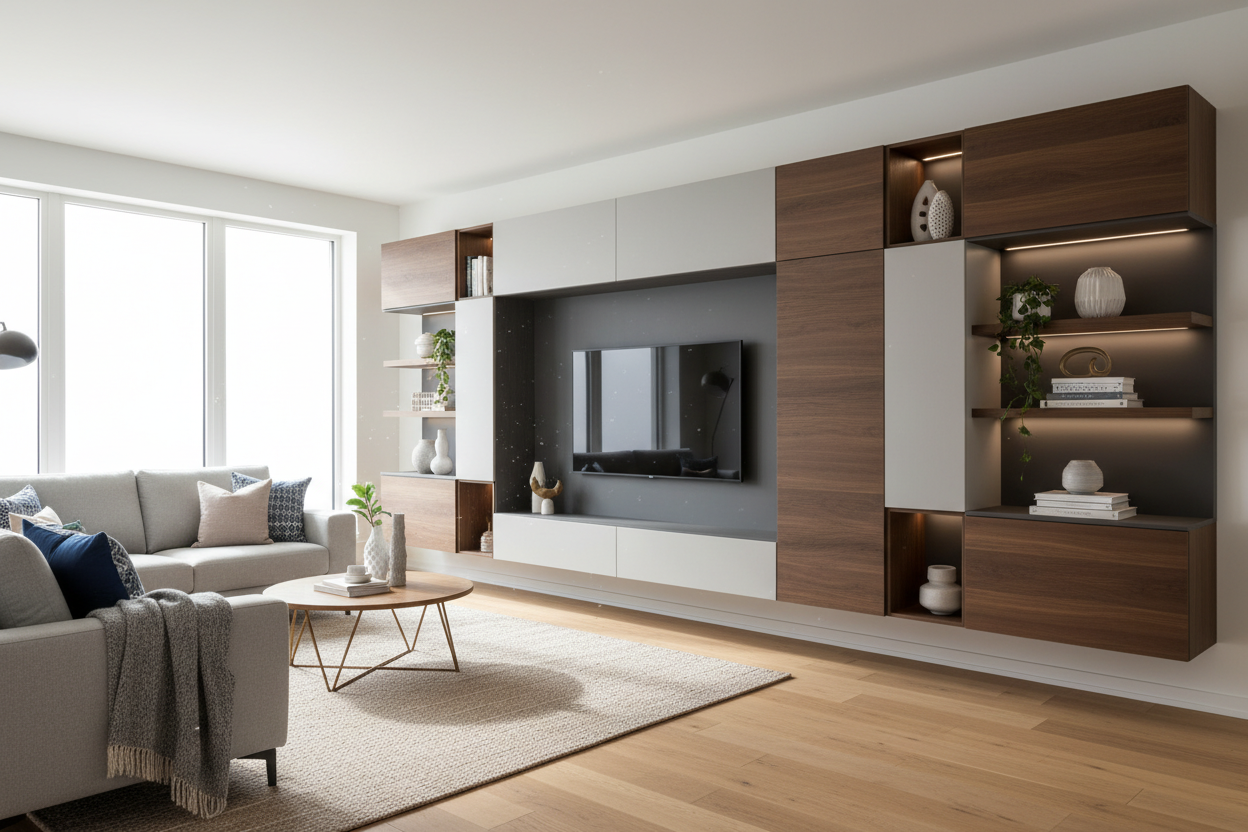
I spent three years living in a studio where my 'living room' was essentially a rug-sized patch of floor between my bed and a radiator. I tried every trick in the book to make it feel like a real home—skinny coffee tables, acrylic chairs, oversized mirrors—but the room always felt like a game of Tetris gone wrong. The culprit? My heavy, floor-standing media console. It was a beautiful piece of mid-century oak, but it was a space hog that made the whole wall feel like it was leaning in on me.
The day I finally ripped that console out and installed **living room wall cabinets**, the entire energy of the apartment shifted. Suddenly, I could see the floorboards stretching all the way to the wall. The room felt four feet wider. If you’re currently doing the sideways shuffle past your furniture, it’s time to stop looking at your floor plan and start looking at your vertical real estate.
Quick Takeaways
- Floating storage creates the illusion of more square footage by keeping the floor line visible.
- Modern wall cabinets are better for cable management than traditional legged units.
- Hanging height is everything—10 to 15 inches off the floor is the sweet spot for media.
- Mix and match: Pair floating uppers with a grounded sideboard for a balanced, high-end look.
The Heavy Furniture Fatigue (And Why We Need to Look Up)
Most of us are guilty of the 'perimeter' furniture layout. We push the sofa against one wall, the TV stand against the other, and maybe squeeze a bookshelf into the corner. We end up with all our living room furniture pieces fighting for the same 8x10 square of rug space. It creates what I call 'visual gravity'—everything feels heavy, low, and cramped. When you have legs on every single piece of furniture, the floor becomes a forest of wood and metal that traps dust and cuts off the sightlines.
By choosing modern wall cabinets for living room storage, you are effectively deleting that visual weight. There is something psychologically freeing about seeing the floor extend underneath your furniture. It signals to your brain that there is 'extra' room, even if the cabinet takes up the same amount of cubic space as a floor unit. I’ve found that this is the fastest way to make an 11-foot wide room feel like a 15-foot wide room. Plus, you’ll never have to move a 100-pound credenza just to vacuum up the dust bunnies again. It’s a cleaner look, literally and figuratively.
How to Fake a Custom Built-In Without the Contractor
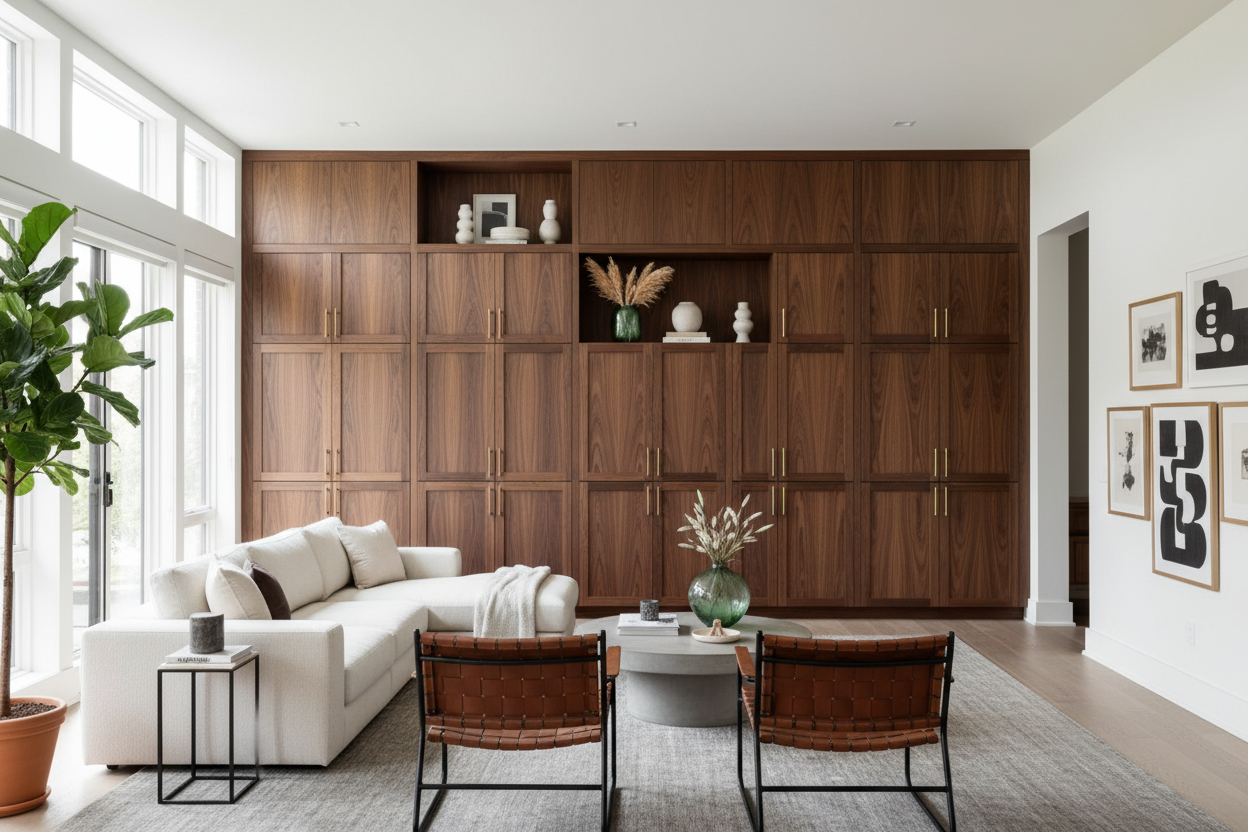
I’m a huge fan of the 'floating credenza' hack. This is where you take two or three identical cabinets and mount them side-by-side to cover almost the entire length of a wall. It gives you that high-end, architectural millwork look that usually costs a couple of months' rent, but you can do it with off-the-shelf pieces on a Saturday morning. When you align modern wall cabinets living room style, you create a long, horizontal line that draws the eye across the space, making the wall itself feel wider.
The trick to making this look expensive is all in the curation. Curating modern living room furniture isn't about buying a matching set from a big-box catalog; it's about choosing pieces that feel like they were designed for the specific dimensions of your home. I usually recommend choosing units with push-to-open doors or very minimal hardware. You want the cabinets to look like part of the wall, not like a box hanging on it. If you have a massive 75-inch TV, don't just put one small cabinet under it. Go wide. A cabinet that is at least 20% wider than your screen will make the whole setup look intentional rather than an afterthought.
The Golden Rule of Hanging a Contemporary Wall Cabinet
The biggest mistake I see—and I’ve made this one myself—is hanging a contemporary wall cabinet at 'eye level' like a kitchen cupboard. Unless you’re using it as a floating bookshelf above a desk, that’s going to look bizarre in a living room. If you are using the cabinet as a media console or a low-slung credenza, you want it to float just 10 to 15 inches off the floor. This height keeps the center of gravity low, which is much more relaxing for a lounge environment. It also puts your TV at the correct ergonomic height so you aren't craning your neck like you're in the front row of a movie theater.
I’m also a firm believer that storage cabinets with doors are superior to open shelving for wall-mounted units. Open shelves on a wall can quickly look cluttered and messy, which defeats the purpose of trying to make the room feel airier. You want a clean, solid surface to hide the routers, the messy stacks of board games, and the tangle of HDMI cables. When everything is tucked away behind a sleek door, the cabinet acts as a piece of art rather than a junk drawer on display. Just make sure you use a level—nothing ruins the 'designer' look faster than a cabinet that’s a quarter-inch lower on the left side.
Wait, What Goes Underneath Them?
Once you float your furniture, you’re left with a gap of negative space. For some people, this 'empty' look is exactly what they want—it’s the peak of minimalist design. But if it feels a little too clinical for you, there are ways to style that gap without cluttering it back up. I love tucking two low, woven ottomans or a pair of leather poufs underneath. It gives you extra seating for guests that you can pull out when needed, but they stay neatly tucked away the rest of the time. It adds texture and warmth to the 'floating' look without eating up the floor space you just fought so hard to win back.
If you have a larger living room, you can play with visual tension by mixing your floating pieces with grounded ones. For example, I love the look of a sleek, smooth-surfaced wall cabinet paired with a textured sideboard with fluted doors on an adjacent wall. The fluting adds a vertical rhythm that contrasts beautifully with the long horizontal lines of a floating unit. This mix of 'floating' and 'grounded' keeps the room from feeling like a spaceship. In an open-concept space, you might use a solid wood modern sideboard in the dining area to provide a heavy, organic anchor, while keeping the living room side light and airy with wall-mounted units. It’s all about balance—using the floor where it counts and reclaiming it where it doesn't.
Personal Experience: The Stud Finder Lesson
I once tried to hang a 60-inch floating cabinet in a rental with old plaster walls. I used those 'heavy-duty' plastic anchors that claim to hold 50 pounds each. About three weeks later, at 2 AM, I heard a sound like a car crash. The cabinet had literally peeled the plaster off the wall because the weight of my record player was too much for the anchors. Lesson learned: always, always hit the studs. If the studs don't line up with your cabinet holes, mount a piece of 3/4-inch plywood to the studs first, then mount the cabinet to the plywood. It’s an extra step, but it’s better than a shattered TV and a ruined wall.
FAQ
Will a wall cabinet hold a heavy TV?
Technically, yes, if mounted to studs, but I always recommend mounting the TV directly to the wall and letting the cabinet float underneath it. It looks cleaner and is much safer for your tech.
How do I hide the cables?
Drill a 2-inch hole in the top and back of the cabinet. Use a plastic cord grommet to keep it tidy, and run the wires through the wall or use a paintable cord raceway for a seamless look.
Are wall cabinets hard to install?
If you can use a drill and a level, you can do this. The hardest part is the weight—always have a second person hold the cabinet while you drive the first few screws into the studs.

Dejar un comentario
Este sitio está protegido por hCaptcha y se aplican la Política de privacidad de hCaptcha y los Términos del servicio.