










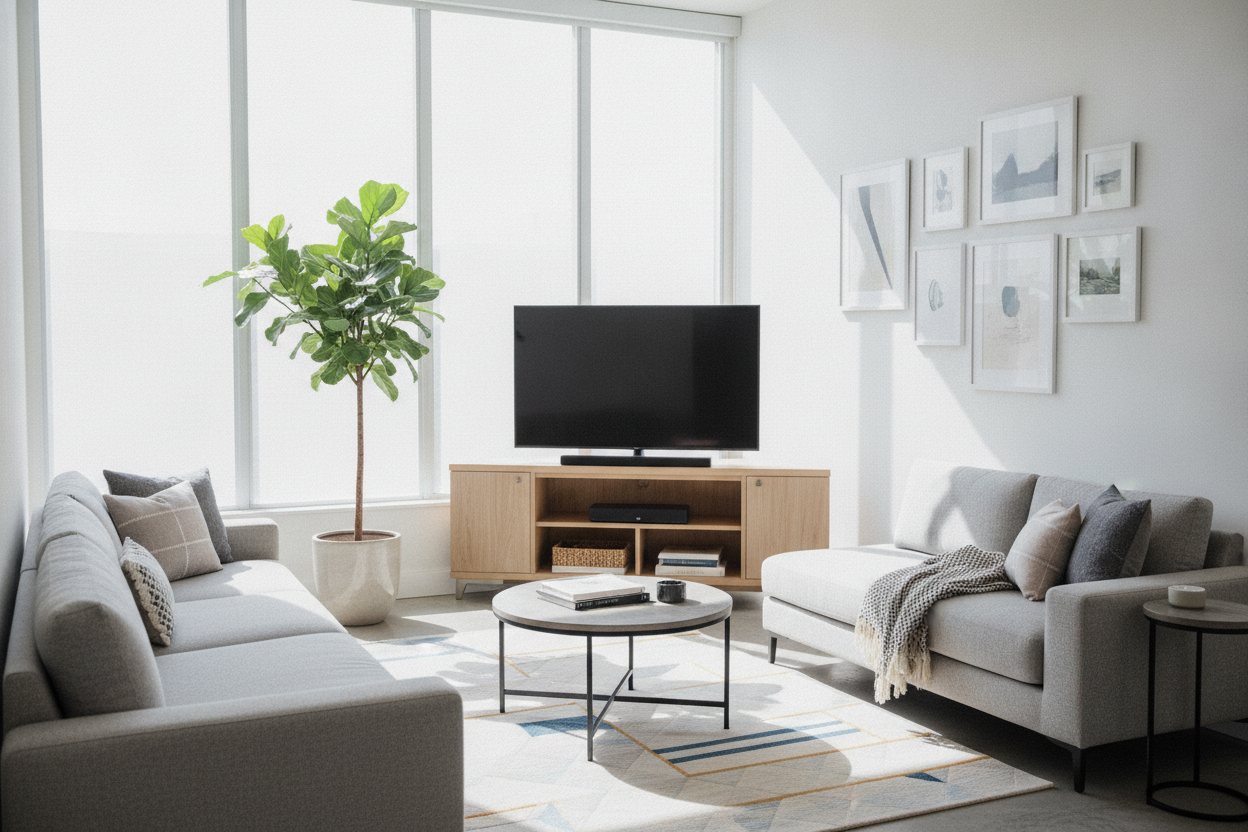
I remember staring at my 450-square-foot studio three years ago, realizing my 55-inch TV was hogging the only wall long enough to fit a proper dining table. I was eating cereal on my lap every night while my screen enjoyed prime real estate. Switching to a space-saving corner tv stand wasn't just a design choice; it was a survival tactic to make my apartment feel like a home instead of a dorm room.
- Corner units reclaim 'dead' square footage that usually goes to waste.
- Tucking the TV away eliminates the 'bowling alley' effect in narrow rooms.
- Measure the depth, not just the width, to ensure it doesn't stick out too far.
- Closed storage is mandatory to hide the inevitable cable spaghetti.
The 'Flat Wall' Trap That Ruins Tiny Apartments
Most of us are conditioned to put the TV on the longest, flattest wall in the room. It is the default setting. But in a small apartment, that wall is your most valuable asset. When you give it to a media console, you lose the chance for a bookshelf, a gallery wall, or a four-person table. You end up with all your furniture lined up against the sides like middle schoolers at a dance.
I’ve seen too many people sacrifice a comfortable sofa just because they felt the TV had to be centered on the main wall. It doesn't. Giving up that flat wall is the first step to actually enjoying your floor plan. When you stop centering your life around the black mirror, the whole room opens up.
Why I Finally Embraced a Space Saving Corner TV Stand
The breaking point for me was trying to host a dinner for four. I had no place for a table because the TV stand was taking up six feet of horizontal space. I spent a Saturday moving my furniture around like a frantic game of Tetris until I realized Why I Flipped My Layout and Put a Small TV Stand in the Corner. Shifting the screen to that awkward 90-degree junction changed everything.
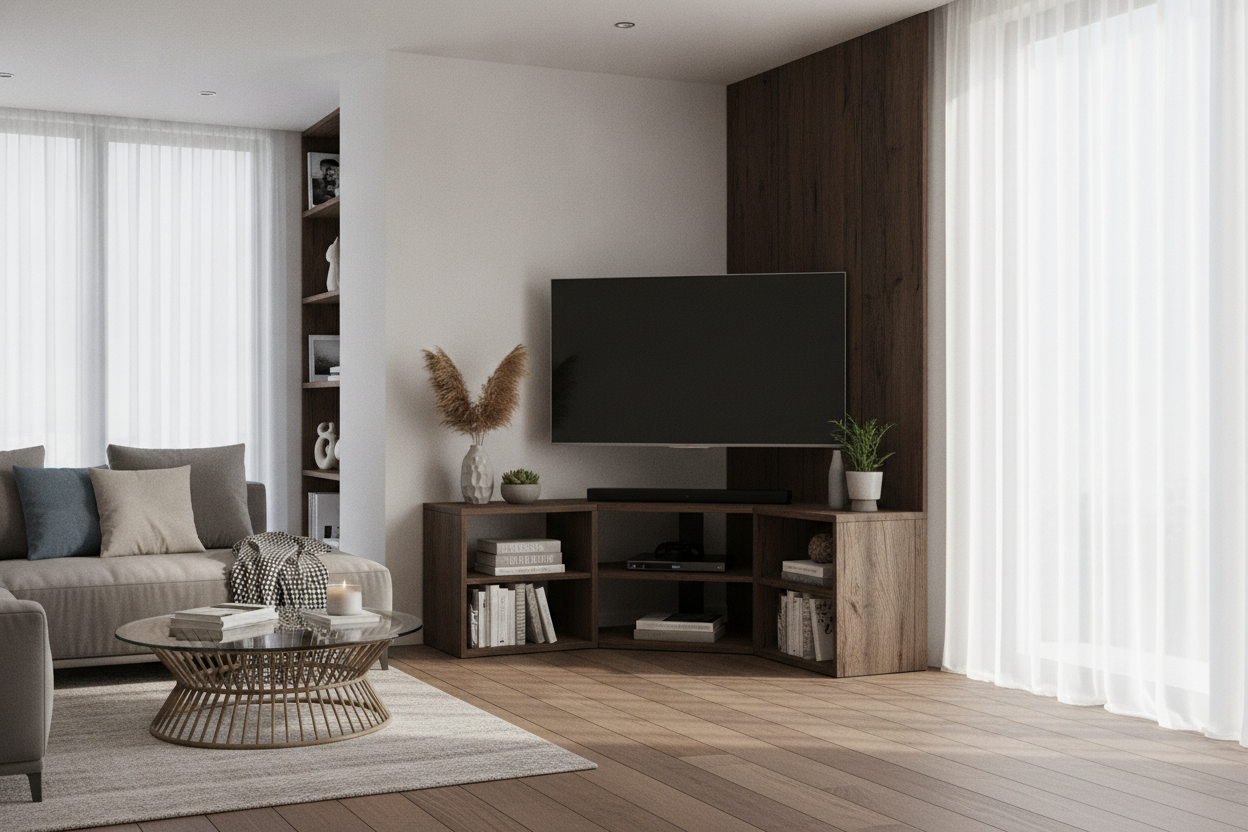
Suddenly, the room felt wider. By utilizing a space saving corner tv stand, I freed up enough wall space for a slim bistro table. The 'dead' corner—which previously held nothing but a dusty floor lamp—became the most functional part of the room. My only regret was not doing it six months earlier.
How a Small Corner TV Unit Fixed My Traffic Flow
Traffic flow is the silent killer of small spaces. When your TV is on the main wall, the 'viewing zone' usually cuts right through the center of the room. Every time someone goes to the kitchen, they walk between you and the screen. It is annoying and breaks the flow of the space. Using a small corner tv unit tucks the focal point into a corner, naturally pushing the walking path to the outside of the seating area.
3 Rules for Choosing a Corner TV Stand for Small Spaces
Not all corner units are created equal. I’ve bought 'small' stands that ended up feeling like massive, clunky triangles that ate more space than they saved. Here is how to avoid that: First, measure the 'nose' of the stand—that is the part that sticks out furthest into the room. You want a unit that stays flush with your walking paths. If the nose sticks out 24 inches, you might still be tripping over it.
Second, look for 'clipped corners.' Some units are true triangles, but the best ones are rectangles with the back corners cut off at 45-degree angles. These offer more surface area for your soundbar while still fitting snugly into the corner. Third, check the scale. If you are shopping for a Small Space Solution, ensure the height matches your eye level from the sofa. A stand that is too tall will make your ceilings feel lower than they actually are.
Hiding the Clutter in Plain Sight
Because a corner stand is often visible from multiple angles, you cannot get away with open shelving. You will see every dusty HDMI cable and glowing router light from the side. I always tell people to look for a modern design with ample storage space. Doors are non-negotiable. They hide the gaming consoles and the cable nest, making the corner look like a deliberate architectural choice rather than a tech graveyard.
FAQ
Will a corner stand fit a 65-inch TV?
Probably not. Most corner units are designed for 43-inch to 55-inch screens. If you go too big, the edges of the TV will stick out past the stand, which looks sloppy and makes it easy to bump into the screen.
Do corner TV stands look dated?
Only if you buy the honey-oak ones from the nineties. Look for mid-century modern legs or sleek, minimalist metal frames. Those look intentional and high-end, not like something from a basement.
What is the best material for a small corner tv stand?
I prefer solid wood or high-quality MDF with a real wood veneer. Avoid the super cheap particle board that feels like paper; it will sag under the weight of a TV within a year, and the corners always peel.


Dejar un comentario
Este sitio está protegido por hCaptcha y se aplican la Política de privacidad de hCaptcha y los Términos del servicio.