










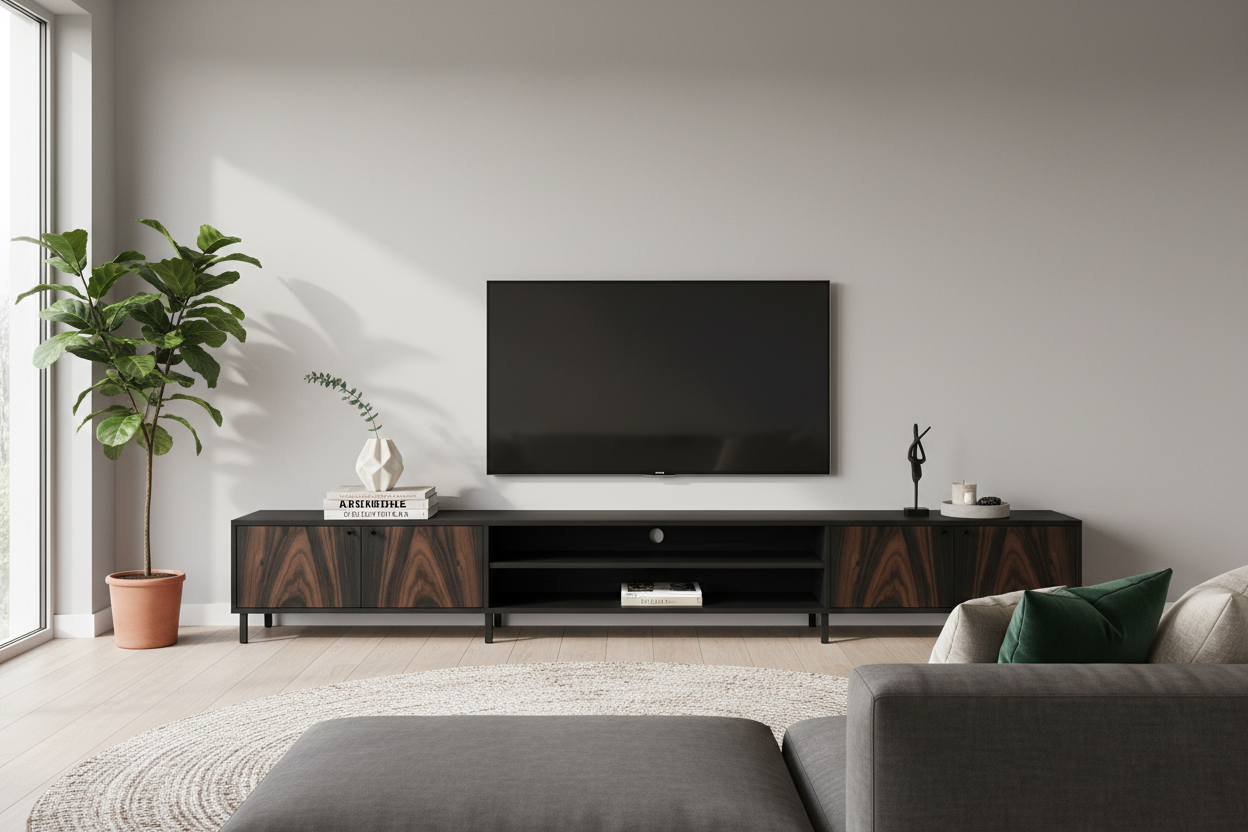
We've all been there: you finally mount that massive flat-screen in your living room, step back, and realize it looks like a giant black void floating on your wall. The room suddenly feels cold and disjointed. Finding the right media console to ground that heavy technology without making the space feel like a stark tech showroom is a common design hurdle. Enter the black and walnut tv stand.
This specific material pairing does heavy lifting in residential interiors. The black elements speak directly to the television screen and modern hardware, while the walnut brings in much-needed organic warmth and grain. In this guide, I will break down exactly how to size, style, and maintain this piece so your living area feels cohesive and intentional.
Quick Decision Guide
- Scale appropriately: Always choose a console that is at least 20 percent wider than your television to create a grounded visual base.
- Match the undertones: Walnut naturally has warm, sometimes reddish undertones. Pair it with neutral or warm-toned wall colors rather than stark, cool grays.
- Manage the dust: Matte black surfaces highlight dust quickly. Opt for a piece where the top surface is walnut and the base or doors are black to minimize daily maintenance.
- Check the hardware: Look for soft-close hinges and cord-management cutouts. These invisible details dictate how much you will actually enjoy living with the piece.
Balancing Visual Weight and Contrast
Bridging the Gap Between Tech and Decor
The primary reason a black walnut entertainment center works so well is its ability to bridge two very different worlds. Televisions, gaming consoles, and soundbars are inherently cold and industrial. A purely wooden console can sometimes clash with this modern tech, creating an awkward "farmhouse meets electronics store" aesthetic.
By integrating black framing, legs, or cabinet doors, the console absorbs the visual harshness of the electronics. The walnut portion then acts as the transitional element that connects the technology back to your fabric sofas, woven rugs, and painted walls.
Sizing and Scale for North American Homes
The Golden Ratio for Media Consoles
One of the most frequent mistakes I see in suburban family rooms is a large TV sitting above a console of the exact same width. This creates a top-heavy silhouette that makes the room feel cramped. If you have a 65-inch television, your black walnut tv stand should be a minimum of 75 to 80 inches wide.
Depth is equally important. Most modern living rooms benefit from a console depth of 16 to 20 inches. Anything deeper starts eating into your valuable walkway space. Always ensure you leave at least 36 inches of clearance between the front of the TV stand and the edge of your coffee table or sofa.
Designer's Honest Take
Over my 15 years designing residential spaces, I have specified dozens of these dual-tone consoles. But I learned a hard lesson early on with a high-end custom build in a downtown loft. I designed a gorgeous piece with a matte black top and slatted walnut doors. It looked incredible on installation day.
A month later, the client called me. The matte black top showed absolutely every speck of dust, pet hair, and fingerprint. It drove them crazy. Since then, I always recommend flipping the materials: prioritize a walnut top for durability and hiding dust, and utilize black for the base, hardware, or slatted fronts. It gives you the exact same striking contrast but requires a fraction of the daily upkeep.
Frequently Asked Questions
Does walnut wood fade over time?
Yes, natural walnut is unique because it actually lightens over time when exposed to UV light, shifting from a dark chocolate to a warmer, honey-brown tone. If your living room gets heavy direct sunlight, consider using window treatments or opting for a high-quality walnut veneer with UV-protective finishes.
What colors go best with black and walnut furniture?
Earth tones and warm neutrals are your best friends here. Olive greens, muted terracottas, and warm creamy whites complement the rich grain of the walnut while allowing the black accents to pop. Avoid sterile builder-grade white or cool icy blues, which can make the wood look dull.
Is engineered wood okay for a TV stand?
Absolutely. While solid wood is fantastic, a high-quality engineered wood core with a real wood veneer is often better for media consoles. It resists warping from the heat generated by your electronics and keeps the piece light enough to move when you inevitably need to access the tangled cords behind it.

Dejar un comentario
Este sitio está protegido por hCaptcha y se aplican la Política de privacidad de hCaptcha y los Términos del servicio.