










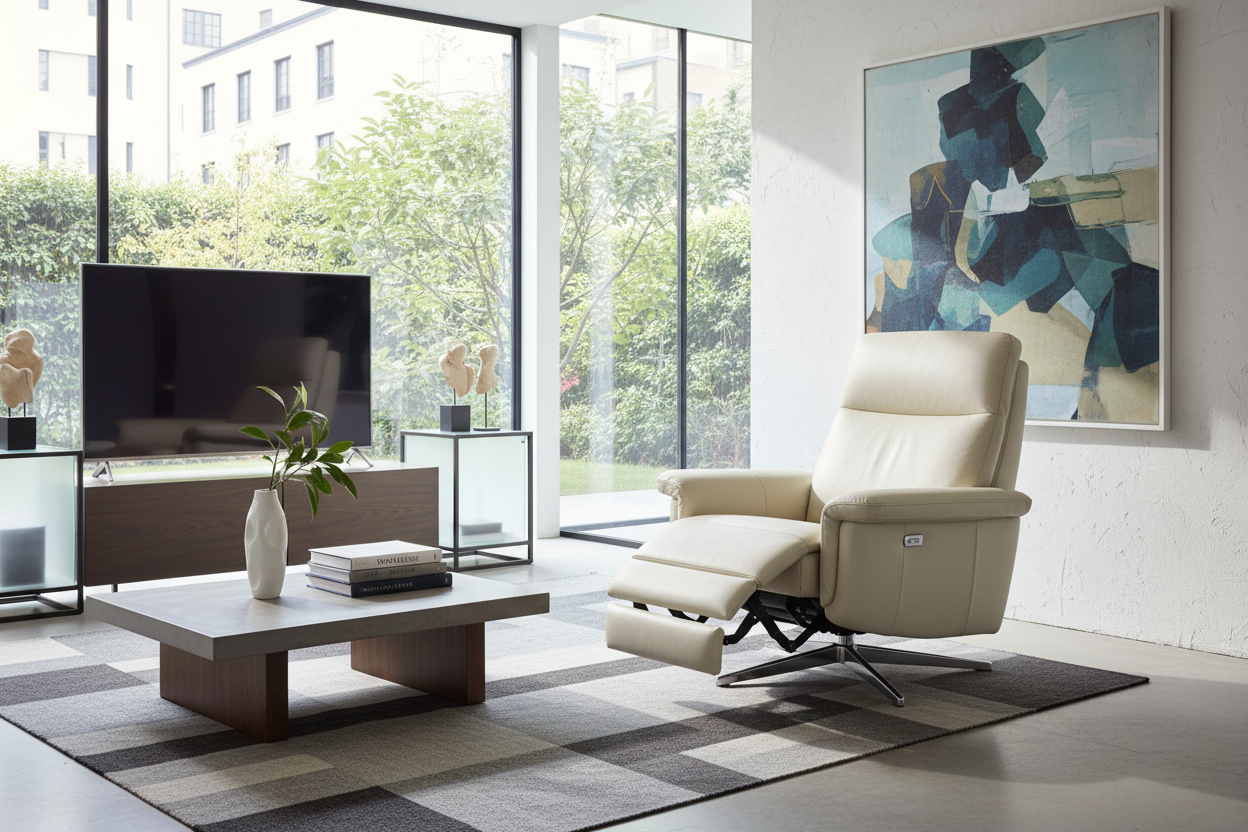
There is often a silent battle in interior design between high-end aesthetics and genuine comfort. We have all seen the "marshmallow" effect—overstuffed furniture that dominates a room and disrupts the visual flow. However, the modern homeowner refuses to compromise. Finding a lounge sofa recliner that offers the ergonomic support of a cinema seat while maintaining the sleek silhouette of Italian design is the ultimate goal. This guide navigates the technicalities of mechanisms, upholstery, and spatial planning to help you make a sophisticated choice.
Key Features to Look For
- Mechanism Quality: Look for smooth, whisper-quiet motors (Leggett & Platt are the gold standard) rather than jerky manual levers.
- Wall Clearance: "Zero-wall" or "wall-hugger" designs are essential for smaller footprints, requiring only 2-4 inches of rear clearance.
- Upholstery Grade: Opt for top-grain leather or high-rub count performance fabrics (Crypton or Sunbrella) for longevity.
- Frame Construction: Kiln-dried hardwood frames prevent warping and squeaking over time compared to plywood or particleboard.
- Seat Suspension: Sinuous springs paired with high-density foam (2.0 lbs or higher) prevent the seat from sagging or "puddling."
Balancing Silhouette and Function
The primary design challenge with reclining furniture is visual weight. Traditional recliners often look heavy and ground the room excessively. To counter this, I advise clients to look for models with track arms rather than rolled arms, and exposed legs. A sofa that sits off the floor creates a sense of airiness, tricking the eye into perceiving the room as larger.
When selecting a lounge sofa recliner, inspect the footrest. Ideally, you want a continuous chaise style—where the fabric connects the seat to the footrest without a gap. This not only looks more streamlined but offers better leg support and prevents small items (or pets) from slipping through the mechanism.
Materiality and Texture
Your choice of material dictates the longevity and vibe of the piece. While full-aniline leather creates a luxurious, buttery patina over time, it is susceptible to scratches. For high-traffic family rooms, I often steer clients toward performance velvets or heavy-weight linens. These add tactile warmth and absorb sound, softening the acoustics of a room with hard flooring.
The Hidden Tech Factor
Modern luxury is subtle. Avoid recliners with bulky plastic cup holders or visible USB ports that glow blue in the dark. Look for controls hidden on the inside of the armrest or brushed metal sensors that blend into the side profile. The technology should serve you, not announce itself.
Space Planning and Layout
Placement is critical. Unlike a static sofa, a recliner changes its footprint. You must account for the pitch—the angle at which the back reclines. Even with wall-hugger technology, you need to ensure the extended footrest doesn't collide with your coffee table. I recommend a clearance of at least 14 to 18 inches between the edge of the sofa seat (when upright) and the coffee table. Alternatively, use nesting tables or a round ottoman to allow for fluid movement.
Lessons from My Own Projects
I learned a hard lesson about reclining sofas during a penthouse renovation in Chicago. We selected a stunning, motorized Italian leather sectional that was meant to float in the center of the room. It looked perfect on the floor plan.
However, once installed, we realized the battery packs were visible from the dining area behind the sofa, creating an eyesore of wires and black plastic boxes. We hadn't accounted for the fact that reclining mechanisms need power, and floating a sofa means nowhere to hide the cords unless you have floor outlets installed exactly under the frame. We ended up having to custom-build a slim console table to run along the back of the sofa just to hide the cabling. Now, I always check the power source placement and battery life specs before finalizing a purchase for an open-concept space. Also, be aware that leather stretches; after six months, that pristine tight seat will develop "comfort wrinkles." This is natural, but something to be prepared for.
Conclusion
Integrating a motion sofa into your living space doesn't mean sacrificing style for a Sunday afternoon nap. By focusing on streamlined profiles, high-performance materials, and smart layout planning, you can curate a space that is as inviting as it is beautiful. Trust the measurements, respect the mechanism, and invest in quality framing.
Frequently Asked Questions
How much space do I really need behind a reclining sofa?
Standard recliners require 10 to 14 inches of clearance. However, "zero-wall" or "wall-saver" models slide the seat forward as the back reclines, requiring as little as 2 to 4 inches. Always verify the manufacturer's specific "wall clearance" metric.
Are power recliners more durable than manual ones?
Surprisingly, often yes. Manual levers rely on spring tension and physical force, which can wear out or jam over time. High-quality power motors provide a controlled, smooth motion that puts less stress on the frame, provided the motor itself is from a reputable brand.
Can I put a rug under a lounge sofa recliner?
Absolutely, and you should—it anchors the space. However, ensure the rug is large enough that the front legs of the sofa sit firmly on it. Be mindful of the pile height; a shag rug might interfere with the footrest mechanism extending and retracting smoothly.


Dejar un comentario
Este sitio está protegido por hCaptcha y se aplican la Política de privacidad de hCaptcha y los Términos del servicio.