










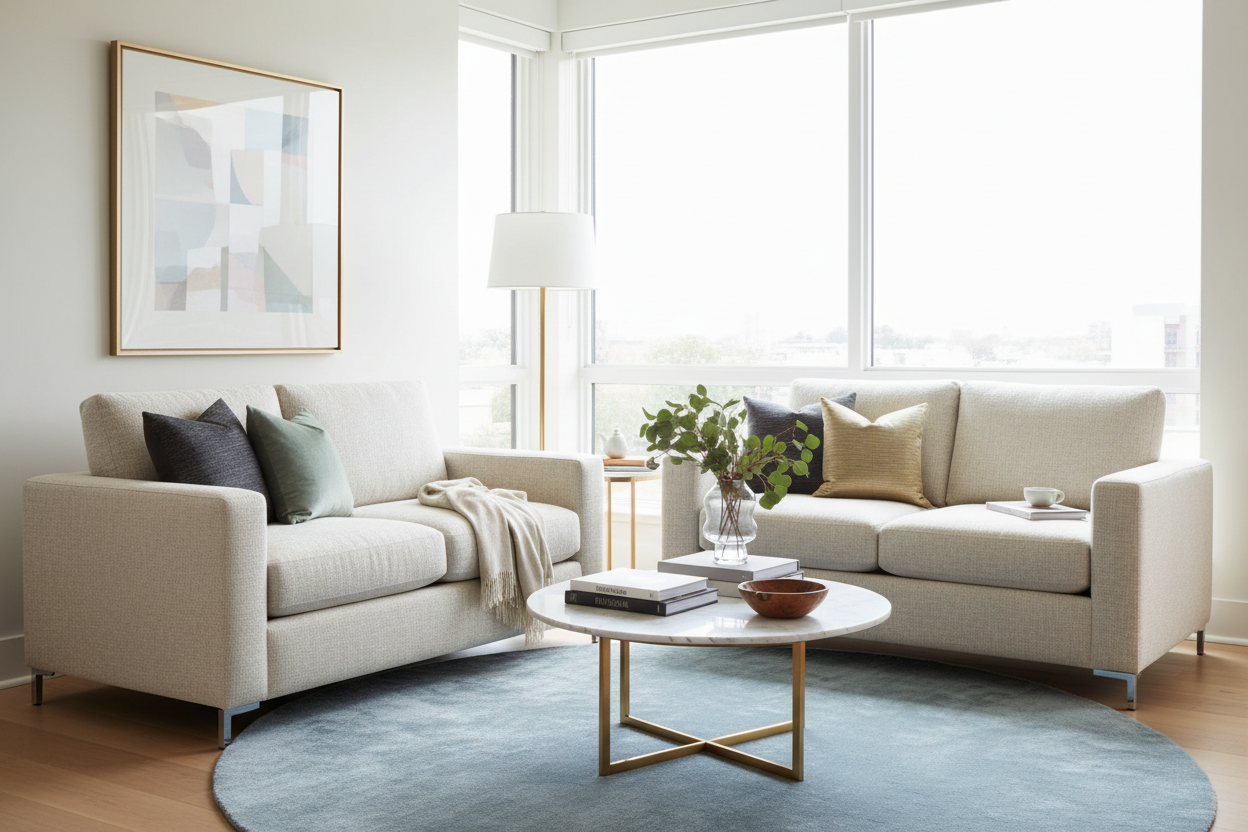
There is a specific kind of spatial paralysis that occurs when designing a living room that isn't quite large enough for a sectional, yet feels too sparse with just a standard three-seater. This is where love seat sofas become the unsung heroes of interior architecture. They bridge the gap between an accent chair and a full-sized sofa, offering intimacy without dominating the square footage. However, selecting the wrong silhouette can quickly make a room feel crowded or, conversely, visually unbalanced. In this guide, we will navigate the nuances of scale, texture, and construction to ensure your choice adds value and sophistication to your home.
Key Features to Look For
- Frame Construction: Look for kiln-dried hardwood frames rather than particle board to prevent warping over time.
- Suspension System: Eight-way hand-tied springs offer superior longevity compared to basic sinuous springs.
- Scale & Depth: Standard depth is around 38 inches; ensure the piece doesn't block traffic flow in tighter areas.
- Upholstery Grade: Check the Martindale rub count (aim for 25,000+) for durability in high-traffic zones.
Mastering Scale and Proportion
The most common error I see in residential projects is misjudging the visual weight of sofa love seats. A heavy, rolled-arm piece in a small study will suffocate the room. Conversely, a low-profile, mid-century modern piece might look lost in a room with high ceilings. When sourcing for clients, I always tape out the dimensions on the floor, but I also consider vertical volume. If your ceilings are over nine feet, opt for a design with a higher back or distinct vertical tufting to draw the eye upward.
Choosing the Right Material
Fabric selection dictates both the aesthetic and the lifespan of the furniture. For a luxury aesthetic that withstands real life, performance velvet or high-grade bouclé are excellent choices. They offer tactile richness—what we call "hand" in the industry—without the fragility of pure silk or low-grade linen.
The Importance of Cushion Fill
Don't overlook what is inside. A 100% foam cushion will look sharp and architectural but may feel stiff. A 100% down fill feels luxurious but requires constant fluffing to avoid looking sloppy. For the best of both worlds, I recommend a high-density foam core wrapped in a down-feather blend. This maintains the structure of the love seat while providing that welcoming "sink-in" feeling.
Space Planning & Layout
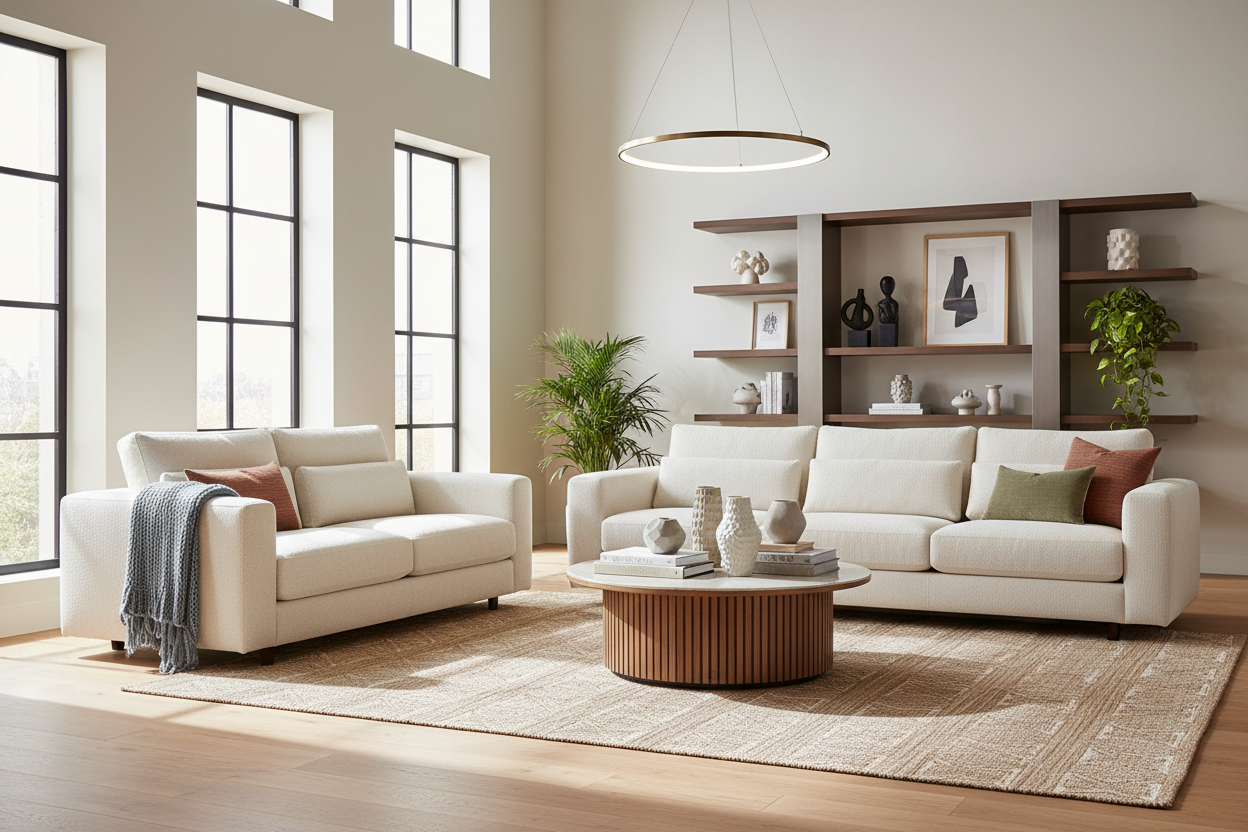
Ideally, a loveseat should not be pushed flush against a wall unless absolutely necessary. Floating the piece even three inches away from the wall creates a shadow line that suggests spaciousness. In larger open-plan spaces, pair two matching love seats facing each other perpendicular to a fireplace. This creates a dedicated conversation zone that feels intentional and tailored, rather than just filling space with a massive sectional.
Lessons from My Own Projects
I want to share a specific realization I had while furnishing a narrow Victorian row house in Boston. We ordered a stunning, deep-navy velvet loveseat. It looked incredible in the renders. However, once installed, I realized a fatal flaw regarding "nap direction." Every time someone sat down or brushed against it, the velvet looked bruised and messy because the pile was distinct. In a showroom, these are smoothed out constantly. In a home, it looked chaotic.
Furthermore, we ignored the "delivery path." We ended up having to remove the door frame—literally prying off the molding—because the legs weren't removable. Now, I personally check the underside of every floor model to see if the legs screw off and I always carry a swatch of the fabric to test how easily fingerprints show up. It’s these unpolished details that determine whether you love the piece in six months or regret it.
Conclusion
Integrating a love seat is about more than just saving space; it is about curating a vignette that invites conversation. By focusing on solid joinery, appropriate scale, and performance textiles, you invest in a piece that serves your home functionally while elevating its design language.
Frequently Asked Questions
What is the standard size of a love seat?
While sizes vary by style, the standard length typically ranges between 52 and 72 inches. Always measure your hallway width and door height to ensure delivery is possible before purchasing.
Can two adults sit comfortably on a love seat?
Generally, yes. However, if the design features wide, rolled arms, the actual seating area (seat width) decreases. For two adults to sit without feeling cramped, look for a seat width of at least 48 inches inside the arms.
How do I style pillows on a smaller sofa?
Avoid the clutter of too many cushions. On a love seat, two 20-inch pillows (one in each corner) are usually sufficient. If you want more layering, use a lumbar pillow in the center to maintain visual balance without reducing seating capacity.

Dejar un comentario
Este sitio está protegido por hCaptcha y se aplican la Política de privacidad de hCaptcha y los Términos del servicio.