










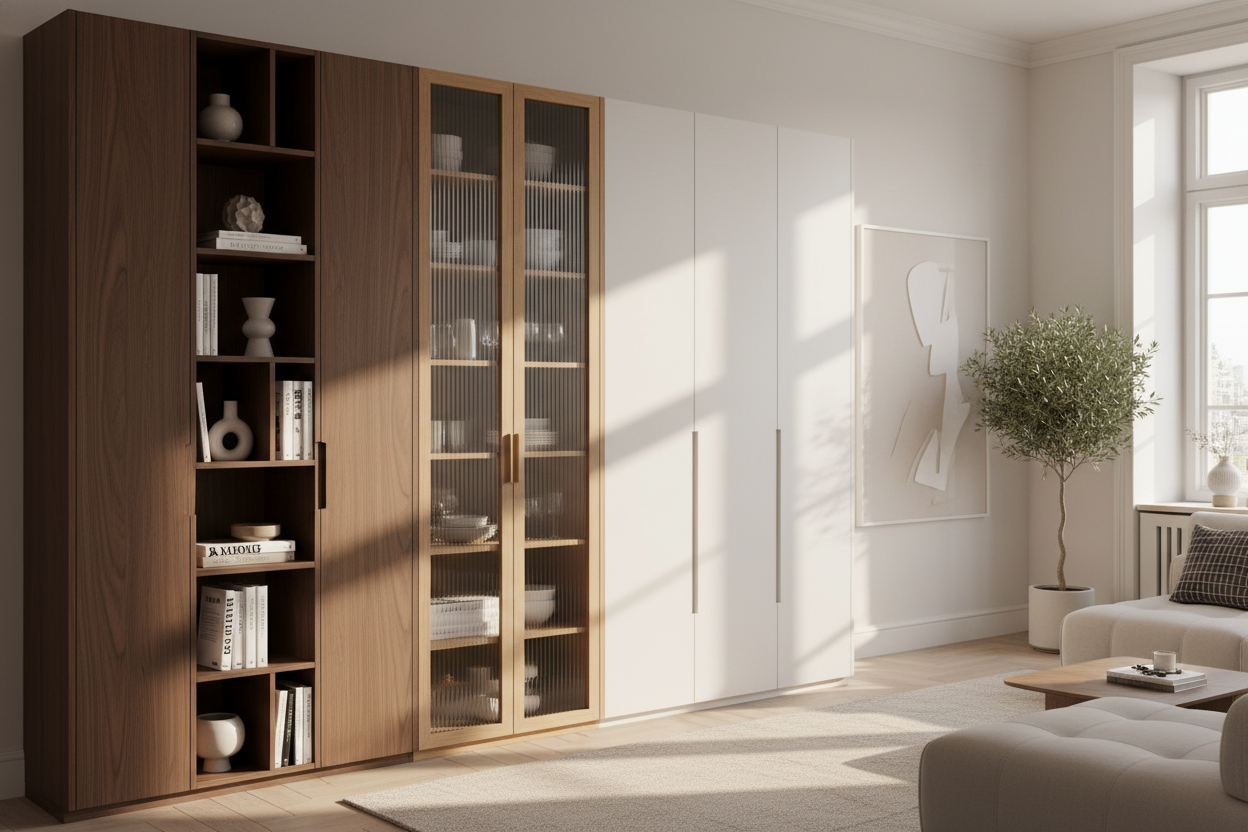
You have decluttered, you have organized, but the room still feels chaotic. Often, the culprit is not too much stuff—it is inefficient floor planning. When we rely solely on wide credenzas and low dressers, we eat up valuable square footage while completely ignoring the upper half of the room. Enter the tall cabinet. Whether you are trying to corral pantry overflow or need a chic way to hide living room clutter, a vertical storage piece draws the eye upward and maximizes your home's footprint.
However, getting vertical storage right is trickier than it looks. Buy the wrong piece, and it can feel like a looming monolith that swallows the room. Let's walk through exactly how to choose a tall storage unit that looks intentional, balances your space, and actually functions for your daily life.
Quick Decision Guide
- Measure your baseboards and crown molding before buying; they dictate how flush a tall storage cabinet will sit against the wall.
- Choose a tall cabinet with doors if your primary goal is hiding visual clutter; reserve open shelving for curated display items.
- Pay attention to door swing clearance. A tall wide cabinet with doors needs at least 18 to 24 inches of clear walkway when fully opened.
- Always anchor high storage furniture to the wall—no exceptions, even if you do not have kids or pets.
- Match the depth to the function: 12 to 15 inches is ideal for linens and pantry items, while 18 to 24 inches is necessary for bulky media equipment or large appliances.
Space Planning: Taming the Vertical Dimension
When you bring a high cabinet into a room, you are fundamentally altering the room's visual weight. A common mistake I see in North American homes is placing a massive, tall wide storage cabinet right next to a doorway. This instantly makes the room feel crowded the moment you walk in. Instead, place taller pieces in corners or along solid walls where they can act as an architectural anchor.
Clearance and Flow
If you are opting for a tall storage cabinet with doors and shelves, you need to account for the physical footprint of the doors in motion. A standard tall cupboard with door requires ample clearance to open fully without hitting a rug, a coffee table, or someone walking by. If space is tight, look for a tall shelving cabinet that leaves the upper half open, or a tall floor cabinet with sliding doors to keep the sightlines airy and the walkways clear.
Material and Build Quality That Lasts
Because a tall floor cabinet holds items vertically, structural integrity is non-negotiable. Gravity is constantly working against the shelves. If you are storing heavy items like dinnerware, small appliances, or heavy books, you need a tall wood cabinet with drawers and solid wood or thick plywood shelves. Flimsy particleboard will inevitably warp under the pressure.
The Open vs. Closed Storage Debate
I always ask clients about their daily habits before recommending a style. If you are naturally tidy, a tall cabinet with shelves and doors—where the top features glass panes—works beautifully as a display case. But if you are using this as a catch-all for board games, winter gear, or messy overflow, you absolutely need tall closed storage cabinets. A modern tall cabinet with doors allows you to shut away the chaos while maintaining a sleek, tailored look in the room.
Designer's Honest Take
I have specified dozens of tall units over the last 15 years, and I will share a hard truth: a cheap tall cabinet will almost always betray you. Early in my career, I placed a beautiful, budget-friendly tall storage cabinet with drawers and shelves in a client's home office. Within six months, the weight of their printer and files caused the composite wood shelves to bow drastically, and the tall closed doors would no longer align.
Another lesson learned? Depth is deeply deceptive. I once ordered an extra tall storage cabinet for a narrow 1920s hallway, focusing entirely on the height. I completely failed to account for the 20-inch depth. Once installed, it felt like a looming barricade that you had to awkwardly shimmy past. Now, for transitional spaces, I strictly stick to a single tall cabinet with a maximum depth of 12 to 14 inches. You would be surprised how much a shallow tall storage closet can hold when the vertical space is properly utilized.
Frequently Asked Questions
How do I keep a high storage cabinet from tipping over?
Regardless of whether you buy a high cabinet with drawers or a simple tall storage shelf with doors, you must use anti-tip wall anchors. Even a heavy, solid wood large tall cabinet can tip if a child climbs on an open bottom drawer or if the floor is slightly uneven.
Can I use a tall cabinet nearby a window?
Yes, but be mindful of blocking natural light. If you place a long tall cabinet adjacent to a window, ensure it sits at least 12 to 18 inches back from the frame so it does not cast harsh shadows or make the window wall feel cramped.
What is the best use for a tall hutch with drawers?
A tall hutch with drawers is incredibly versatile. In a dining room, it serves as a modern china cabinet. In an open-concept living area, the lower drawers hide media components and cables, while the upper tall cupboard shelves display curated ceramics, plants, or books.

Dejar un comentario
Este sitio está protegido por hCaptcha y se aplican la Política de privacidad de hCaptcha y los Términos del servicio.