










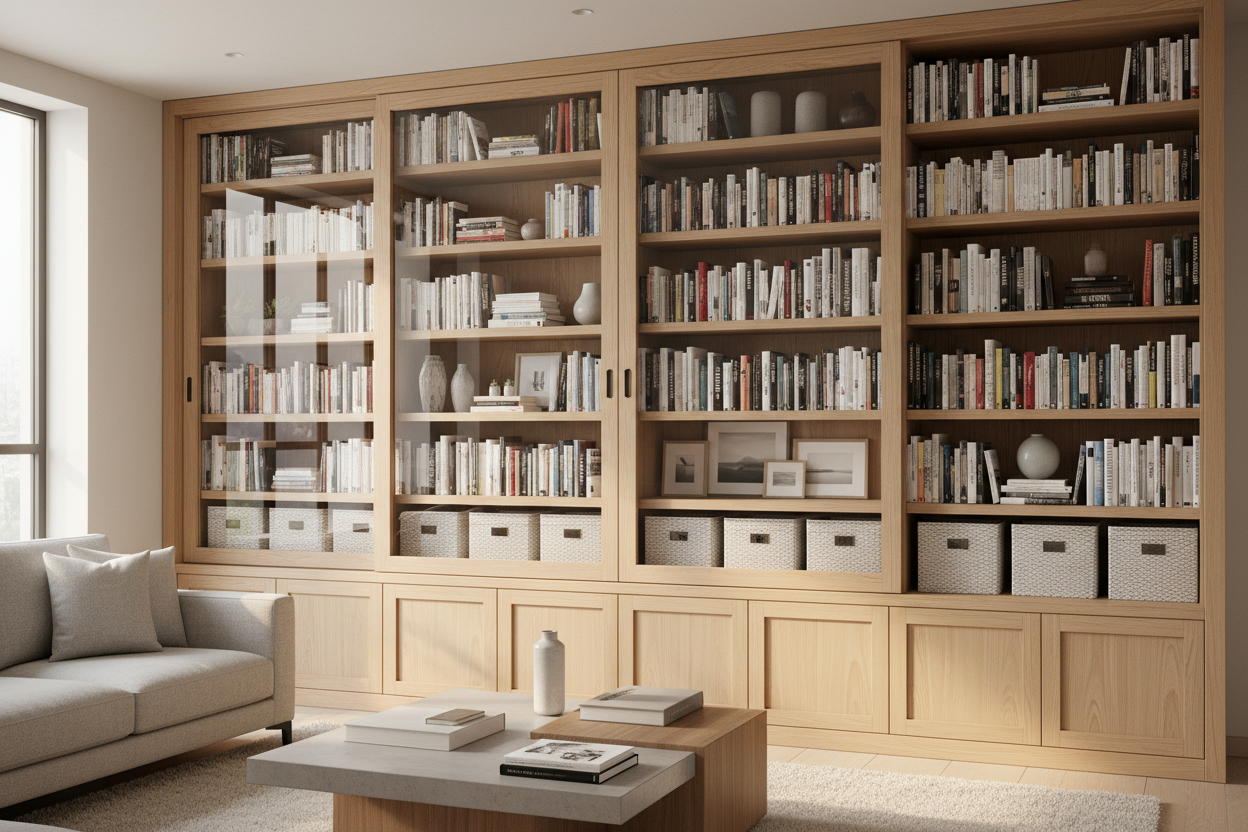
Open shelving has dominated interior design feeds for years, but anyone who actually lives with them knows the dirty secret: they are dust magnets and require constant curation to look good. If you are tired of dusting knick-knacks or trying to artfully arrange ugly binders, switching to a bookshelf with doors is the most practical upgrade you can make for your home office or living room. Finding the right piece, however, requires a bit of detective work, especially when you can't touch the furniture before buying.
Most people start their search by typing bookshelf with doors amazon into the search bar, but the sheer volume of results can be paralyzing. You are immediately hit with thousands of options ranging from flimsy particle board units to high-end solid wood cabinets. The trick isn't just finding one that looks good in the thumbnail; it is identifying a piece that will survive the shipping process, actually fit your space, and hold the weight of your library without bowing.
Why I Finally Ditched Open Shelving
My transition to enclosed storage wasn't driven by aesthetics, but by sheer frustration. For years, I had a standard open-back bookcase in my home office. It looked great for the first week. But soon, it became a catch-all for loose papers, charging cables, and books I was currently reading but hadn't shelved properly. Visually, it created a sense of chaotic noise that made it harder to focus.
I decided to hunt for a unit with bottom cabinet doors and open upper shelving. The difference was immediate. Being able to shove the unglamorous office supplies—printer paper, old tax returns, router equipment—behind a solid wood door instantly calmed the room. It also cut my cleaning time in half. If you have pets, this is doubly important; enclosed bottom shelves stop the dog from chewing on book spines or the cat from knocking over your bottom-row decor.
Understanding Materials: What You Are Actually Buying
When shopping on massive marketplaces, deciphering the material list is the most critical step. The price difference usually comes down to three main categories: solid wood, MDF (Medium Density Fiberboard), and particle board.
Particle board is the most common material you will find in the budget range. It consists of wood chips glued together. While affordable, it hates moisture and tends to sag if you overload it with heavy hardcovers. If you choose this route, check the weight capacity per shelf specifically. A shelf rated for 20 pounds will bow under a full set of encyclopedias.
MDF is a step up. It is denser, smoother, and paints well. Many mid-range bookcases use MDF with a wood veneer. It offers a good balance of durability and cost. Solid wood is rare online due to shipping weight and cost, but pine is a lightweight option often available. It might dent easily, but it won't disintegrate like cheaper composites might over time.
Glass vs. Solid Doors: Choosing Your Function
The type of door you choose dictates how you use the furniture. This seems obvious, but it changes the maintenance requirement entirely.
The Barrister Style (Glass Doors)
Glass doors, often associated with barrister bookcases, are fantastic for dust protection while still allowing you to display your collection. They turn a standard book collection into a museum-like display. The downside is that you cannot hide clutter. Your organization needs to be on point because everything is visible. If you are buying a unit with glass doors online, pay close attention to the packaging reviews. Glass is the most likely component to arrive shattered.
Solid Cabinet Doors
If your goal is storage maximization without the visual noise, solid doors are superior. They allow you to stack board games, craft supplies, or ugly reference materials without worrying about how they look. A popular configuration is the hybrid model: glass on top, solid wood on the bottom. This gives you the best of both worlds—display space for your prized first editions and a hiding spot for your cable management nightmare.
The Logistics of Buying Furniture Online
Ordering a bookshelf with doors amazon or from similar retailers presents unique logistical challenges. Unlike buying a book or a toaster, you are purchasing a heavy, flat-packed box that is difficult to return.
Check the assembled dimensions against your space, but also check the package dimensions. If you live in a walk-up apartment, you need to know if the box weighs 120 pounds. Many enclosed bookcases are significantly heavier than open ones due to the extra hardware and material required for the doors.
Furthermore, examine the hinge quality in the reviews. Doors are moving parts. If the hinges are cheap, the doors will sag, scrape the bottom, or refuse to close flush. Look for terms like "adjustable hinges" or "European hinges" in the product description. These allow you to tweak the alignment of the doors after assembly, which is almost always necessary to get that perfect, even gap.
Assembly: The Reality Check
Unless you are paying for white-glove delivery, you are going to be building this yourself. Bookcases with doors are more complex to assemble than standard shelving units. You have to align hinges, install magnetic catches, and ensure the frame is perfectly square. If the frame is slightly off-kilter, the doors will never close properly.
A pro tip for assembly: use your own tools. The little Allen wrench included in the box is usually garbage. A ratcheting screwdriver or a drill with a hex bit (set to low torque) will save your wrists. Also, consider using a bead of wood glue on the dowels during assembly. This simple addition makes flat-pack furniture significantly more rigid and durable over the long haul.
Safety Considerations
A bookshelf with doors has a different center of gravity than an open one. When you open both doors simultaneously, the weight shifts forward. This makes wall anchoring non-negotiable. Most units come with a basic strap, but buying a heavy-duty metal anti-tip kit is a small investment for peace of mind, especially if you have children or live in an earthquake-prone area.
Ultimately, the switch to enclosed storage transforms a room. It shifts the vibe from "dorm room storage" to "curated library." By focusing on hinge quality, material density, and realistic size constraints, you can find a piece that looks like a custom built-in, even if it arrived in a cardboard box.
Frequently Asked Questions
How do I stop the doors from scraping the bottom of the shelf?
This is usually an alignment issue. Most modern cabinets use adjustable Euro-style hinges with screws that control vertical, horizontal, and depth placement. Tightening or loosening these specific screws will lift the door slightly to clear the frame.
Can I add doors to an existing open bookshelf?
It is difficult to do this well unless you are handy with woodworking. You would need to frame out the front to accept hinges and ensure the side panels are thick enough to hold the screws. It is often more cost-effective and structurally sound to buy a unit designed with doors from the start.
What is the best way to fix a wobbly bookshelf?
Wobbling often happens if the back panel isn't nailed on tight enough, as that thin backing provides the shear strength. Ensure all fasteners on the back are secure. If it still wobbles, check your floor level; you may need to use shims under the front or back legs to stabilize the unit.

Dejar un comentario
Este sitio está protegido por hCaptcha y se aplican la Política de privacidad de hCaptcha y los Términos del servicio.