










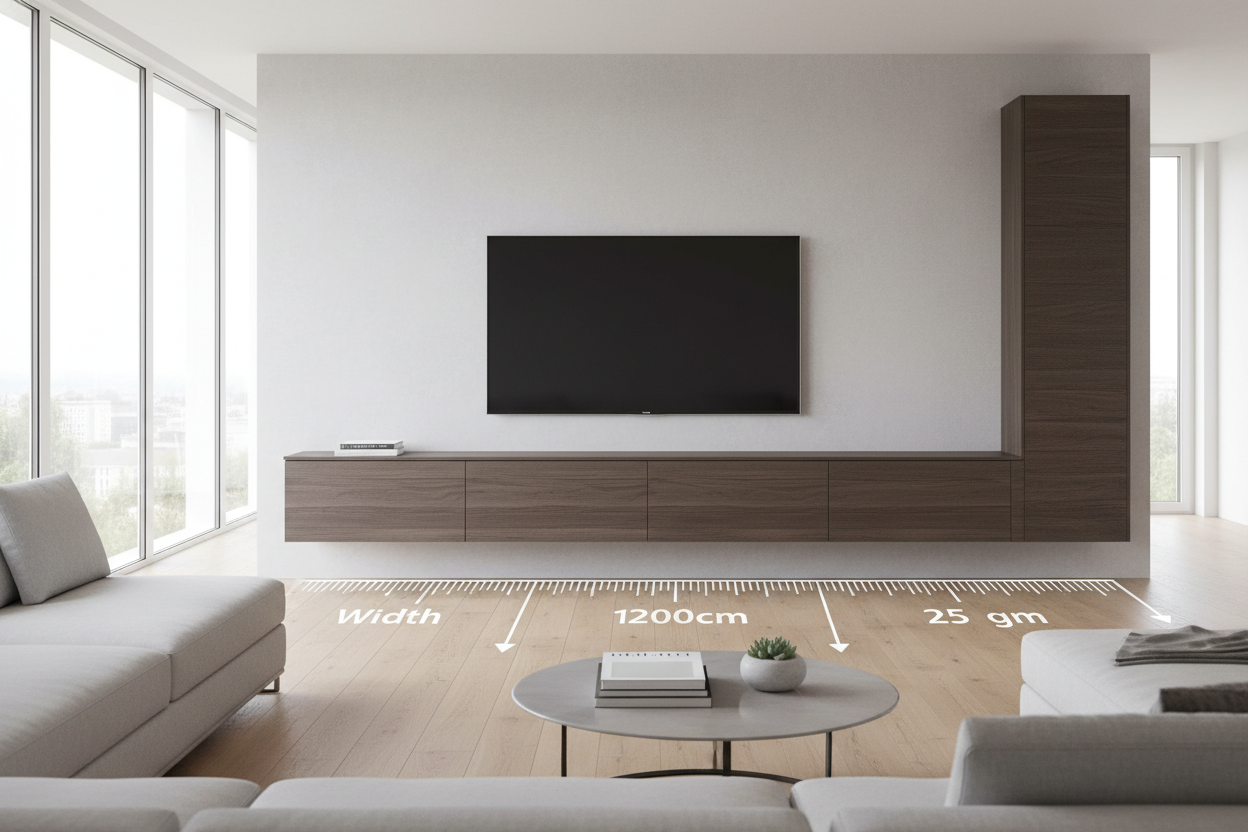
I remember the first time I tried to achieve that 'floating' look in my living room. I spent hours scrolling through Pinterest, convinced that getting my furniture off the floor would magically make my 600-square-foot apartment feel like a loft. I finally hid my partner's ugly tech inside a sleek unit and felt like a design genius—until I realized I’d mounted it so high we both had to tilt our heads back like we were in the front row of a movie theater.
A wall mounted tv cabinet is a fantastic way to save floor space and hide the 'spaghetti' of cables behind your TV. But unlike a standard media console that you just slide against a wall, these require a bit of math and some structural honesty. If you mess up the measurements, you aren't just looking at an ugly living room; you're looking at a potential disaster for your drywall.
Quick Takeaways
- Always mount for eye level, not for 'fireplace' height.
- Your cabinet must be wider than your TV to maintain visual balance.
- Stud placement is non-negotiable for heavy consoles.
- Renters should opt for floor-based units to save their security deposits.
The Illusion of Floating Furniture
There is something undeniably cool about a cabinet that seems to defy gravity. It opens up the floor, making small rooms feel airy and modern. But that aesthetic comes with a price: structural integrity. I've seen too many DIY attempts end with a 40-pound mounted tv cabinet ripping right out of the wall because the owner relied on plastic drywall anchors instead of actual wood studs. Before you click 'buy,' you need to know exactly what is happening behind your paint.
Measurement 1: The 'Neck Cramp' Clearance (Height)
The biggest mistake people make with wall mounted cabinets under tv setups is hanging them way too high. We have this weird instinct to treat them like a mantelpiece. Please, don't. Your neck will hate you within twenty minutes of a Netflix binge.
The center of your TV screen should be at eye level when you are sitting on your sofa. For most standard couches, this means your console should actually sit about 8 to 12 inches off the floor. If you hang it at 24 inches, your TV ends up near the ceiling. Measure the height of your seated eye level first, then work backward to find where the cabinet needs to live.
Measurement 2: The Stud Span (Weight Capacity)
Drywall is essentially just chalk and paper. It cannot hold a heavy media unit, a PlayStation 5, and a soundbar on its own. You need to find your studs. In most modern American homes, studs are spaced 16 inches apart, though some older homes use 24-inch spacing.
Use a stud finder to mark exactly where those vertical wood beams are. If the mounting brackets on the cabinet you're eyeing don't line up with your studs, you'll need to install a backer board or look for a different model. I once tried to 'cheat' by using heavy-duty toggle bolts in drywall; the unit stayed up for a week before the drywall started to crumble and lean forward. It's not worth the risk.
Measurement 3: The Golden Proportion (Width)
Visual weight is a real thing. If your TV is wider than the cabinet beneath it, the whole room feels top-heavy and precarious. It looks like an accident. The golden rule of thumb is that your cabinet should be at least 25% wider than the actual width of your TV.
If you're rocking a massive 75-inch or 85-inch screen, you need a large tv cabinet spacious storage unit to anchor the look. A wide base creates a sense of stability and gives you room for a few decorative items on the ends to soften the tech-heavy look of the screen.
What If Your Walls Can't Handle It?
If you live in an old apartment with crumbling plaster or a rental where the landlord forbids drilling lag bolts into the studs, don't panic. You can still get a contemporary look without the structural risk. A modern table with storage that sits on the floor can offer the same clean lines without the 'will it fall?' anxiety.
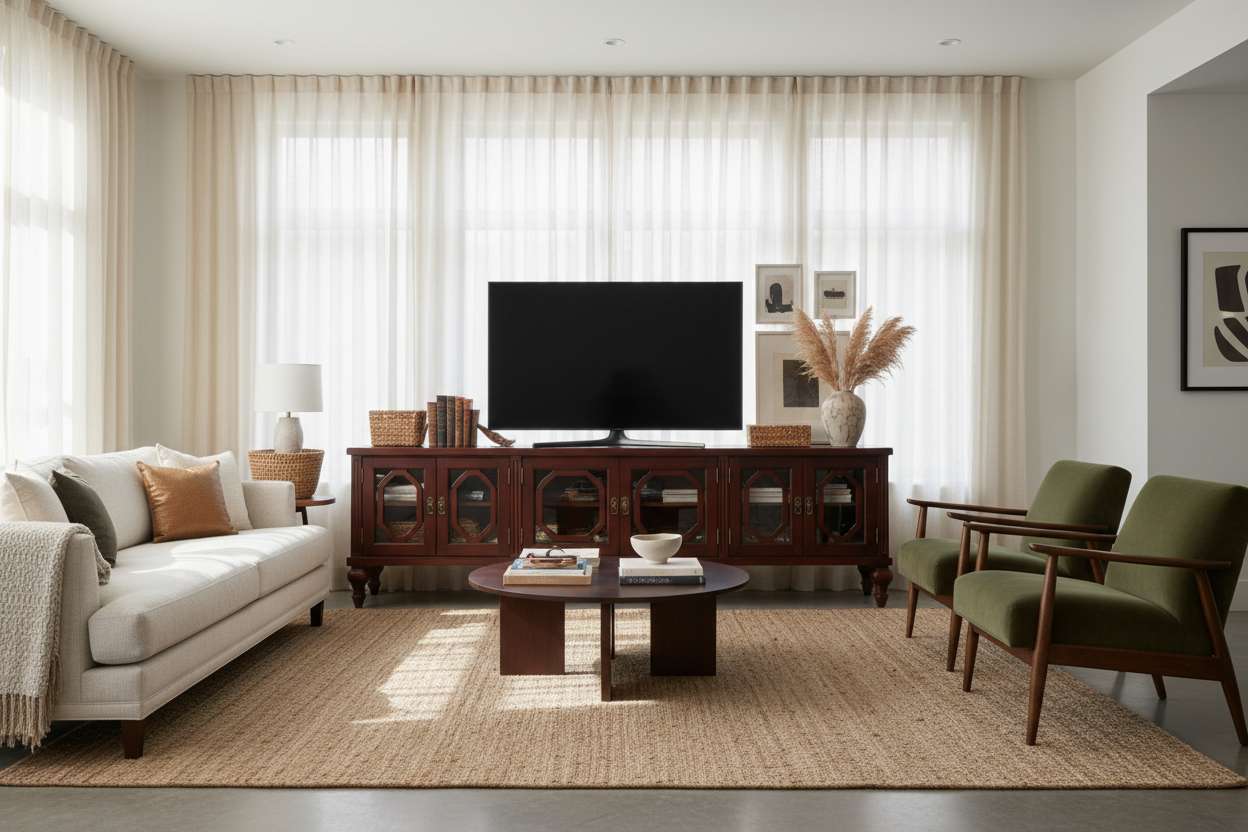
For those who want to hide the clutter but need a more traditional footprint, a black cabinet with glass doors is a solid alternative. It keeps the dust off your electronics and looks sophisticated while staying firmly planted on the ground. Sometimes, the best 'floating' look is one that doesn't actually float.
My Personal Lesson in Hubris
I once lived in a beautiful 1930s brownstone with what I thought were solid walls. I bought a gorgeous walnut floating console and spent three hours mounting it. It looked perfect. That night, I heard a sickening 'thud.' The lath behind the plaster had snapped under the weight because I hadn't hit a primary support beam. I ended up with two massive holes in the wall and a broken receiver. Now, I never mount anything without using a magnetic stud finder and double-checking the weight ratings. If the math doesn't add up, I buy a floor unit.
FAQ
How high should a floating TV stand be?
Usually 8 to 12 inches off the floor. The goal is to keep the center of the TV at eye level when you're sitting down.
Can I mount a TV cabinet on drywall alone?
Absolutely not. You must secure the mounting hardware into the wall studs. Drywall anchors are not designed to handle the leverage and weight of a furniture piece.
How much wider should the cabinet be than the TV?
Aim for at least 6 to 10 inches of 'overhang' on each side. A console that is 25% wider than the TV usually looks the most balanced.


Dejar un comentario
Este sitio está protegido por hCaptcha y se aplican la Política de privacidad de hCaptcha y los Términos del servicio.