










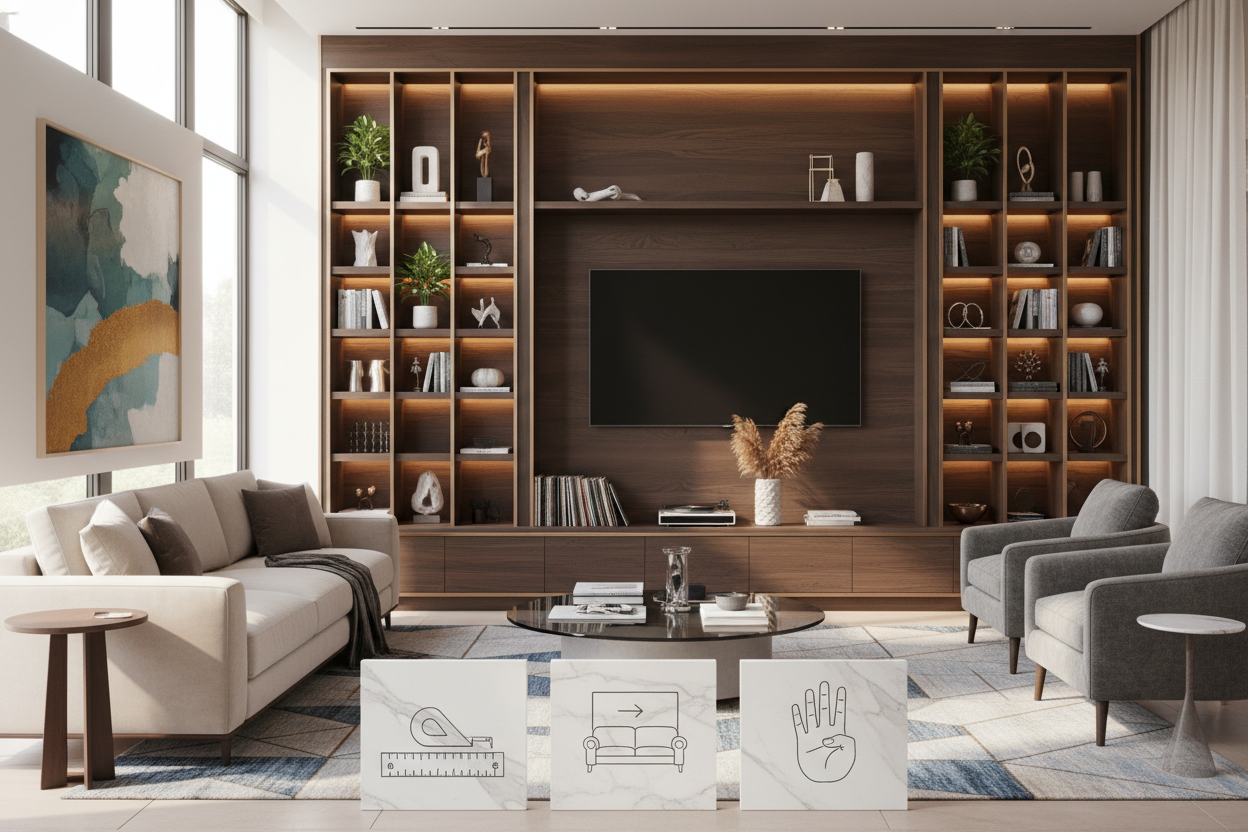
I remember staring at my first 'grown-up' apartment and realizing the focal point was a tangle of black HDMI cables and a dusty Xbox sitting on a $40 particle board shelf. It felt like I was still living in a dorm, despite the nice rug and the expensive candles. Finding the right entertainment center furniture is usually the last thing people think about, but it is the one thing you stare at for three hours every night while binging Netflix.
- Go wider than you think; a TV stand should be at least 12-18 inches wider than the screen.
- Hide the junk. 80% of your gear belongs behind solid doors, not on display.
- Match the scale to your wall height, not just the floor space.
- Avoid high-gloss if you have kids or lots of natural light—the glare is a nightmare.
Why Your TV Wall Still Looks Like a Dorm Room
We spend thousands on OLED screens and soundbars, then stick them on a piece of furniture that looks like an afterthought. The 'dorm room' vibe happens when the tech dominates the decor. If the first thing I see is a power strip and a tangle of wires, the room has failed.
You want a piece that anchors the room, not just a pedestal for your screen. I have seen so many beautiful living rooms ruined by a 'media unit' that was basically just a glorified laptop stand. Treating your TV wall as a curated focal point changes the entire energy of the house.
Rule 1: Scale Your Unit to the Wall, Not Just the TV
Most people buy a console that is exactly the width of their TV. This is a massive mistake. It makes the whole setup look top-heavy and precarious. I always tell people to aim for a unit that is at least 20-30% wider than the TV itself. This provides visual 'breathing room' for a lamp or a small plant on the ends.
If you have a massive 15-foot wall, a tiny 60-inch stand is going to look like a postage stamp. You have to decide if a larger entertainment tv center is worth the floor space in your layout based on the total wall acreage. If the wall is huge, go long and low to ground the space.
Rule 2: Demand the Right Ratio of Closed to Open Storage
I live by the 80/20 storage rule. 80% of the unit should be closed storage—solid doors or drawers. This is where the routers, gaming consoles, and messy cable nests live. Nobody needs to see your dusty PlayStation 4 or your collection of tangled charging bricks.
The remaining 20% can be open shelving for the 'pretty' stuff: a few curated books or a ceramic vase. When you browse modern furniture entertainment centers, look for pieces with integrated cable management holes in the back. If it does not have a way to route wires internally, walk away. It is not worth the headache.
Rule 3: Let the Architecture Dictate Your Style
Do not force a farmhouse cabinet into a floor-to-ceiling glass condo. It looks disjointed. If you have low ceilings, a low-slung, horizontal unit helps the room feel taller. If you are in a classic 1950s ranch, a mid-century modern styling approach with tapered legs and warm walnut finishes will feel like it was built for the room.
I personally prefer natural wood grains over painted finishes. Real wood or high-quality veneers add a layer of organic texture that softens the harsh, 'techy' look of a giant black screen. It makes the room feel like a home rather than a Best Buy showroom.
When to Go Floating vs. Freestanding
If you are tight on square footage, a wall mounted media console is a lifesaver. Seeing the floor continue underneath the furniture tricks your brain into thinking the room is bigger. It is a sleek, modern look that keeps things airy.
However, if you have a massive 85-inch screen and a cavernous living room, you need a freestanding unit with some visual weight. A floating shelf under a giant TV can sometimes look like it is struggling to hold the weight of the room. Go big or go home in large spaces.
Matte Wood vs. High-Gloss Finishes
I used to love the look of a high gloss tv console entertainment center in professional photos. Then I bought one. Every speck of dust and every fingerprint from my nieces became a permanent fixture. Plus, the reflection from the TV screen at night was incredibly distracting.
Now, I almost always recommend matte woods or textured finishes. They absorb light rather than bouncing it back at you. If you really want that contemporary look, go for a semi-matte finish that gives you the sheen without the constant maintenance and glare issues.
Personal Experience: The 'Sleek' Mistake
I once bought a gorgeous marble-topped console that was only 2 inches wider than my TV. I thought it looked 'minimalist.' Within a week, I hated it. It looked like the TV was about to tip over the edge. I ended up returning it for an 80-inch oak unit that cost less but looked ten times more expensive because the proportions were finally right. Don't skimp on width.
Common Questions
How high should my TV be?
Your eyes should be level with the middle of the screen when seated. Most people mount their TVs way too high. If you are looking up, your console is either too tall or your mount is too high.
Can I mix wood tones?
Yes, but keep the undertones consistent. If your floor is a cool grey-oak, do not buy a cherry red entertainment center. Stick to cool tones or neutral walnuts.
How do I hide the wires?
Use velcro ties inside the cabinet and paintable cord covers for anything visible on the wall. A clean look is 90% cable management and 10% furniture choice.

Dejar un comentario
Este sitio está protegido por hCaptcha y se aplican la Política de privacidad de hCaptcha y los Términos del servicio.