










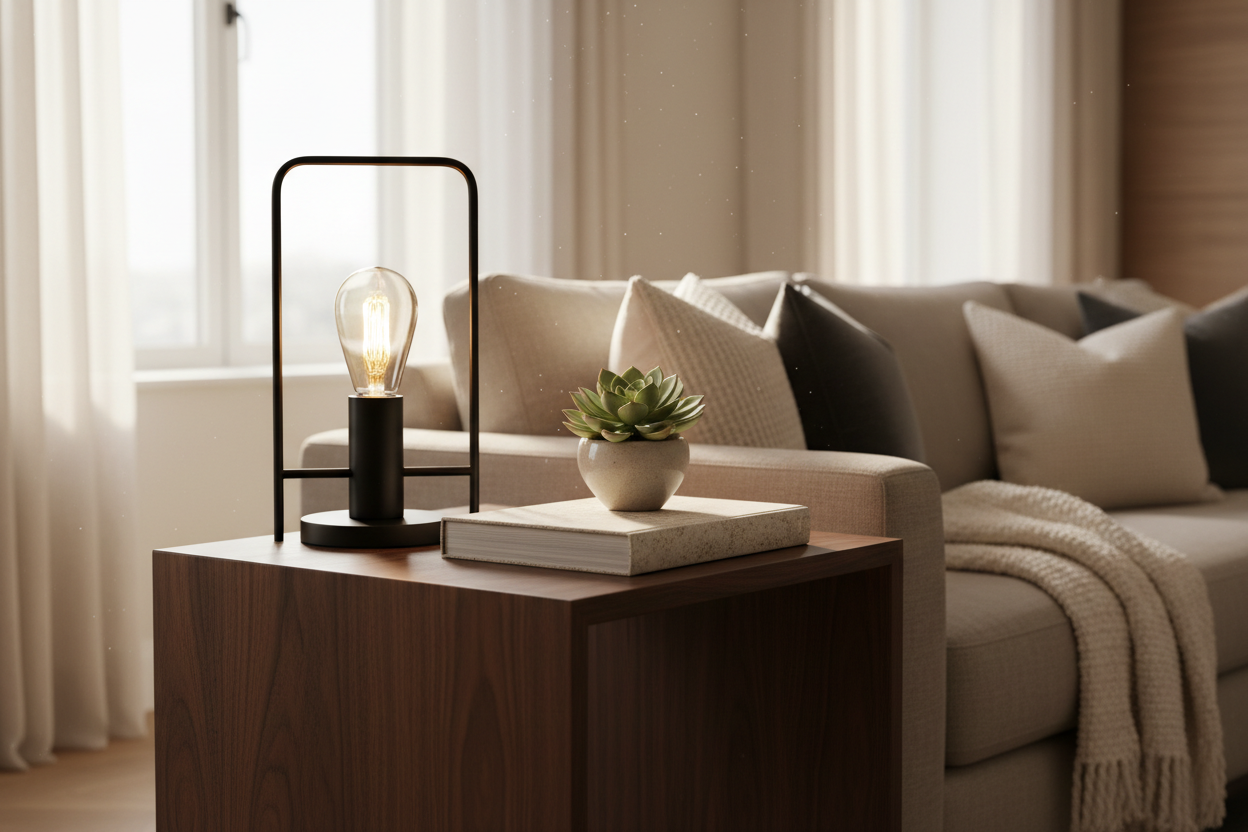
A chaotic living space often leads to a chaotic mind. That might sound dramatic, but visual noise accumulates faster than we realize, and furniture is frequently the culprit. Minimalist side tables offer a solution that goes beyond simple aesthetics; they provide a dedicated surface for your essentials without commanding the visual weight of traditional furniture. By stripping away ornamentation and focusing on clean lines, these pieces create a sense of airiness and flow that bulky furniture simply cannot match.
I learned this lesson the hard way in my first apartment. I had inherited a heavy, ornate oak cabinet that I tried to use as an end table. It was beautiful in isolation, but it made my small living room feel suffocated. The moment I swapped it for a sleek, powder-coated steel table with an open base, the entire room seemed to exhale. The floor space became visible again, and the light traveled differently across the room. That is the power of a well-chosen minimalist table: it serves a purpose while almost disappearing into the design.
Defining the Modern Minimalist Aesthetic
When shopping for a modern minimalist side table, you are looking for geometry and restraint. The design philosophy here is "form follows function." You won't find cabriole legs, heavy carving, or excessive hardware. Instead, look for silhouettes that utilize negative space. A C-shaped table that slides over the arm of a sofa, or a simple cylinder, exemplifies this style.
The goal is to reduce the piece to its essential elements. However, simple does not mean boring. Minimal tables often rely on high-quality materials and precise joinery to make a statement. Because there is nowhere to hide flaws, the construction must be impeccable. A side table minimal in design demands that the texture and finish do the heavy lifting.
Choosing the Right Materials
Material selection defines the warmth or coolness of the room. A minimalist wood side table is the most effective way to introduce organic texture into a stark space. Light woods like ash, maple, or white oak are staples of Scandinavian minimalism, offering a soft, matte finish that feels natural. If you prefer a moodier, more grounding look, walnut provides a rich contrast without needing ornate detailing.
On the other end of the spectrum, metal and glass minimalist tables lean towards an industrial or ultra-modern vibe. Thin iron frames with glass tops are excellent for small rooms because they block zero sightlines. The eye travels right through them, tricking the brain into thinking the room is larger than it is. Concrete and marble are also gaining popularity, offering a sculptural element that feels permanent and solid despite a small footprint.
Functionality: Storage vs. Silhouette
One of the hardest choices is deciding between a purely sculptural piece and a minimalist side table with drawer storage. Purists might argue that drawers add bulk, but practical minimalism is about reducing clutter on surfaces. If you are prone to leaving remotes, coasters, and charging cables lying around, a table with a discreet drawer is invaluable.
Look for designs where the drawer is integrated seamlessly into the body of the table. Flush fronts with no handles (push-to-open mechanisms) or simple cutout pulls maintain the sleek profile. This allows the piece to function as a hardworking minimalist end table while keeping your visual environment serene. If you don't need hidden storage, open-tier tables allow you to stack a few curated books or magazines, turning your items into part of the display.
Styling Your Accent Table
Once you have your furniture, the challenge becomes styling it without ruining the vibe. A minimalist accent table quickly loses its effect if it is covered in knick-knacks. The rule of three is useful here, but for minimalism, the rule of one or two is often better. A single ceramic vase with a dried branch, or a high-quality table lamp, is often all you need.
Lighting plays a massive role in how these tables are perceived. A table lamp with a simple linen shade or a mushroom-style metal lamp complements the furniture's geometry. Avoid cluttering the surface with things that belong elsewhere. If the table is next to a reading chair, a coaster and a book are sufficient. Let the surface breathe.
Mixing and Matching Shapes
Uniformity can sometimes feel clinical. If you have a rectangular sofa and a square rug, consider a round minimalist table to break up the straight lines. The curve softens the room and improves flow, especially in tight corners where you might bump your shin on a sharp edge. Nesting tables are another brilliant option. They offer flexibility—you can pull them apart when guests arrive for drinks and tuck them away when you need floor space.
Quality Over Quantity
Because minimalist furniture lacks ornamentation, cheap materials are immediately obvious. Laminate peeling off particle board stands out more on a simple cube than on a distressed farmhouse piece. It is better to invest in one high-quality minimalist wood side table than to buy a set of three low-quality ones. Solid wood, tempered glass, and powder-coated steel age better and can handle the wear and tear of daily life.
When inspecting potential purchases, check the weight. Even a visually light table should feel substantial and balanced. It shouldn't wobble when you set a coffee mug down. Stability is a key component of the user experience; a table that feels fragile induces anxiety, which is the exact opposite of what a calm, minimal interior should achieve.
Ultimately, the right table acts as a supporting character in your home's narrative. It doesn't scream for attention, but it elevates everything around it. Whether you choose a warm wooden piece or a cool metal frame, the result should be a space that feels curated, intentional, and breathably open.
Frequently Asked Questions
How tall should a minimalist end table be relative to the sofa?
Ideally, the table surface should be within two inches of the sofa's arm height. If it is too low, it becomes awkward to reach your drink; if it is too high, it disrupts the visual line of the room. When in doubt, slightly lower is better than significantly higher.
Can I mix different styles of minimalist tables in one room?
Yes, mixing materials creates depth. For example, pairing a minimalist wood side table on one side of the sofa with a metal or marble table on the other adds interest without clutter. Just ensure they share a similar visual weight or scale so the room doesn't feel lopsided.
How do I clean matte finish minimalist furniture without ruining the look?
Avoid oil-based polishes or heavy waxes, which can create shiny spots on matte surfaces. Use a soft, slightly damp microfiber cloth for dusting and a mild soap solution for spills, drying immediately. For unfinished wood, use a specific oil recommended by the manufacturer to maintain the matte protection.


Dejar un comentario
Este sitio está protegido por hCaptcha y se aplican la Política de privacidad de hCaptcha y los Términos del servicio.