










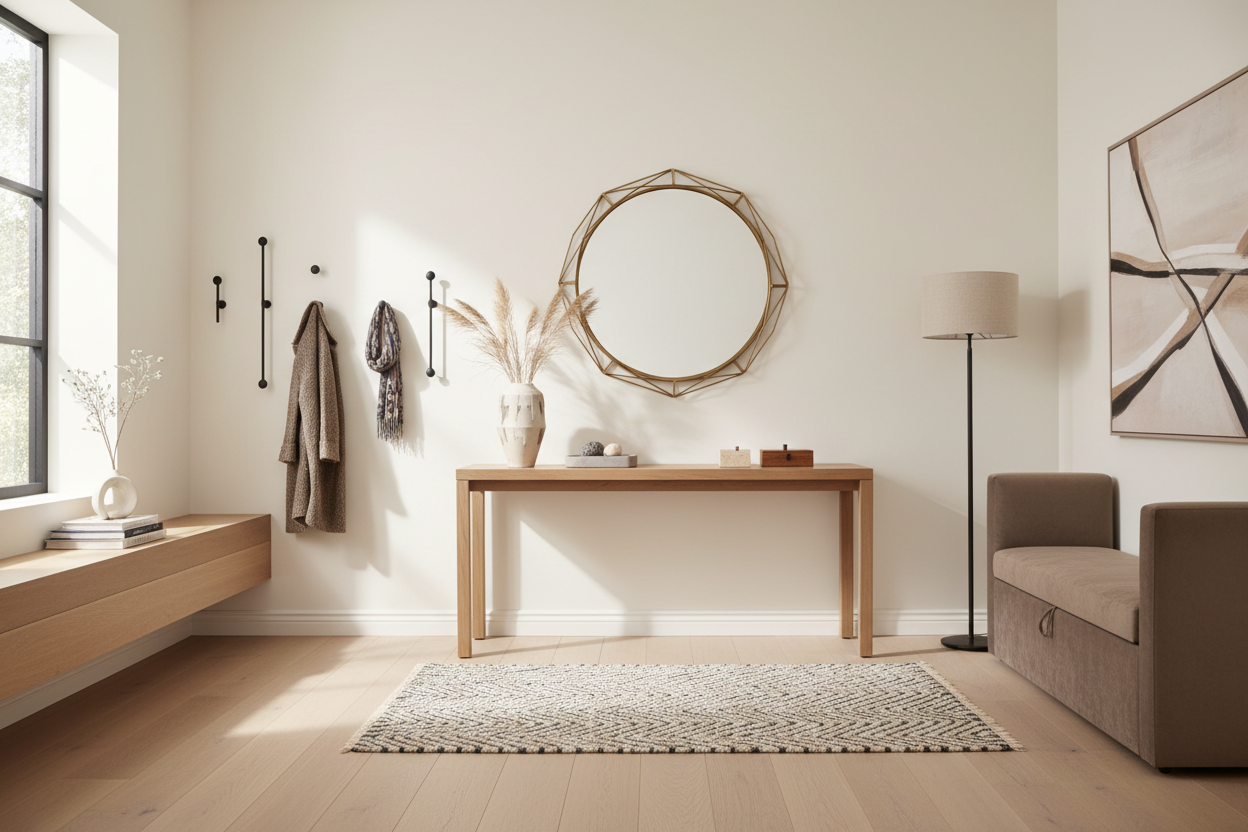
Your hallway acts as the handshake of your home. It creates that immediate psychological shift from the chaos of the outside world to the sanctuary of your personal space. Yet, this area is frequently the most neglected, often becoming a dumping ground for mail, muddy shoes, and discarded coats. Creating a space that is both visually arresting and highly functional requires a thoughtful approach to layout and piece selection. You don't need a grand foyer to make a statement; you simply need the right balance of form and utility.
Defining the Space with Statement Pieces
The anchor of any entryway is usually a surface where you drop your keys and check your reflection before leaving. In the past, heavy, ornate tables dominated this space, but current trends lean heavily toward sleek lines and visual lightness. A modern foyer cabinet serves as an excellent focal point. Unlike open tables which can quickly look messy, a cabinet with doors offers the distinct advantage of concealed storage. You can hide the unsightly necessity of daily life—dog leashes, charging cables, and unread post—behind a clean, minimalist facade.
When selecting a cabinet, pay close attention to proportion. If your hallway feels cavernous, a low-slung, wide unit can ground the space. For tighter areas, look for pieces with legs that lift the bulk of the cabinet off the floor. Seeing the floor run underneath the furniture tricks the eye into perceiving the room as larger than it actually is. Floating wall-mounted units are even better for this, providing a surface for decor without encroaching on the walkway.
The Battle Against Clutter
A beautiful hallway falls apart the moment it is overrun by clutter. This is where modern hallway storage becomes the unsung hero of interior design. The goal is to integrate storage so seamlessly that it feels like part of the architecture rather than an afterthought. If you have the depth, a floor-to-ceiling wardrobe with flat-front doors can swallow coats and bags while maintaining a serene aesthetic. If depth is an issue, look for tilt-out shoe cabinets. These are exceptionally slim, often protruding less than 30 centimeters from the wall, yet they can house a surprising number of shoes.
Multi-functional furniture is also vital here. A bench with internal storage or a shelf underneath offers a place to sit while putting on boots and a home for those boots once they are off. The key is to avoid open racks if you are prone to mess; seeing a pile of sneakers immediately disrupts the calm vibe of a modern home. Closed storage is almost always the superior choice for maintaining a curated look.
A Lesson Learned in Proportion
I learned the hard way that measuring the floor space isn't enough; you have to measure the "air" space. In my previous apartment, I fell in love with a stunning, chunky oak console table. It fit the measurements on paper, allowing just enough clearance to walk past. However, once I wrestled it into the hall, it was a disaster. It felt like a barricade rather than a welcome. The visual weight of the piece suffocated the narrow corridor. I eventually swapped it for a slim metal and glass console that was actually the same depth, but the transparency made the hallway breathe again. It was a pivotal moment in understanding that contemporary hall furniture is as much about visual weight as it is about physical dimensions.
Cohesion and Flow
Your entryway shouldn't feel like a stranger to the rest of your house. It needs to whisper hints of the design language found in the living room or kitchen. If your home features industrial elements, look for modern entrance hall furniture that incorporates blackened steel or raw concrete textures. For a warmer, Scandi-inspired home, blonde woods and soft curves are appropriate. This continuity ensures that walking from the front door into the living area feels like a fluid journey.
Lighting and Mirrors
Furniture does not exist in a vacuum. The way light hits your chosen pieces changes their character entirely. Overhead lighting in hallways can often be harsh and unflattering. Consider adding a table lamp to your console or installing wall sconces. Soft, layered lighting creates ambiance and highlights the textures of your furniture.
Mirrors are the oldest trick in the book for a reason. Placing a large, frameless or minimally framed mirror above your console bounces light around and doubles the visual depth. It also serves the practical purpose of that final "outfit check" before you head out the door.
Materiality and Texture
Because hallways are often devoid of soft furnishings like sofas or curtains, they can risk feeling sterile. You can counteract this through the materials you choose for your furniture. A walnut cabinet brings warmth and grain patterns that act as natural art. A marble-topped console adds a touch of luxury and coolness. Don't be afraid to mix materials. A timber cabinet paired with a metal mirror and a ceramic lamp creates a tactile richness that makes the space feel inhabited and designed, rather than just purchased.
Ultimately, the best hallway is one that serves your lifestyle while sparking a little joy every time you turn the key in the lock. By prioritizing concealed storage, respecting the scale of the room, and selecting pieces that resonate with your home's broader aesthetic, you transform a passageway into a destination.
Frequently Asked Questions
How do I style a long, narrow hallway without making it feel crowded?
Focus on verticality and slim profiles. Use wall-mounted hooks or shallow floating consoles to keep the floor clear, and break up the "tunnel" effect with a runner rug or a series of artwork and mirrors on one side to draw the eye along the space.
What is the best material for high-traffic hallway furniture?
Hardwoods like oak or walnut and metals are excellent choices because they withstand knocks and bumps better than softwoods or glass. If you choose painted finishes, ensure they are lacquered or high-quality to resist chipping from keys and bags.
Should the hallway rug match the furniture?
It doesn't need to match perfectly, but it should complement the tone. If you have dark wood furniture, a lighter rug can provide necessary contrast, whereas a metal and glass console pairs well with a textured, wool rug to add warmth and softness.

Dejar un comentario
Este sitio está protegido por hCaptcha y se aplican la Política de privacidad de hCaptcha y los Términos del servicio.