










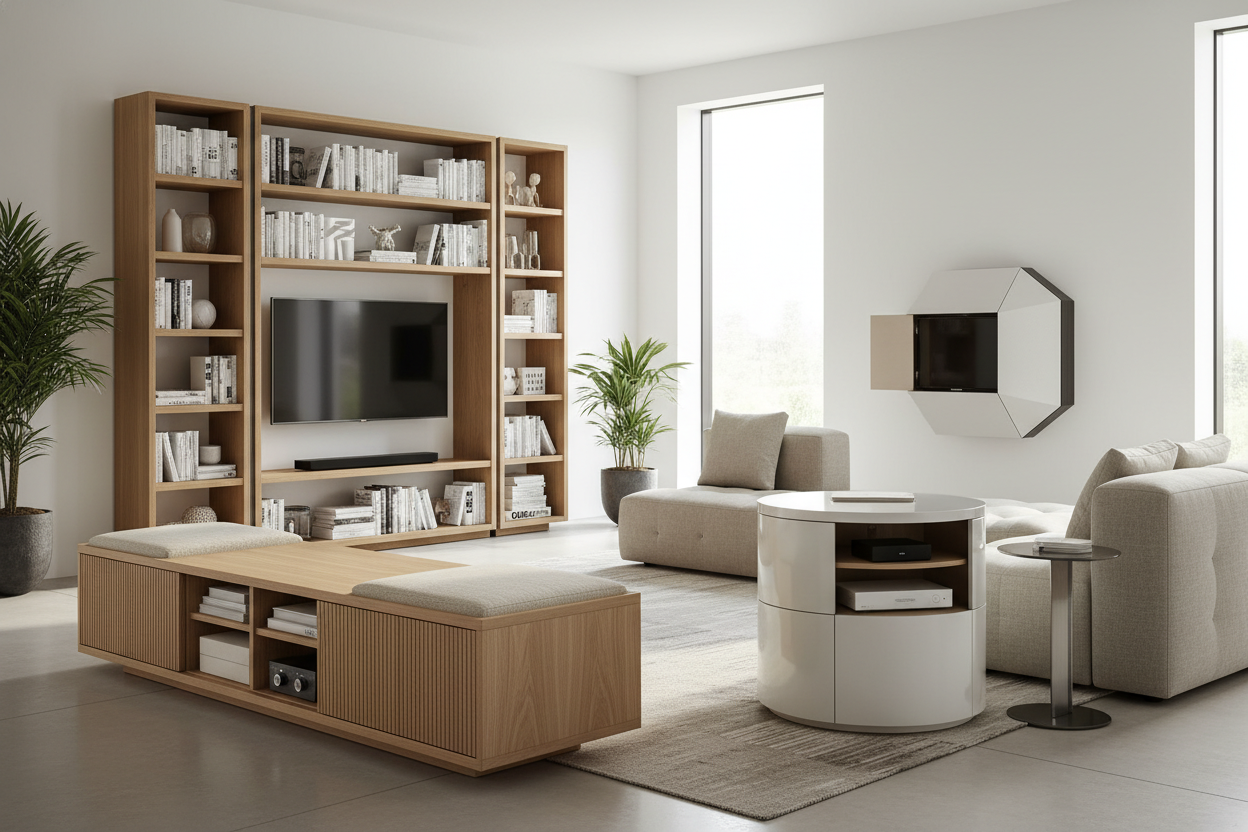
I have moved six times in eight years. Each move taught me a brutal lesson: most furniture is designed for a specific room, but apartment life is fluid. I once spent $400 on a sleek, low-profile media console that looked amazing in my Brooklyn studio, only to realize it looked like a literal footstool in my next place with higher ceilings. Finding the best small tv stands isn't about finding the smallest footprint; it's about finding a piece that doesn't become obsolete the moment you sign a new lease.
We have all been there—staring at a pile of tangled HDMI cables and a router that looks like a robotic spider, wondering why we bought a stand with open glass shelves. It is a trap. I have learned that the most successful small-space furniture is the kind that can pivot roles without looking like a temporary fix. If your media unit can't survive a move to the entryway or the dining room, it is probably not worth the floor space.
Quick Takeaways
- Prioritize depth over width to ensure the stand doesn't stick out into high-traffic walkways.
- Always choose solid doors over open shelving to hide the inevitable cable nest.
- Look for a height of 24 to 30 inches; lower pieces often feel too 'dorm-room' in larger spaces.
- Verify weight capacities—modern 50-inch screens are light, but vintage-inspired solid wood units are heavy.
The 'Migration Test' Every Piece of Furniture Should Pass
Before you click 'add to cart' on that hyper-specific tv cabinet small space solution, ask yourself: 'Where does this go if I stop putting a TV on it?' I call this the Migration Test. If a piece of furniture is so specialized that it only functions as a media hub, it is destined for the curb. The best compact pieces are chameleons. They are high enough to act as a bar cabinet, narrow enough for a hallway, and sturdy enough for a stack of heavy art books.
I once bought a tiny, triangular corner unit because I thought I was being clever with a 'dead' corner. It was a disaster. It fit nothing but the TV, and when I moved to a place without that specific 94-degree corner, the piece was useless. Now, I stick to rectangular silhouettes with clean lines. Versatility is the only real metric for value when you are dealing with limited square footage. You want furniture that grows with your career and your zip code, not something that anchors you to a floor plan you'll outgrow in twelve months.
Why Your Setup Demands Opaque Doors, Not Open Shelves
Open shelving is a lie told by interior photographers who don't actually own a PlayStation or a cable box. In a real home, a compact tv stand with storage needs to be a fortress of solitude for your electronics. You need solid doors to mask the blinking lights of a router and the dusty chaos of power strips. Choosing a small tv storage cabinet with adjustable interior shelves allows you to customize the height for bulky gaming consoles or tall coffee table books.
Visual noise is the enemy of a small room. When you can see every wire and remote through a glass door or an open cubby, the room feels cluttered, no matter how clean the floor is. A small standing cabinet with slab doors creates a calm, flat surface that lets your eyes rest. I personally prefer cabinets with a 'cord management' hole in the back—or better yet, I just drill my own into a solid wood backer. It keeps the profile clean and the stress levels low.
Repurposing Dining Furniture for Your Entertainment Zone
Here is a secret: some of the best media furniture isn't in the 'living room' section of the store. I often shop for dining buffets or small sideboards when I need a small space tv cabinet. These pieces are usually built to a higher standard because they have to hold heavy ceramic plates and glassware. They also tend to be a few inches taller than standard media consoles, which puts the TV at a much more comfortable viewing height if you're watching from a standard-height sofa rather than a low-slung lounge chair.
Using a small tv unit with storage that was originally intended for a dining room adds a layer of sophistication. It feels like a 'real' piece of furniture rather than a plastic-veneered afterthought. For instance, a wood cabinet with glass doors (provided the glass is fluted or smoked to hide the tech) can look incredibly high-end while serving as a functional electronics hub. It breaks the 'big black box' monotony of the typical living room setup.
Matching Your Screen Size Without Overpowering the Room
The math of small tv stands for flat screens is simple but easy to mess up. You want at least two to three inches of 'breathing room' on either side of your TV base. If the screen overhangs the edges of the stand, it looks top-heavy and accidental. It also creates a physical hazard; one stray elbow while vacuuming and your 55-inch OLED is on the floor. I aim for a stand that is about 20% wider than the TV itself.
When you are looking for a small space solution, don't just measure the width. Measure the depth. Most modern flat screens only need about 10 inches of depth, but many stands are 18 to 20 inches deep. In a narrow room, those extra 10 inches are the difference between a comfortable walkway and a bruised shin. Look for 'slim' or 'apartment-scale' pieces that keep the TV close to the wall without the permanence of a wall mount.
The Only Exception: When Sizing Up Actually Makes Sense
There is one scenario where I tell people to ignore the 'small' advice: the massive blank wall. If you have a twelve-foot wall and you put a tiny 40-inch stand in the middle, it looks like a postage stamp on a billboard. It makes the room feel unanchored. In this case, even if your TV is small, you might want a large tv cabinet to fill the visual gap and provide extra storage for things that aren't electronics, like linens or board games.
I once tried to 'save space' by putting a tiny stand on a huge white wall in a loft. It looked ridiculous. I ended up replacing it with a wider sideboard that spanned half the wall. Even though it took up more physical floor space, the room actually felt larger because the proportions were finally correct. Don't be afraid to go wide if the architecture demands it; just keep the piece shallow so it doesn't eat into the center of the room.
FAQ
How high should a small TV stand be?
For most setups, 24 to 30 inches is the sweet spot. You want the middle of the screen to be at eye level when you are seated. If you have a very low sofa, you can go shorter, but a little extra height usually looks more intentional.
Can I put a 55-inch TV on a 40-inch stand?
Technically yes, if the weight capacity allows, but it will look terrible. The screen will overhang the sides, making the whole room feel cramped and the furniture look 'cheap.' Try to find a stand at least as wide as the screen.
What is the best material for a durable TV stand?
Avoid thin MDF with paper laminate; it peels at the corners within a year. Look for solid wood legs and a real wood veneer or high-grade plywood box. It handles the weight of the TV better and survives being dragged across a floor during a move.

Dejar un comentario
Este sitio está protegido por hCaptcha y se aplican la Política de privacidad de hCaptcha y los Términos del servicio.