










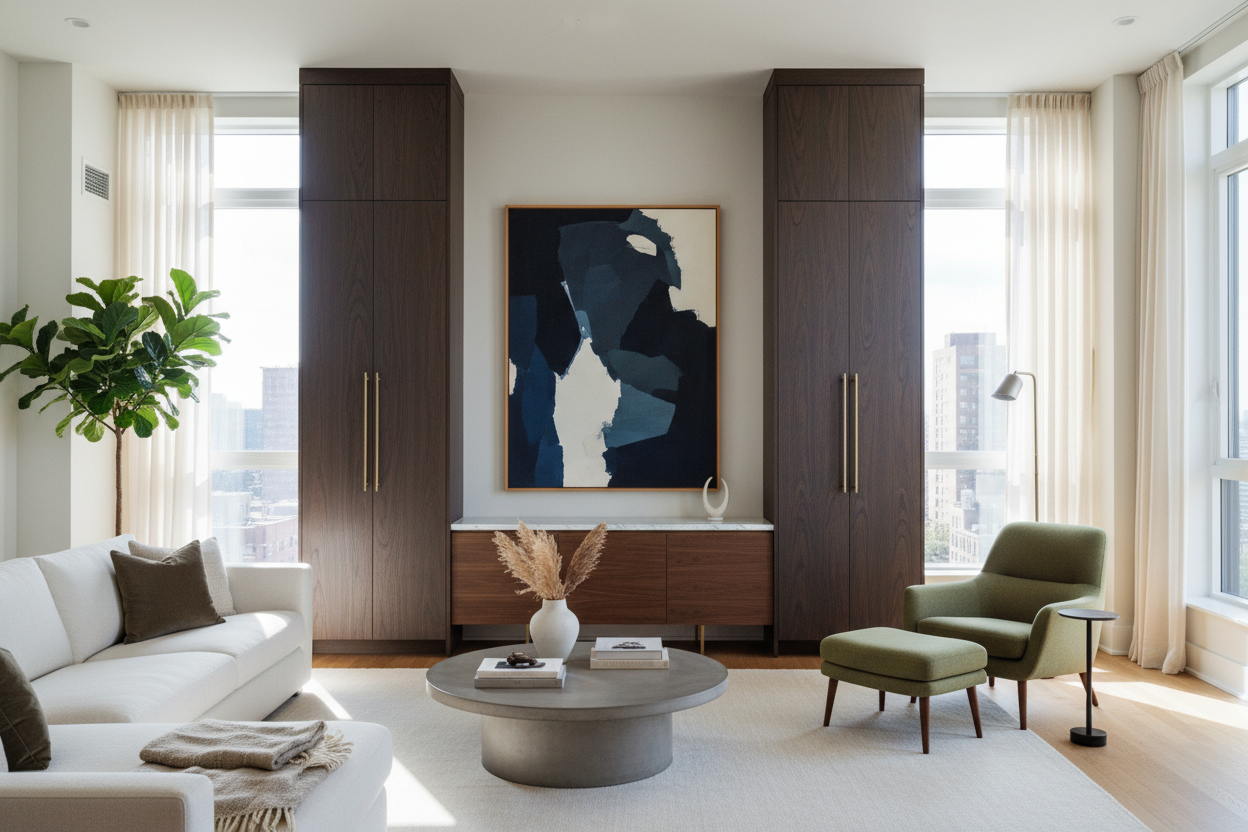
I still have vivid nightmares about helping my brother move his 1998 honey-oak entertainment center. It took four grown men, a specialized industrial dolly, and two ruined door frames to get that beast out of the house. We finally left it in the alley, where I assume it still sits, unmovable as a tectonic plate. That shared trauma is why so many of us have spent the last decade petrified of buying anything taller than a coffee table. We’ve been staring at 47 browser tabs of nightstands at 1 AM because we’re afraid of the 'big' purchase.
But the tide is finally turning. We are recovering from our collective armoire-induced PTSD and embracing modern tall cabinets because, frankly, our floor space is too precious to waste on low-slung clutter magnets. If you’re living in a place where every square inch matters, going vertical isn’t just a design choice—it’s a survival strategy for your sanity.
- Vertical storage maximizes your footprint without making a room feel crowded.
- Legs are the secret to making a tall piece feel airy rather than oppressive.
- Modern materials like fluted glass and matte steel offer a 'visual lightness' oak never had.
- Always leave at least 12 inches of gap between the top of the cabinet and your ceiling.
The Heavy Oak Elephant in the Room
In the late 90s, furniture was designed like it was preparing for a siege. Everything was chunky, orange-toned, and built from MDF so thick it could stop a bullet. These 'wall units' didn't just hold your TV; they held your entire identity captive. They were floor-to-ceiling monoliths that made even the largest living rooms feel like a cave. I remember my first apartment featured a hand-me-down armoire that was so deep I could actually hide inside it during hide-and-seek. It was a 300-pound box of wasted space.
The problem wasn't just the size; it was the visual weight. These pieces sat flush against the floor, creating a literal wall of wood that blocked sightlines and killed the flow of the room. Moving one required a team of professionals and a prayer. It’s no wonder our generation pivoted so hard toward minimalist floating shelves and tiny consoles. We were tired of living with giants. But in our quest to avoid the bulk, we lost our storage capacity, leading to the 'clutter creep' we all struggle with today.
How the Silhouette Got a Sleek Upgrade
The modern tall storage cabinet has undergone a radical transformation. Designers finally realized that height doesn't have to equal heaviness. Instead of three-inch-thick side panels and ornate crown molding, we’re seeing ultra-slim profiles and high-performance materials. I’m talking about powder-coated steel frames that are barely an inch wide but can hold a full library of heavy art books without bowing. This shift toward sleek storage cabinets is about finding the balance between utility and aesthetics.
One of my favorite trends right now is the use of fluted or reeded glass. It’s a genius move for anyone who isn’t a professional organizer. It lets light pass through the unit—keeping the room bright—while blurring the contents inside. You can have your messy stack of board games or mismatched ceramic mugs behind those doors, and all the world sees is a soft, textured glow. Pair that with light-toned woods like rift-sawn oak or walnut, and you have a piece that feels like a piece of art rather than a storage locker. I recently swapped a heavy dresser for a slim, tall metal unit in my guest room, and it literally felt like the room grew three feet.
The 'Float' Illusion: Why Legs Matter
If there is one hill I will die on, it is this: tall furniture must have legs. When a cabinet sits directly on the floor, it becomes a permanent part of the architecture—and usually not in a good way. It stops the eye. But when you lift that same cabinet six or eight inches off the ground on tapered legs, the floor continues underneath it. Your brain registers that extra floor space, which tricks you into thinking the room is larger than it actually is. It’s the 'float' illusion, and it’s the difference between a piece looking like a refrigerator and looking like a design statement.
Take the modern white wardrobe armoire as a prime example. Even though it offers massive storage capacity, its clean lines and elevated base prevent it from feeling like it’s swallowing the corner of the room. I’ve seen people put these in bedrooms, and because the white finish bounces light and the base is open, the room stays energetic. I once made the mistake of buying a legless cabinet for a small hallway. Within a week, I felt like I was walking through a narrow canyon. I ended up DIY-ing some 6-inch hairpin legs onto it, and the transformation was instant. Light could finally reach the baseboards, and the 'canyon' turned back into a hallway.
My Favorite Ways to Use Them (Without Looking Clunky)
You don't have to shove these against a back wall and hope for the best. One of the most sophisticated ways to use tall cabinets is in pairs. If you have a fireplace that feels a bit lonely, flanking it with two identical slim cabinets creates a 'built-in' look for a fraction of the cost of a contractor. It adds symmetry and high-end architectural interest. I also love using a single tall cabinet to create a 'faux entryway.' If your front door opens directly into your sofa, a well-placed modern tall storage cabinet acts as a physical divider, giving you a place to drop keys while shielding your living area from the 'outside' world.
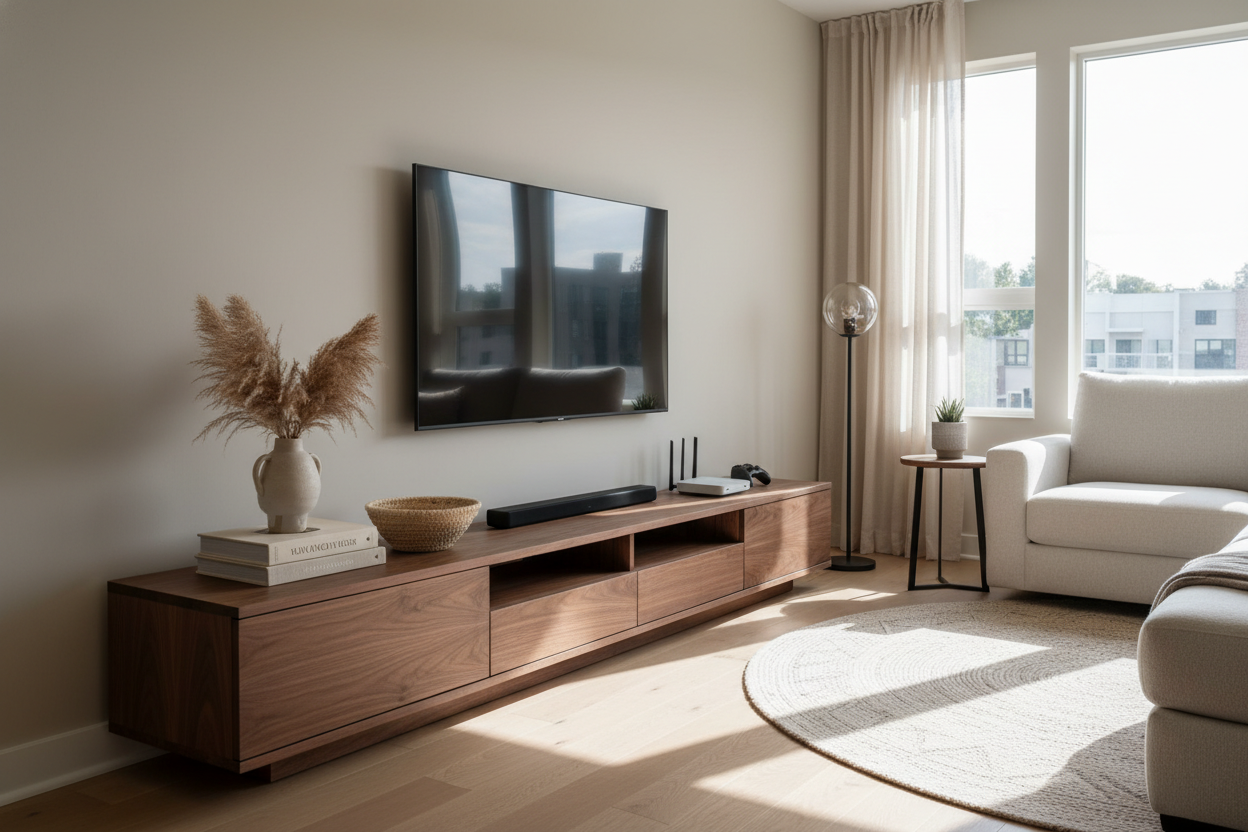
It’s also the most effective way to transform clutter with the right cabinet. Most of us have 'the pile'—that collection of mail, chargers, and random tech that lives on the kitchen island. A tall cabinet with adjustable shelving can swallow all of that. I actually decided to ditch the traditional TV stand in my den recently. I moved the TV to a simple wall mount and placed a tall, fluted cabinet to the side. Now, all the ugly wires, the router, and the gaming consoles are tucked away at eye level where I can actually reach them, and the floor where the old dusty console used to sit is completely clear.
Finding the Right Proportions for Your Ceilings
Before you hit 'add to cart,' you need to pull out the measuring tape. This is where most people mess up. A tall cabinet should look like it belongs in the room, not like it’s trying to hold up the ceiling. If you have standard 8-foot ceilings (96 inches), you generally want a cabinet that is no taller than 80 to 84 inches. That 12-to-16-inch gap at the top is crucial. It provides 'negative space' that allows the eye to rest. If the cabinet is too close to the ceiling, it creates a visual tension that makes the room feel cramped and the ceiling feel lower than it is.
Also, consider the depth. A modern tall storage cabinet usually clocks in between 14 and 18 inches deep. Anything deeper than 20 inches starts moving back into 'bulky armoire' territory. I once bought a 24-inch deep cabinet for a narrow dining room and spent three months bruising my hip every time I walked past it. Stick to the slimmer depths; you’ll be surprised how much you can actually fit when you use the full height of the unit. Look for kiln-dried hardwood or high-grade steel—avoid the cheap 1.2 lb density particle board that sags the moment you put a few heavy books on it.
Do tall cabinets make a small room look smaller?
Actually, the opposite is true. By drawing the eye upward, you’re emphasizing the height of the room. Just make sure to choose a piece with legs and a finish that doesn't absorb all the light in the room.
How do I prevent a tall cabinet from tipping?
This is non-negotiable: bolt it to the wall. Most modern pieces come with anti-tip kits. Throw away the plastic zip-tie ones and buy a steel cable kit from the hardware store. It takes five minutes and prevents a disaster, especially if you have kids or cats.
Can I use a tall cabinet in a kitchen?
Yes! They are perfect as 'standalone pantries.' If you’re short on cabinet space, a tall unit can hold all your dry goods and small appliances like air fryers, keeping your counters clear for actual cooking.


Dejar un comentario
Este sitio está protegido por hCaptcha y se aplican la Política de privacidad de hCaptcha y los Términos del servicio.