










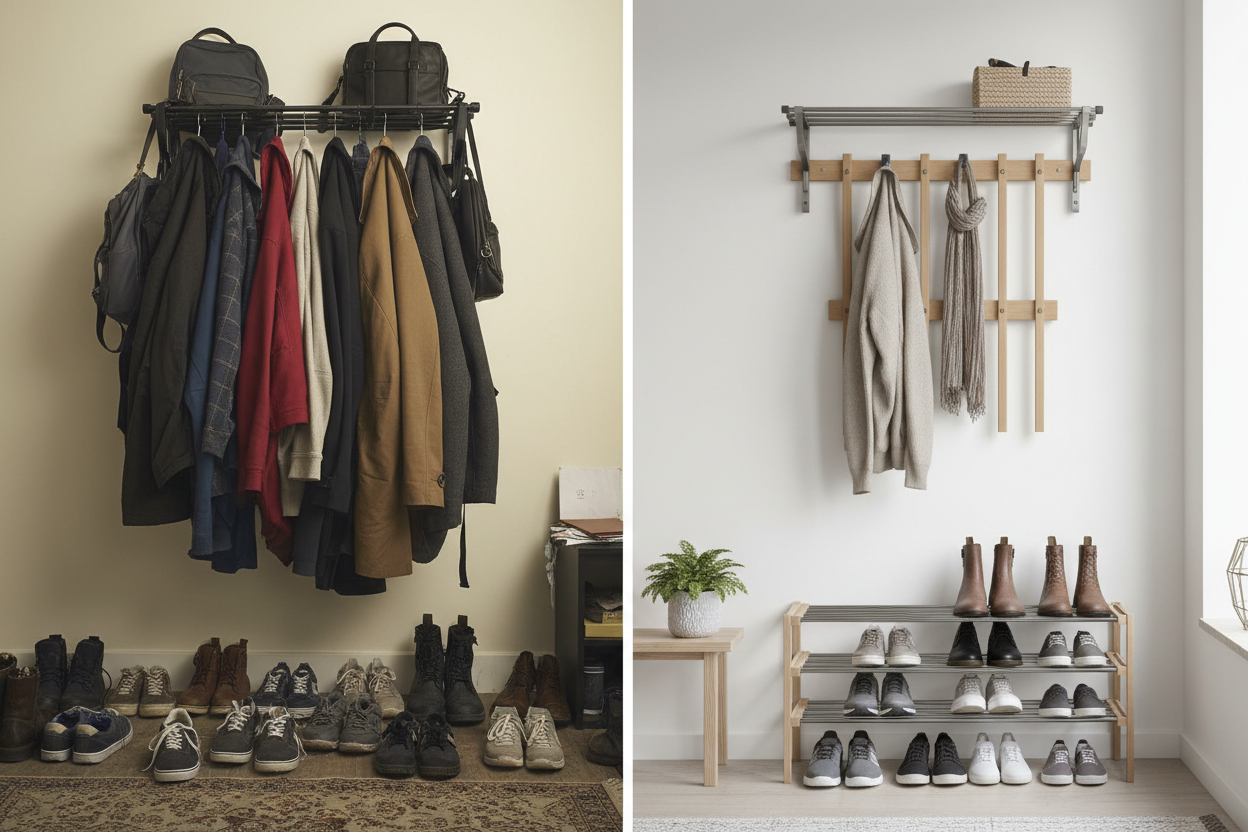
The foyer is the handshake of your home; it sets the tone before a guest even steps fully inside. Yet, it is often the most neglected zone, becoming a chaotic drop zone for mail, keys, and muddy boots. As a designer, I see clients struggle to balance the need for organization with the desire for a clean aesthetic. The solution usually isn't a massive renovation, but rather the strategic placement of a well-chosen entryway rack. This piece acts as a functional anchor, but selecting the wrong one—or placing it poorly—can disrupt the flow of your entire entrance.
Key Features to Look For
- Scale & Proportion: Ensure the rack depth allows for at least 36 inches of clearance for walking.
- Material Integrity: Prioritize solid hardwoods or powder-coated metals over particle board for longevity.
- Weight Capacity: Check the load rating, especially if the unit functions as an entryway storage rack for heavy winter coats.
- Visual Weight: Opt for open-frame designs in small spaces to maintain an airy feel.
Choosing the Right Material
When curating furniture for high-traffic zones, durability is non-negotiable. An entrance rack takes a beating; it encounters wet umbrellas, heavy bags, and the occasional hip bump.
Solid Wood vs. Veneer
While veneer offers a sleek, uniform finish often found in a budget-friendly modern entryway rack, it is prone to chipping at the edges. For clients looking for longevity, I always recommend solid wood (like oak or walnut) or high-grade plywood with solid banding. Solid wood can be refinished if scratched; veneer cannot.
Metal Finishes
If your aesthetic leans industrial or contemporary, metal is a fantastic choice. However, look for powder-coated steel rather than painted aluminum. Powder coating resists chipping and prevents rust, which is crucial if wet raincoats are hanging on the frame.
Space Planning & Layout
The most frequent error homeowners make is ignoring the "swing zone." Your door requires ample radius to open fully without banging into furniture. When positioning your rack, map out the traffic flow.
In narrow hallways, verticality is your friend. A tall, slender unit draws the eye upward, making the ceiling feel higher while minimizing the footprint. Ensure that the piece doesn't visually clutter the space. If the rack looks heavy, the room feels smaller.
Balancing Aesthetics and Utility
An entryway storage rack should not look like a utility closet. To achieve a designer look, we need to manage what is visible. I recommend a combination of open and closed storage.
Use the upper hooks for curated items—a stylish hat, a scarf with a pop of color, or a structured tote. Use the lower shelves for baskets. Woven baskets add texture and hide the unsightly clutter of dog leashes and mismatched gloves, keeping the visual noise to a minimum.
Lessons from My Own Projects
I want to share a specific lesson learned from a project in a tight urban walk-up. I specified a stunning, sharp-edged modern entryway rack for a client with a particularly narrow hallway. It looked architectural and beautiful in the photos.
However, two weeks later, the client called. Every time they came in with groceries, they were practically bruising their hip on the sharp metal corner of the unit. We had to swap it out for a piece with a rounded, tubular frame. It was a humble reminder that in tight transition spaces, ergonomics and "soft corners" matter just as much as the silhouette. Also, never underestimate the weight of winter coats. I once saw a cheap rack literally bow in the middle under the weight of three wool trench coats. Always check the hardware and joinery stability before buying.
Conclusion
Your entrance deserves as much design attention as your living room. By selecting a rack that respects your spatial limitations and offers durable material quality, you create a welcoming atmosphere that functions effortlessly. Measure twice, check the joinery, and style with intention.
Frequently Asked Questions
How do I maintain a wood entrance rack in wet climates?
If you live in a rainy or snowy area, ensure the wood is sealed with a marine-grade varnish or a high-quality polyurethane. I also suggest placing a small rubber mat on the specific shelf where wet shoes sit to prevent water rings and warping.
What is the ideal depth for a rack in a narrow hallway?
For narrow corridors, look for a unit with a depth between 10 to 14 inches. Anything deeper than 15 inches tends to encroach on the walking path and can make the entry feel claustrophobic.
Can I use an entryway rack in a home without a foyer?
Absolutely. In open-concept homes where the door opens directly into the living room, a rack can actually create a "phantom foyer." Position it perpendicular to the door if space allows, or flat against the wall behind the door swing to define the drop zone.

Dejar un comentario
Este sitio está protegido por hCaptcha y se aplican la Política de privacidad de hCaptcha y los Términos del servicio.