










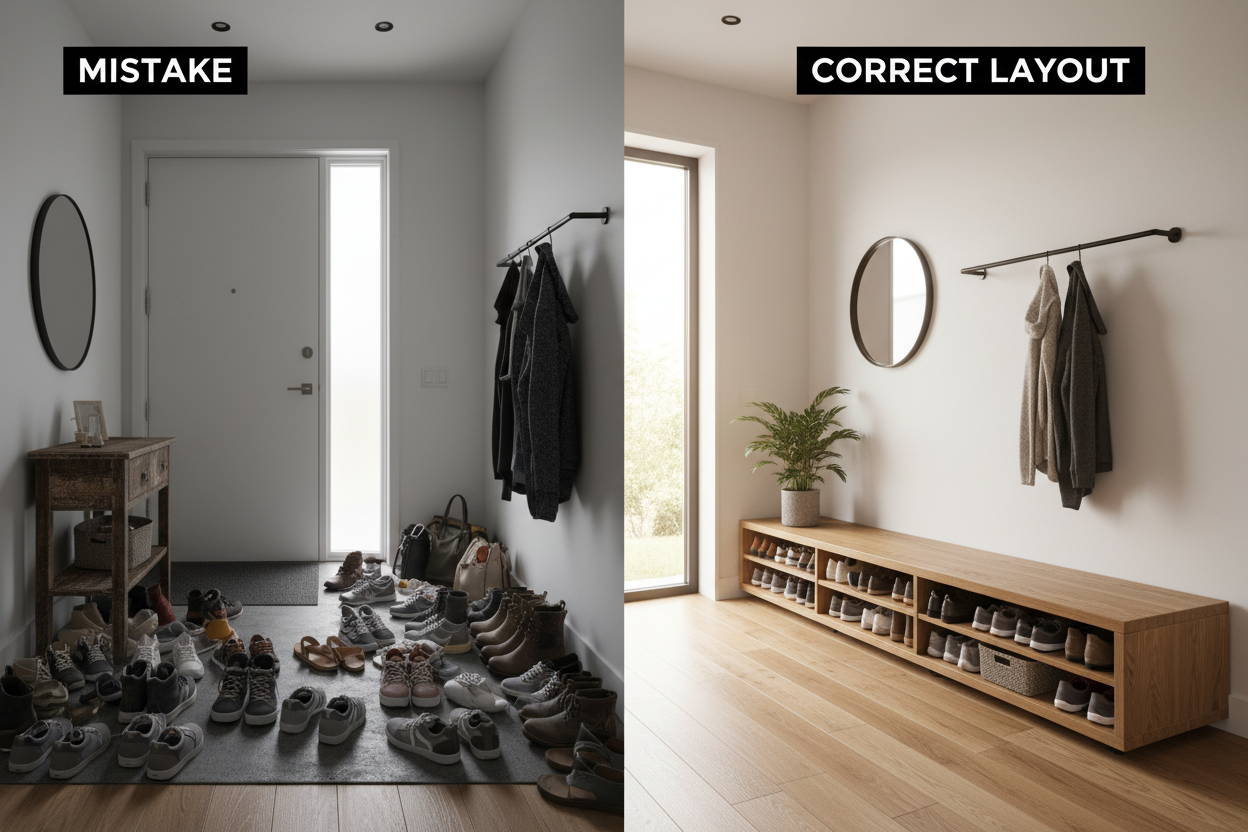
The foyer is the handshake of your home; it sets the tone before a guest even steps onto the living room rug. Yet, the most frequent design dilemma I encounter isn't a lack of space—it's the visual chaos of the "drop zone." You need a place for keys and mail, but you also need to manage the pile of footwear at the door. The solution is not just a rack, but a dedicated entryway shoe storage table that bridges the gap between high-end furniture and utilitarian organization.
Key Features to Look For
- Depth Requirements: Ensure the cabinet depth is at least 13 inches for standard shoes, or look for "tilt-out" mechanisms for narrower profiles (under 10 inches).
- Ventilation: A premium shoe cabinet console table must have rear cutouts or slatted doors to prevent moisture buildup and odors.
- Material Integrity: Avoid low-grade particle board if you live in wet climates; opt for marine-grade plywood or solid wood veneers that resist warping.
- Weight Capacity: If you plan to use it as a hallway table with shoe storage, ensure the top surface can hold heavy lamps or sculpture (aim for 50lbs+ capacity).
Choosing the Right Silhouette for Your Flow
When selecting a console table with shoe storage, the silhouette dictates the traffic flow. In narrow corridors, a standard depth cabinet will feel intrusive. Here, a narrow entryway table with shoe storage utilizing drop-down drawers is essential. These units often protrude less than 10 inches from the wall, maintaining the necessary 36-inch clearance for comfortable walking paths.
For larger foyers, a substantial shoe cabinet entryway table acts as an anchor. I often recommend pieces with raised legs. A shoe rack console table that sits flush on the floor can look heavy and block light, whereas a unit raised on tapered legs increases the perception of floor space, making the entry feel airier.
Materiality and Durability
As a specialist, I cannot stress enough the importance of surface durability. An entry way table with shoe storage sees high traffic. Keys are tossed, wet bags are dropped, and muddy boots are kicked nearby.
Solid Wood vs. Engineered Solutions
While a solid wood console with shoe storage offers heirloom quality, high-quality engineered wood with a melamine finish is often more practical for the interior compartments of a shoe organizer table. It is easier to wipe down and resistant to the scratches caused by grit on shoe soles. However, for the exterior, look for walnut or oak veneers to maintain that sophisticated hall table shoe storage aesthetic.
The "Hidden" Functionality
The goal is to disguise the utility. A console table with shoe rack often exposes the clutter. Instead, opt for a shoe storage console with closed cabinetry. This allows you to style the top surface like a traditional foyer table with shoe storage—using a statement mirror, a tray for catch-alls, and ambient lighting—while the footwear remains concealed.
If your living room backs up to the entry, consider a sofa table with shoe storage. Placed behind the sofa, it acts as a room divider while offering accessible storage for the whole family.
My Personal Take on Entryway Shoe Storage Tables
I learned a hard lesson early in my career regarding the shoe cabinet console. I specified a stunning, high-gloss lacquer unit for a client in Seattle. It looked incredible on installation day. Three months later, the client called me back. The issue wasn't the look; it was the mechanics and the finish.
Because the unit lacked proper ventilation cutouts in the back panel, the dampness from their rain boots had nowhere to go. This caused the interior veneer to bubble slightly at the seams—a detail you wouldn't notice until you ran your hand over the shelf. Furthermore, the "push-to-open" latches started sticking because the wood had swelled imperceptibly.
Since then, I always prioritize hardware quality and airflow over pure aesthetics. I now look for console tables with shoe storage that feature soft-close hinges (German-engineered Blum hinges are a favorite) and discreet ventilation slots. It’s these unsexy details that determine whether a piece lasts two years or twenty.
Conclusion
Integrating a front door table with shoe rack capabilities doesn't mean sacrificing your home's design language. By focusing on slim profiles, durable materials, and proper ventilation, you can curate an entrance that feels welcoming and organized. Elevate your entryway from a clutter magnet to a curated gallery space.
Frequently Asked Questions
How deep should a narrow console table with shoe storage be?
For a standard horizontal shelf, you need about 13-14 inches. However, for a narrow entryway table with shoe storage using tilt-out drawers (where shoes are stored vertically), you can find units as slim as 7 to 9 inches deep.
Can I use a normal console table as a shoe rack?
You can, but a standard console table and shoe rack combination often lacks the structural stability to handle the weight of multiple pairs of boots on the lower shelf. Dedicated shoe storage tables are reinforced to prevent sagging over time.
How do I style a hallway table with shoe storage to look expensive?
Treat the top surface independently of its function. Use the "rule of three": a vertical element (lamp or vase), a horizontal element (tray or book stack), and a sculptural element. Ensure the shoe cabinet table hardware is upgraded—swapping generic knobs for brushed brass or matte black pulls instantly elevates the look.



Dejar un comentario
Este sitio está protegido por hCaptcha y se aplican la Política de privacidad de hCaptcha y los Términos del servicio.