










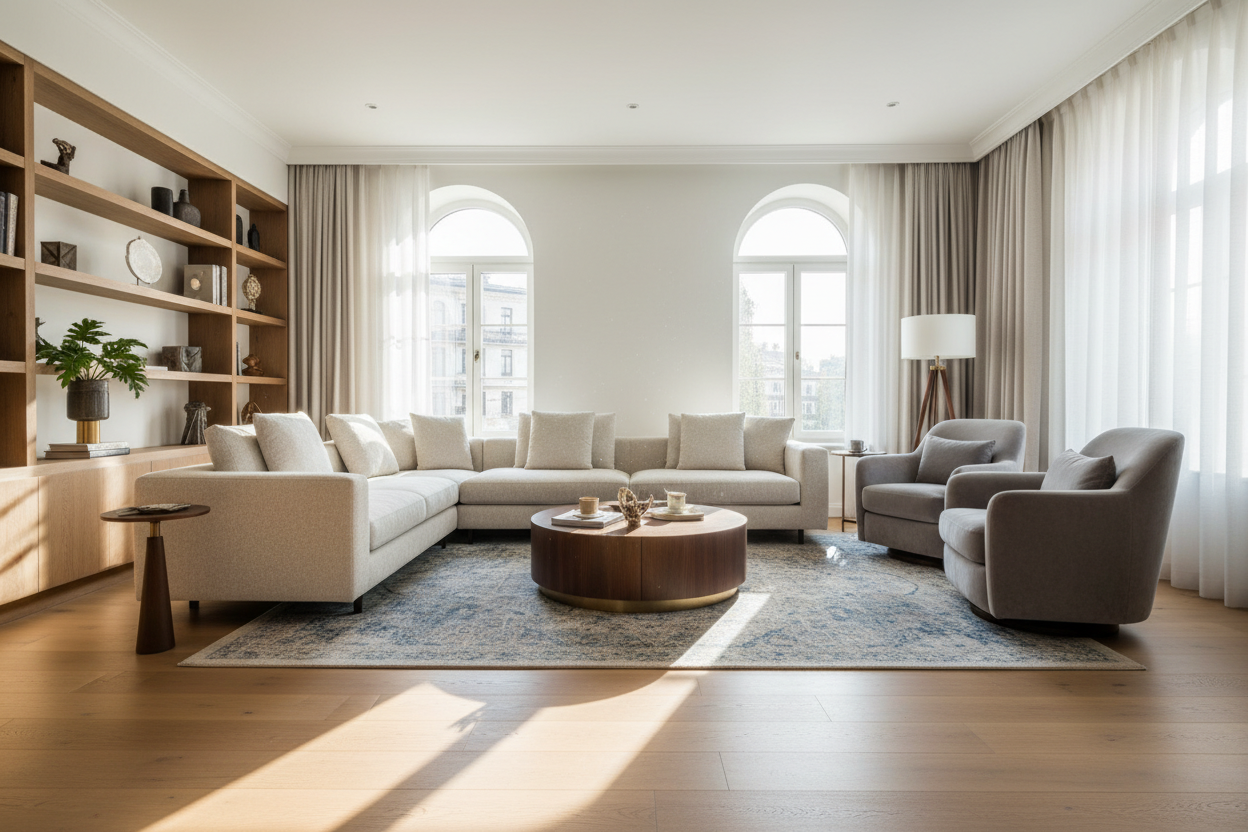
You walk into a showroom, fall in love with a silhouette, and visualize it perfectly in your home. Yet, once delivered, the piece feels overwhelming, or worse, surprisingly uncomfortable after an hour of use. This is the classic design dilemma: prioritizing immediate aesthetics over long-term livability. Selecting living couches isn't just about picking a color; it is about architectural balance and understanding how a piece facilitates conversation and relaxation.
Quick Decision Guide: Key Features to Look For
- Frame Integrity: Always verify the frame is kiln-dried hardwood. Avoid particleboard or metal staples alone, as these warp over time.
- Suspension System: Look for 8-way hand-tied springs or sinuous springs made of heavy-gauge wire for lasting support.
- Cushion Fill: A high-resiliency foam core wrapped in down provides the best balance of structure and softness.
- Fabric Durability: Check the "double rub" count. For daily use, aim for 15,000+ rubs to prevent premature wear.
- Seat Depth: Standard depth is 21-24 inches. If you are tall or prefer to lounge, look for 25 inches or deeper.
Defining the Silhouette and Scale
In interior design, scale is everything. A common error I see is placing a heavy, rolled-arm sofa in a room with low ceilings, which visually shrinks the space. Conversely, a low-profile, mid-century piece can look lost in a room with vaulted ceilings.
When shopping for living sofas, consider the visual weight. If your flooring is dark wood, a sofa with raised legs (exposing the floor underneath) creates a sense of airiness. For larger, open-plan spaces, a skirted base or a sectional that sits flush with the floor grounds the room and acts as a solid anchor.
Material Selection: Beyond the Swatch
Understanding Martindale Ratings
The touch and feel of a fabric are important, but the technical specs dictate longevity. I always advise clients to look at the Martindale or Wyzenbeek rating (the rub count). A velvet might look luxurious, but if it crushes easily or has a low rub count, it will look tired within a year.
Leather vs. Performance Fabric
Full-grain leather is an investment that develops a patina—a subtle sheen and character—over time. However, it requires temperature control; leather can crack in dry heat or feel sticky in humidity. For high-traffic family rooms, Crypton or performance weaves offer the tactile quality of linen or wool but with molecular-level stain resistance.
Ergonomics and Seat Composition
Comfort is subjective, but ergonomics are science. The "pitch" of the sofa—the angle between the seat and the back—determines if you sit attentive or reclined. A deep pitch is excellent for media rooms but terrible for formal living areas where you host guests.
Furthermore, consider the cushion construction. 100% down cushions are incredibly soft but require daily fluffing to avoid looking sloppy. A foam core wrapped in Dacron or feathers offers the requisite structure to keep the sofa looking tailored without sacrificing comfort.
Lessons from My Own Projects: The "Blue Jean" Incident
I want to share a specific lesson I learned the hard way early in my career. I specified a stunning, cloud-white textured weave for a client's primary living space. It was visually breathtaking. However, I failed to account for the family's lifestyle—specifically, their penchant for wearing dark, raw denim.
Within three months, the beautiful white fabric had taken on a subtle, dingy blue cast on the seat cushions. It wasn't dirt; it was dye transfer. No amount of professional cleaning could fully restore it because the dye had bonded with the synthetic fibers. Now, whenever I suggest light-colored living couches, I physically rub a sample of the fabric against dark denim in the showroom. If there is even a hint of friction transfer, we switch to a natural fiber blend or a treated performance fabric. It is a small, unpolished detail, but it saves thousands of dollars in regret.
Conclusion
Your sofa is likely the most used piece of furniture in your home. By focusing on the internal construction and how the scale interacts with your room's architecture, you ensure your investment stands the test of time. Don't just buy a seat; curate a space where design meets durability.
Frequently Asked Questions
How long should a quality couch last?
A well-constructed sofa with a kiln-dried hardwood frame and high-density foam should last between 7 to 15 years. Leather options can often last longer, sometimes upwards of 20 years, as they are less prone to fraying and tearing.
What is the ideal distance between a coffee table and the couch?
To maintain good traffic flow while keeping drinks accessible, allow for 14 to 18 inches of clearance between the edge of the sofa and the coffee table. Anything more than 18 inches makes the table hard to reach; anything less feels cramped.
Can I mix different sofa styles in one living room?
Yes, but maintain a common thread. If you mix a modern track-arm sofa with a vintage settee, ensure they share a similar seat height or color palette to create a cohesive visual language rather than a chaotic showroom look.

Dejar un comentario
Este sitio está protegido por hCaptcha y se aplican la Política de privacidad de hCaptcha y los Términos del servicio.