










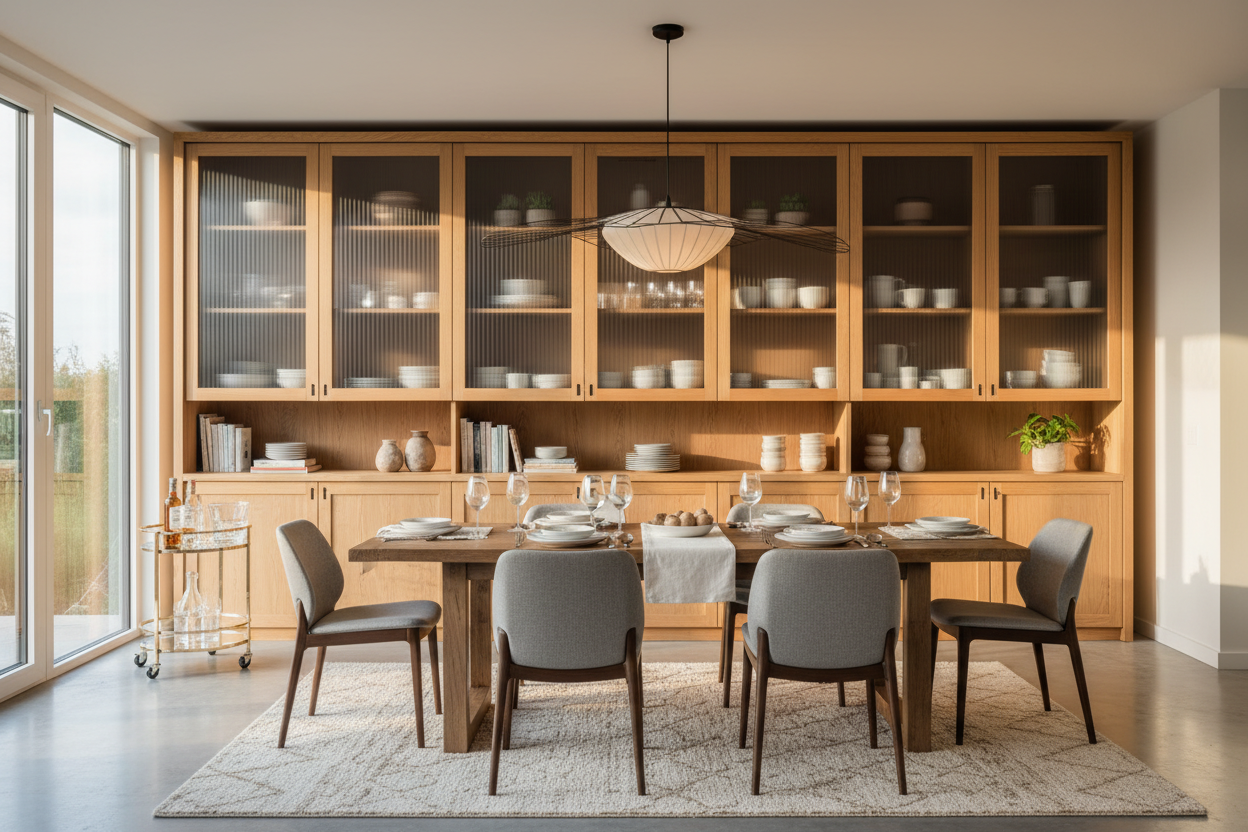
I used to own this gorgeous, walnut mid-century sideboard. It was sleek, low, and absolutely useless. Every time I hosted a dinner party, I would end up with stacks of serving platters on the floor because the drawers were too shallow for anything thicker than a placemat. I spent three years staring at 47 browser tabs of furniture at 1 AM before I finally admitted the truth: I didn’t need a bigger table; I needed a dining room wall cabinet that actually utilized the six feet of empty air above my floor.
- Go Vertical: Floor space is precious; wall space is free. Use it.
- The 70/30 Rule: Hide 70% of the chaos behind solid doors and display 30% of the 'pretty' stuff.
- Lighting is Non-Negotiable: If your unit doesn't have built-in LEDs, buy some puck lights. It makes a massive difference.
- Measure Your Chairs: You need 36 inches of clearance between the cabinet and the table to actually pull a chair out.
Why I Finally Gave Up on Tiny Credenzas
Tiny credenzas are great for Instagram, but they’re a nightmare for anyone who actually owns a Crock-Pot. My old setup left my dining table constantly cluttered with overflow. I had a 'dining wall cabinet' in my head, but I kept buying these 30-inch-high pieces that barely held my napkins. The realization hit me when I had to store my Thanksgiving turkey platter in the guest room closet because it wouldn't fit in the kitchen or the dining room.
Switching to a taller unit changed the entire workflow of my house. Suddenly, the table was for eating, not for holding the overflow of things that didn't have a home. If you're constantly shuffling piles of mail and serving bowls, you don't need better organization—you need more cubic inches.
The Magic of the 'Wall of Cabinets in Dining Room' Approach
People are terrified that a wall of cabinets in dining room spaces will make the area feel like a claustrophobic box. In reality, the opposite happens. When you run furniture high up the wall, it draws the eye upward, making your ceilings feel like they’ve gained an extra foot of height. It’s a classic interior design trick that mimics the high-end look of a custom built-in china cabinet without the permanent commitment or the five-figure contractor bill.
A well-placed dining wall unit acts as an anchor for the room. Instead of a bunch of small, leggy pieces of furniture that make a room feel 'busy,' one large unit provides a clean, architectural line. It’s the difference between a cluttered room and a curated one.
Hiding the Chaos vs. Displaying the Good Stuff
The secret to a successful wall unit design for dining room storage is the mix of 'hide' and 'show.' My unit has solid doors at the bottom and glass at the top. Behind those solid doors? A graveyard of mismatched Tupperware, a heavy stand mixer, and a stack of seasonal paper plates. No one needs to see that. It’s the junk drawer of the dining room, but on a much larger scale.
Up top, I treat the glass shelves like a gallery. This is where I look for dining room china cabinet sets that have that perfect balance of glass and wood. I put my grandmother’s crystal and my favorite ceramic pitchers there. When you’re browsing a dining room furniture collection, look for pieces that offer adjustable shelving. Being able to move a shelf up two inches to fit a tall wine glass is a small detail that saves a lot of frustration later.
Does It Feel Too Heavy for the Room?
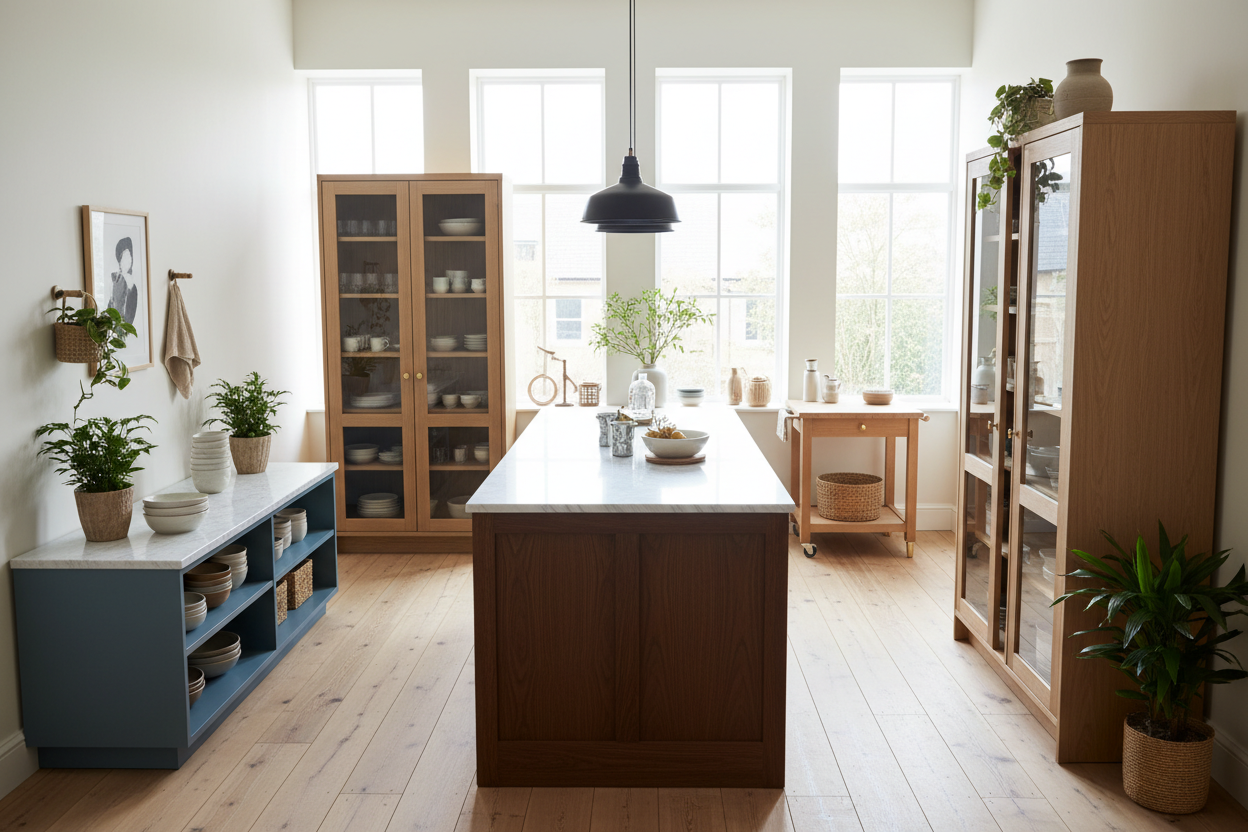
There’s a legitimate fear that a massive wall unit for dining room use will look like a 1990s entertainment center. You know the ones—heavy, dark oak monsters that swallowed the whole wall. To avoid that, I always look for modern dining room wall units that have some 'breathing room.' This could mean tapered legs that lift the piece off the floor or a lighter wood finish like oak or washed ash.
If you have a truly tiny space where a full wall unit feels like overkill, you might be better off with a modern brown sideboard buffet cabinet. It gives you the storage and the display glass without the vertical bulk. But for most of us, the vertical storage is worth the visual weight.
My Checklist for Getting the Proportions Right
Before you pull the trigger on any dining room wall unit cabinets, you have to grab the painter's tape. Tape out the dimensions on your wall. I’ve seen people buy beautiful units only to realize they can’t open the cabinet doors all the way because the dining table is too close. You need that 3-foot clearance for humans to walk by while someone is seated.
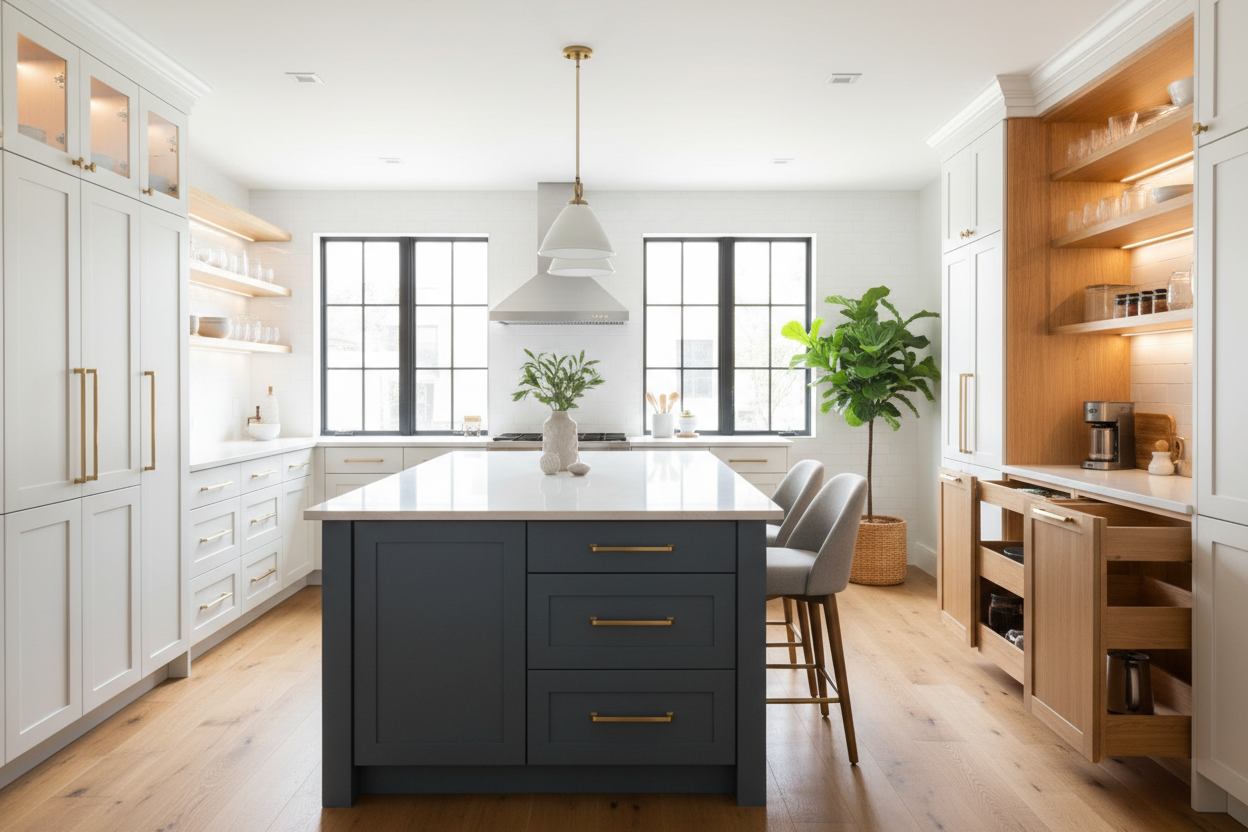
I also like to leave a little 'staging' area. If your wall unit is your main storage, you might still want a solid wood modern sideboard on an adjacent wall if you have the space. This gives you a flat surface for a bar setup or a buffet-style dinner. My rule of thumb: the wall unit is for the 'forever' storage, and the sideboard is for the 'right now' hosting.
How deep should a dining wall unit be?
Usually, 15 to 18 inches is the sweet spot. Anything deeper starts to eat into your floor space too much, and anything shallower won't fit a standard dinner plate comfortably.
Can I put a wall unit in a small dining room?
Yes, just go for a lighter color or something with mirror accents. It reflects the light and keeps the piece from feeling like a dark hole in the room.
Is it hard to assemble these large units?
I won't lie to you—it’s a two-person job. Expect to spend about 2 to 3 hours on it. It’s not that the steps are hard, it’s just that the pieces are heavy and you want everything perfectly level so the doors don't sag.

Dejar un comentario
Este sitio está protegido por hCaptcha y se aplican la Política de privacidad de hCaptcha y los Términos del servicio.