










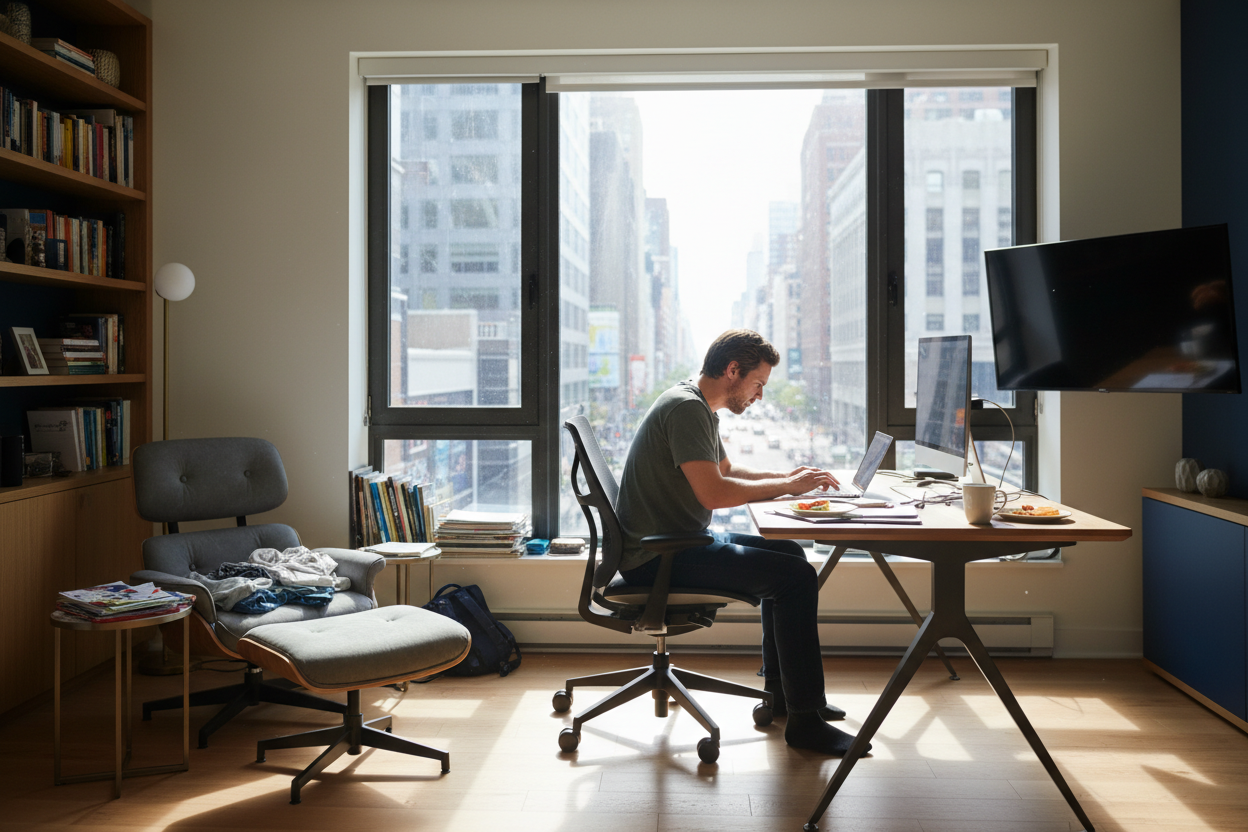
We often attribute our lack of productivity to poor time management, but as an interior designer, I see a different culprit: the environment itself. The sudden shift to remote layouts revealed that many residential spaces are simply not equipped for professional demands. The **challenges work from home** professionals face—from chronic back pain to shattered concentration—are frequently symptoms of poor spatial planning and inadequate furniture selection.
Quick Decision Guide: Solving WFH Design Dilemmas
If you are struggling to work from home effectively, your environment likely fails in one of these four critical areas. Use this checklist to identify the gap:
- Ergonomic Support: Does your seating offer adjustable lumbar support and seat depth, or is it merely decorative?
- Acoustic Control: Are hard surfaces creating echo and amplifying household noise? Look for textiles and density.
- Lighting Layers: Are you relying on a single overhead fixture? You need a balance of ambient and task lighting to reduce eye strain.
- Visual Zoning: Is your workspace clearly defined from your relaxation space? Physical separation is key to mental separation.
Addressing Physical Discomfort Through Furniture Selection
One of the most persistent difficulties in work from home scenarios is physical fatigue. When clients tell me they are struggling with working from home, the first thing I audit is their chair-to-desk relationship.
The Truth About Aesthetics vs. Ergonomics
There is often a tension between the desire for a cohesive, stylish home and the need for clinical-grade ergonomics. However, high-end design has evolved. When selecting a task chair, look past the fabric swatch. You need a synchronous tilt mechanism—where the backrest and seat pan move in a specific ratio—to maintain healthy posture. Avoid rigid dining chairs; while they offer a beautiful silhouette, they create static loading on the spine, leading to long-term injury.
Materiality and Durability
Home office issues often arise from selecting materials not meant for 40-hour work weeks. A soft pine desk might look charmingly rustic, but it will dent under the pressure of a ballpoint pen. For longevity, I recommend hardwoods like walnut or oak, or high-pressure laminates (HPL) that resist heat from laptops and abrasion from daily use.
Zoning: Solving the Distraction Crisis
The struggle working from home is often a struggle against distraction. In an open-plan living space, visual and acoustic bleeding is inevitable without intentional intervention.
Creating an "Office Within a Room"
If you lack a dedicated room, you must create a micro-architecture. Position your desk to command the room (the "power position") rather than facing a blank wall, which can feel claustrophobic. Use open shelving units or a console table behind a sofa to act as a physical barrier. This helps resolve the challenges to work from home by signaling to other household members—and your own brain—that you have entered a place of business.
Acoustic Dampening
Hardwood floors and minimalist walls look chic, but they bounce sound, making video calls difficult. To mitigate noise issues work from home setups generate, incorporate soft, porous materials. A high-pile wool rug, heavy velvet drapery, or even acoustic felt wall panels can absorb reverberation, instantly elevating the professional audio quality of your space.
Lighting: The Overlooked Productivity Killer
Many people struggling to work from home don't realize they are battling improper lux levels. Reliance on standard residential lighting (often 2700K warm white) can induce lethargy. Conversely, harsh daylight without diffusion causes glare on monitors.
Layer your lighting. Start with an ambient source, then add a dedicated task lamp with an adjustable arm. Look for fixtures with a Color Rendering Index (CRI) of 90 or above; this ensures colors look accurate and reduces the subconscious strain on your eyes, solving one of the subtle difficulties in work from home environments.
My Personal Take on challenges work from home
I learned the hard way that "commercial grade" exists for a reason. Early in my career, I designed a home office for myself using a stunning, vintage cane-back chair. It was visually perfect for the space—light, airy, and sculptural.
However, after three months of sitting in it for six hours a day, the cane began to snap, snagging my clothing, and the lack of lumbar support sent me to a chiropractor. But the specific detail that drove me crazy was the sound. Every time I shifted weight during a Zoom call, the dry wood creaked loudly, forcing me to stay perfectly still while presenting. It was a beautiful mistake. I now advise clients that while we want the office to look residential, the "engine" of the room—the chair and desk mechanism—must be built for performance, not just a photo shoot.
Conclusion
Work from home challenges and solutions are not just about software or schedules; they are intrinsically linked to interior design. By investing in ergonomic furniture, proper acoustic zoning, and layered lighting, you stop fighting your environment and start being supported by it. Your workspace should be a tool that propels your career, not an obstacle course of discomfort.
Frequently Asked Questions
What are the challenges of working from home regarding small spaces?
In limited square footage, the main challenge is the lack of separation between "living" and "working." The solution lies in vertical storage and multi-functional furniture, such as secretary desks that close up to hide clutter, physically signaling the end of the workday.
How can employers address the challenges of remote working for employers?
Employers often struggle with reduced team productivity due to poor home setups. Providing a stipend specifically for ergonomic furniture—rather than just technology—ensures employees have the physical infrastructure to focus, reducing long-term health absenteeism.
I am struggling with working from home due to noise; does furniture help?
Absolutely. While furniture cannot soundproof a room, introducing "soft architecture" helps. Upholstered high-back chairs create a sound cocoon around the user, and bookshelves filled with books act as excellent sound diffusers, breaking up sound waves before they echo.

Dejar un comentario
Este sitio está protegido por hCaptcha y se aplican la Política de privacidad de hCaptcha y los Términos del servicio.