










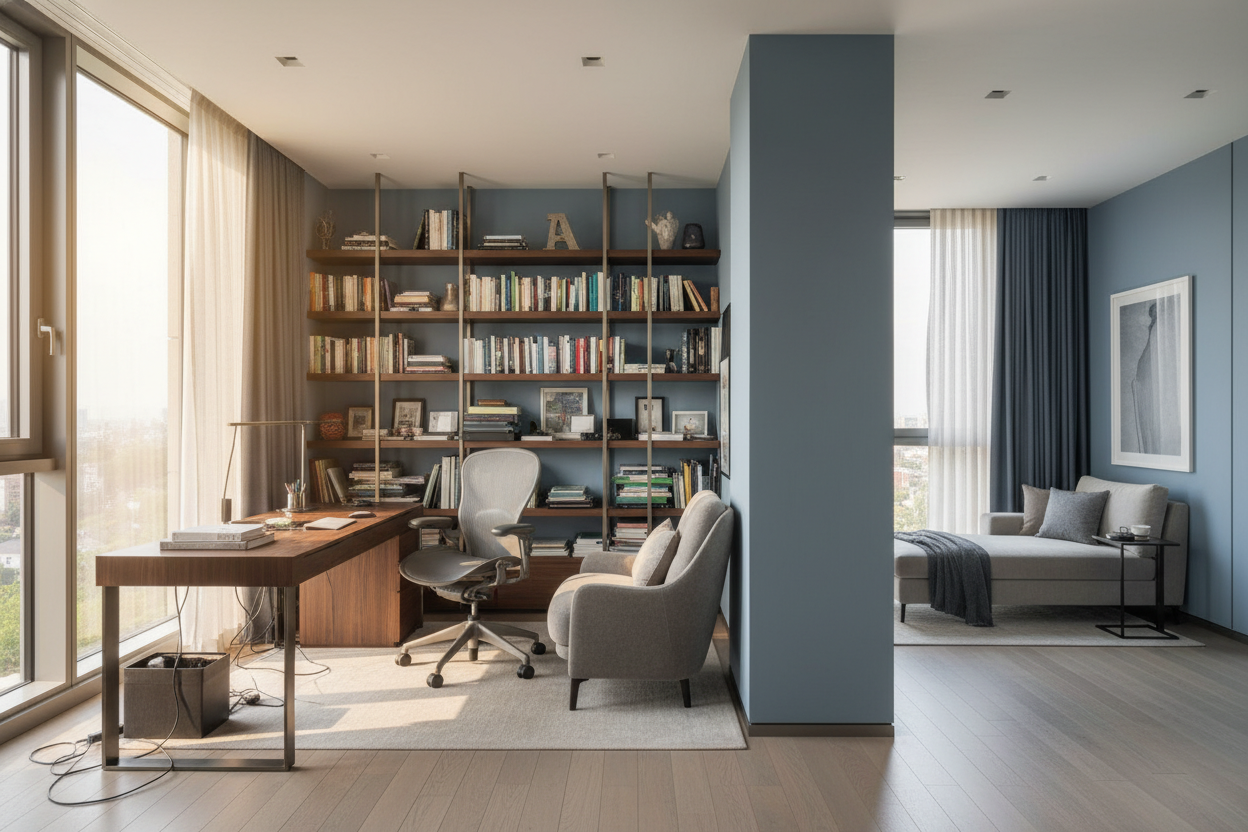
We often treat the workspace as an afterthought—a spare corner where a desk is hastily shoved against a wall. However, as an interior designer, I see this approach stifle productivity more than any distraction ever could. A truly effective home office study is not just about having a surface to work on; it is about curating an environment that induces a state of flow while maintaining the aesthetic integrity of your home. In this guide, I will walk you through the architectural and decorative decisions that turn a cluttered room into a command center.
Key Components of a High-Performance Study
Before we discuss aesthetics, we must address the fundamental elements that dictate how the room functions. If you are skimming for the essentials, focus on these four pillars:
- The Command Position: Never face a blank wall; orient your desk to face the door or a window to reduce subconscious anxiety.
- Lighting Layers: Combine ambient overhead lighting with focused task lighting (aim for 3000K-4000K color temperature).
- Material Tactility: Choose desk surfaces like solid walnut or leather-topped wood over glass to improve acoustics and warmth.
- Ergonomic Integration: Ensure your chair offers lumbar support without sacrificing the room's visual silhouette.
Mastering the Layout and Flow
The most common error I see in home office study ideas found on Pinterest is poor spatial planning. Pushing a desk into a corner might save floor space, but it psychologically boxes you in.
The Floating Desk Technique
If your square footage allows, float the desk in the center of the room or perpendicular to a wall. This anchors the room and creates a clear distinction between the "work zone" and the rest of the space. It also allows for a credenza behind you, creating a professional backdrop for video calls while keeping clutter out of your primary line of sight.
Selecting Materials: Durability Meets Aesthetics
The surface you touch for eight hours a day matters. While veneer is cost-effective, it often lacks the longevity of solid wood. For a luxury study, I often recommend hardwoods like walnut or white oak. These materials develop a patina over time, forgiving minor scratches that would ruin a laminate finish.
The Case Against Glass
While glass desks appear sleek and modern, they are often impractical for a serious work environment. They offer no sound dampening, making keyboard clatter distracting, and they are perpetually cold to the touch. A wood or leather-wrapped surface provides the necessary friction and warmth for comfortable writing and typing.
Lighting: The Invisible Design Element
Lighting dictates the mood. A single overhead fixture casts harsh shadows that strain the eyes. You need to sculpt the light.
Start with a high-quality task lamp with an articulating arm. This is your functional light. Then, add ambient lighting—perhaps a floor lamp with a linen shade in the corner—to soften the room's edges. Finally, consider accent lighting, such as picture lights over bookshelves, to add depth and highlight your decor.
Lessons from My Own Projects
I learned the hard way that "showroom ready" doesn't always mean "work ready." A few years ago, I designed a moody, masculine study for a client using a stunning, high-gloss lacquered executive desk. It was visually arresting—a true centerpiece.
However, three weeks post-install, the client called me. The issue wasn't the look; it was the maintenance and the acoustics. The high-gloss finish acted like a mirror for fingerprints—he felt like he had to clean it every time he touched it. Furthermore, the hard surface reflected sound, making his conference calls echo. We had to retrofit the design with a custom, inlaid leather blotter to dampen the sound and mitigate the smudges. Now, I always insist on matte or satin finishes for primary work surfaces. It’s a small detail that saves daily frustration.
Conclusion
Designing your study is an investment in your own efficiency and peace of mind. By prioritizing layout, selecting materials that age gracefully, and layering your lighting, you create a space that pulls you in rather than pushes you away. It is time to stop working at a makeshift station and start leading from a proper sanctuary.
Frequently Asked Questions
How do I fit a home office study into a small bedroom?
In compact spaces, verticality is your friend. Utilize wall-mounted shelving units with an integrated drop-down desk. This maintains floor flow while providing necessary storage. Keep the color palette monochromatic to prevent the room from feeling closed in.
What is the best rug size for a home office?
The rug should be large enough that when you push your chair back to stand up, the castors remain on the rug. Typically, this means the rug should extend at least 24 to 30 inches behind the desk edge.
Should I choose a task chair or an accent chair?
Never sacrifice your spine for style. However, you don't need a bulky gaming chair. Look for "executive" or "conference" chairs from high-end manufacturers. They often hide advanced ergonomic mechanisms inside upholstered, tailored silhouettes that look like furniture, not machinery.

Dejar un comentario
Este sitio está protegido por hCaptcha y se aplican la Política de privacidad de hCaptcha y los Términos del servicio.