










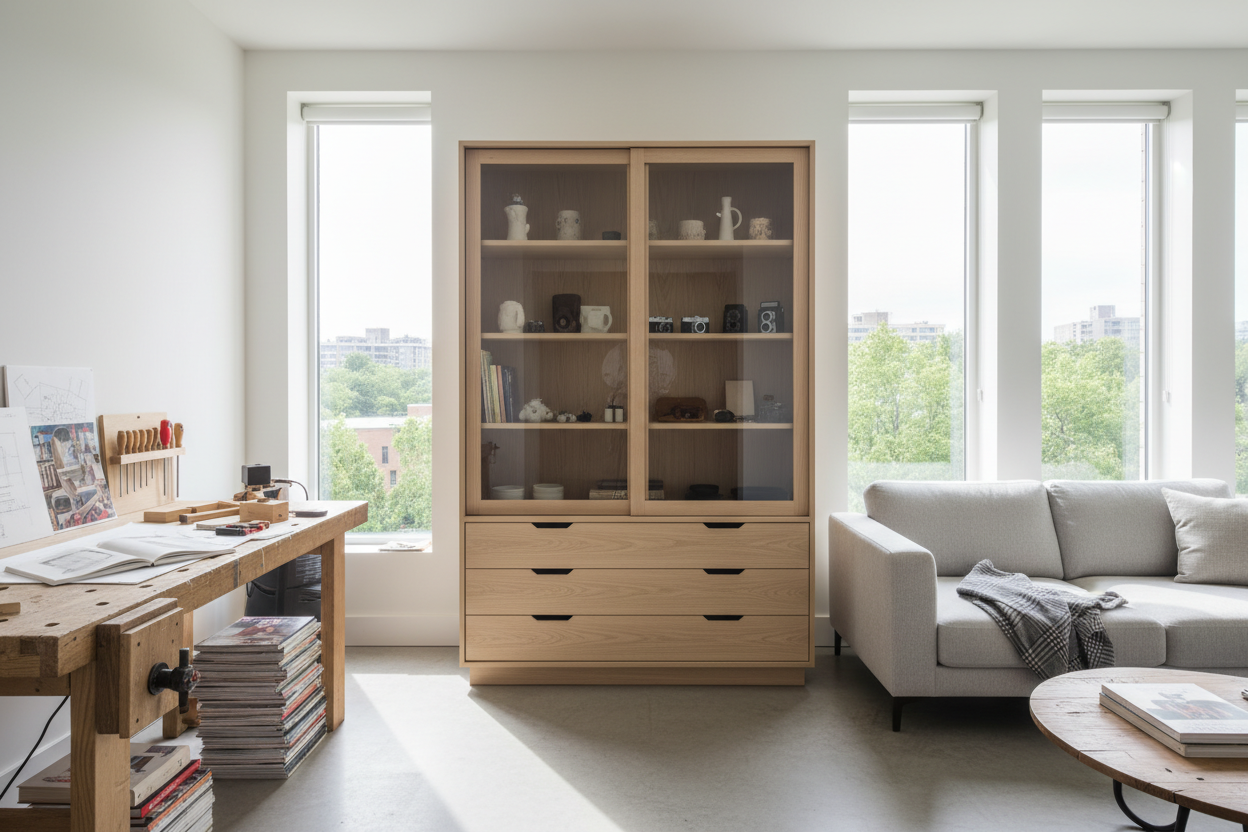
We have all been there: you finally curate a beautiful collection of vintage ceramics or beloved hardcovers, only to realize your current shelving does them zero justice. You scour the usual furniture retailers, but the options are grim. You are forced to choose between flimsy particleboard units that wobble when you walk by, or massive, custom-built pieces that cost as much as a used car. This is exactly why utilizing diy display cabinet plans has become my favorite workaround for clients who want high-end aesthetics without the luxury markup.
Taking control of the build means you dictate the dimensions, the materials, and the final silhouette. By the end of this guide, you will know exactly what to look for in a solid plan, which materials yield a professional finish, and how to avoid the rookie mistakes that give DIY furniture a bad name.
Quick Decision Guide
- Prioritize plywood over MDF: Cabinet-grade plywood or solid wood prevents the dreaded 'shelf sag' over time.
- Plan for tempered glass: If your design includes glass doors or shelves, standard glass is a safety hazard; always specify tempered.
- Integrate lighting early: Routing channels for LED strips must happen before assembly for a seamless, hidden look.
- Mind your proportions: A cabinet should leave at least 12 to 18 inches of negative space between its top and the ceiling to avoid overwhelming the room.
Material & Build Quality
Choosing Structural Integrity Over Convenience
When reviewing various diy display case plans, the material list is your first indicator of quality. Many beginner-friendly plans rely heavily on MDF (Medium Density Fiberboard) because it is cheap and takes paint beautifully. However, MDF lacks structural rigidity. If you plan to display heavy items like art books or cast-iron cookware, MDF shelves wider than 24 inches will eventually bow.
Instead, look for designs that utilize 3/4-inch birch or oak plywood for the carcass, finished with solid wood edge banding. This combination gives you the visual weight and durability of solid wood at a fraction of the cost. The edge banding is crucial—it hides the exposed plywood layers, giving the piece a refined, custom-built appearance.
Space Planning & Layout
Sizing for Standard Living Spaces
A common hurdle when figuring out how to make display cabinet units is getting the scale right. In a typical North American suburban living room with 8- or 9-foot ceilings, a cabinet that reaches 84 inches tall provides an excellent focal point without feeling oppressive. If you are working with a smaller apartment, consider a narrower, taller silhouette to draw the eye upward and save valuable floor space.
Pay attention to clearance as well. If your plans include swinging doors, ensure you have a minimum of 36 inches of clearance in front of the cabinet. For tighter rooms, sliding glass doors or an open-shelving design might be a more practical choice.
Style & Coordination
Making It Look High-End
The difference between a weekend craft project and a designer piece often comes down to the hardware and finish. Flush-mount hinges or soft-close concealed hinges instantly upgrade the tactile experience of using the cabinet. When it comes to color, matching the cabinet to your baseboards or wall color creates a high-end, built-in look. Alternatively, staining a rich walnut or white oak brings warmth to cooler, minimalist spaces.
Lessons from My Own Projects
A few years ago, I decided to build a massive, wall-to-wall display unit for a client's mid-century pottery collection. I found a great set of plans, modified the dimensions, and got to work. The matte black finish looked stunning on day one. But I learned a harsh lesson about glass shelving: I used standard 1/4-inch glass across a 36-inch span to save a little money.
Within three months, the weight of the heavier ceramic pieces caused a noticeable, terrifying bow in the glass. We had to empty the entire unit and replace every shelf with 3/8-inch tempered glass. It was an expensive and frustrating fix. I also made the mistake of trying to retrofit LED puck lights after the cabinet was assembled, resulting in visible wires that ruined the clean lines. Always route your lighting channels while the wood is still flat on your workbench.
Frequently Asked Questions
What is the best wood for a DIY display cabinet?
Cabinet-grade plywood (like birch or maple) is the best choice for the main box and shelves due to its stability and resistance to warping. Use solid wood for the face frames and doors to ensure durability and a premium finish.
How deep should a display cabinet be?
For most decorative items, books, and glassware, a depth of 12 to 15 inches is ideal. Going deeper than 18 inches often creates dark shadows in the back and makes it harder to see the items you are trying to showcase.
How do I add lighting to my display cabinet?
The cleanest method is to use a router to cut shallow grooves into the underside of your shelves before assembly. You can then press LED strip lights into aluminum channels within these grooves, diffusing the light and hiding the wiring completely.

Dejar un comentario
Este sitio está protegido por hCaptcha y se aplican la Política de privacidad de hCaptcha y los Términos del servicio.