










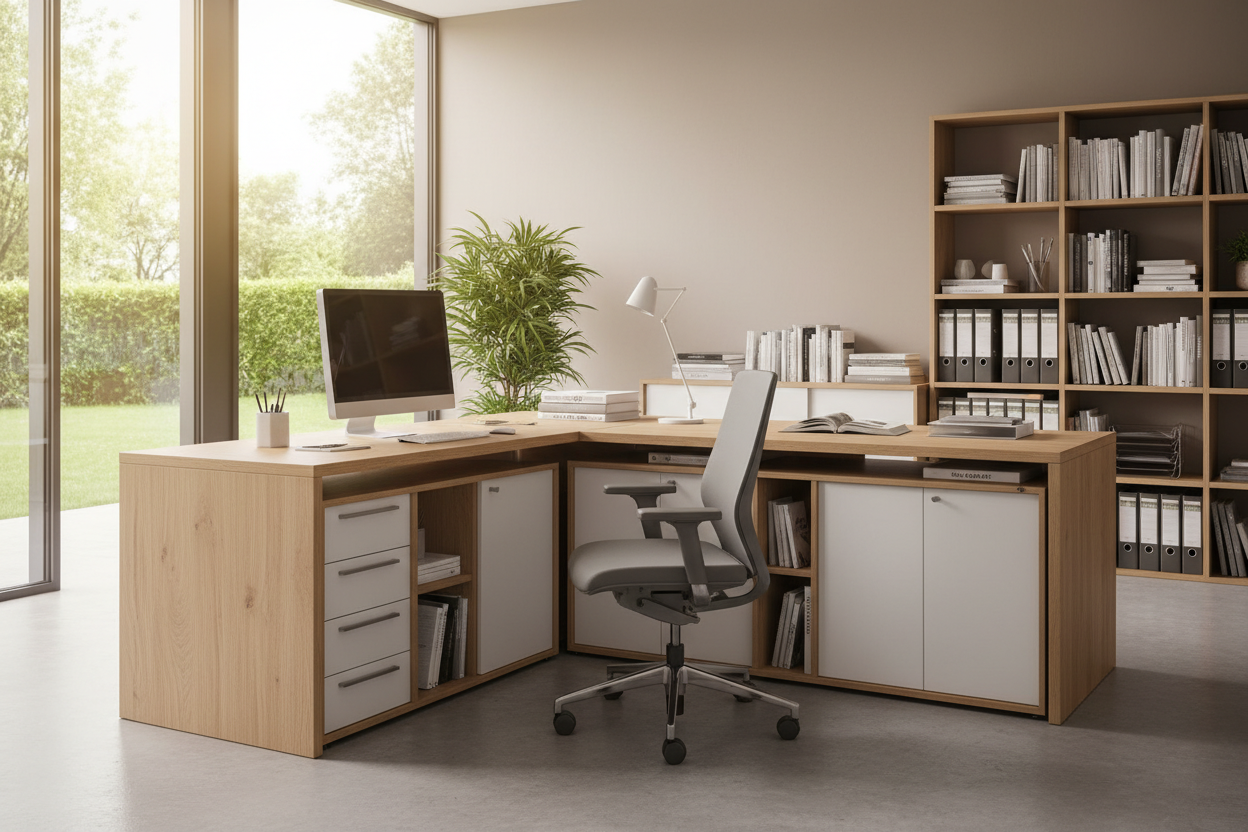
There is a distinct tension in interior design between the need for a pristine, minimalist surface and the reality of daily paperwork. We all crave that architectural digest moment—a clean surface with a single vase and a laptop—but the reality of a working professional involves cables, files, and peripherals. The dilemma isn't just about clutter; it's about how your furniture dictates your workflow. If you choose the wrong office desk and storage combination, you risk creating a workspace that looks beautiful but functions poorly, leading to physical strain and mental fatigue.
Key Features to Look For
- Drawer Extension Quality: Look for full-extension ball-bearing slides so you can reach the back of the drawer without struggling.
- Visual Weight: In smaller rooms, opt for legs rather than solid pedestals to keep the floor visible and the room feeling open.
- Integrated Power Management: A true work from home desk with storage should have grommets or hidden channels to manage cable spaghetti.
- Material Durability: Ensure the desktop surface (high-pressure laminate or sealed wood) can withstand coffee heat and pen pressure.
- Ergonomic Clearance: Verify that under-desk storage units do not encroach on your legroom or force you to sit off-center.
Defining Your Aesthetic and Materiality
When curating a home office desk and storage solution, the material choice defines the longevity of the piece. In my consultations, I often steer clients toward hardwoods like walnut or white oak if they want the desk to age gracefully. These materials develop a patina over time, turning scratches into character rather than damage.
Solid Wood vs. Engineered Surfaces
However, for a high-traffic office storage desk, high-quality veneers or thermal-fused laminates are often more practical. They resist the dreaded "coffee ring" and maintain a uniform appearance. If you are looking for a desk for home office with storage that blends into a living room, consider a matte finish. High-gloss finishes can look dated and show every fingerprint, disrupting the visual calm necessary for deep work.
Optimizing Layout for Workflow
The placement of your home desks with storage is just as critical as the furniture itself. A common error is pushing the desk directly against a wall, facing away from the room. This "time-out" position feels cramping. Instead, consider floating the desk in the center of the room or perpendicular to a window.
The "L" Configuration
For those needing substantial filing space, an L-shaped setup is superior. It separates your "computer zone" from your "paper zone." When selecting desks with storage for home office use, ensure the return (the side part of the desk) is on your dominant side for easy access to files without swiveling your chair excessively.
Balancing Storage Volume with Visual Space
A heavy, double-pedestal desk can dominate a small room, making it feel claustrophobic. If you are tight on square footage, a home storage desk with a floating silhouette or open shelving can reduce visual weight. The goal is to have storage that recedes into the background, allowing the desk itself to remain the focal point.
My Personal Take on Office Desk and Storage
In my early years designing home offices, I once specified a stunning, custom-built desk with integrated drawer banks on both sides for a client who was an accountant. It looked incredible in the rendering. However, a month after installation, I visited the site and noticed he was sitting awkwardly at an angle.
The issue? The storage pedestals were too wide, leaving a "knee hole" of only 22 inches. He couldn't swivel his chair without banging his knees against the drawers. It was a functional failure despite the aesthetic success. Since then, I always measure the chair's wheelbase against the desk opening. A work from home desk with storage is useless if you can't physically fit comfortably within it. Always prioritize the "human envelope"—the space your body needs to move—over the storage capacity.
Conclusion
Investing in the right workspace furniture is an investment in your own efficiency. By prioritizing ergonomic clearance, durable materials, and a layout that breathes, you can create a space that invites productivity rather than stress. Measure twice, consider your workflow, and choose a piece that elevates your daily grind.
Frequently Asked Questions
What is the ideal depth for a desk with storage?
For a primary workstation, aim for a depth of at least 24 to 30 inches. This provides enough distance for your monitor to prevent eye strain while leaving room for a keyboard and paperwork in front of you.
Should I choose attached storage or a separate filing cabinet?
If you move frequently or like to rearrange your room, separate mobile pedestals are superior. They offer flexibility and can be rolled out to serve as extra surface area during large projects.
How do I hide cables on a desk with open leg storage?
Look for desks with a "modesty panel" at the back or use cable vertebrae (flexible spines that travel from the desk to the floor) to route wires neatly down one leg, keeping the visual profile clean.

Dejar un comentario
Este sitio está protegido por hCaptcha y se aplican la Política de privacidad de hCaptcha y los Términos del servicio.